According to an investment program proposed by a study by the National Chamber of Accountants:
father-in-law
Expressiveness
61 billion dinars for electricity and electronics and 112 billion for metal components
4 poles and Al Sharq customization of electronics, batteries and precision mechanics
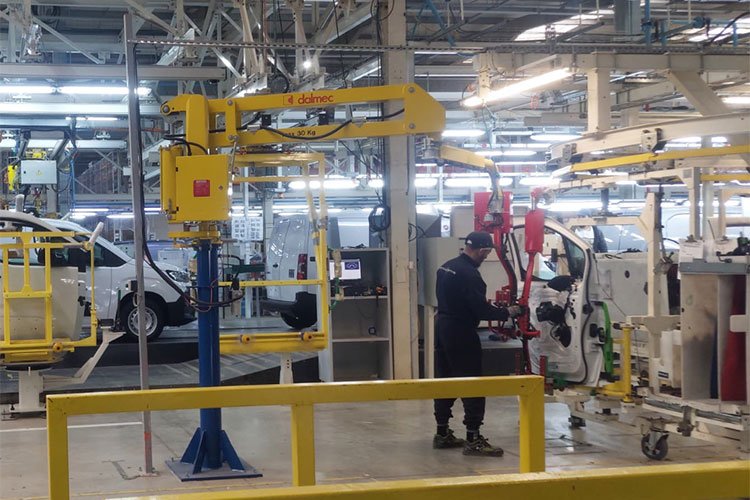
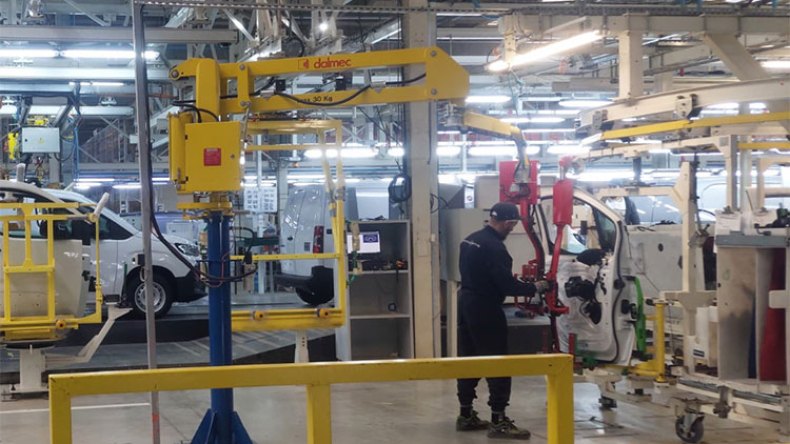
A strategic study by the National Chamber of Auditors, prepared in August 2026 and viewed by Al-Shorouk, revealed an ambitious proposal to rebuild the automobile industry in Algeria on new foundations, based on moving from simply assembling vehicles to establishing an integrated national system for manufacturing components, spare parts, and precision mechanics, through an investment program extending until 2035, with a total value estimated at about 300 billion dinars, or 30 thousand billion centimes.
The 43-page study, entitled “The Industrial Cluster of Automotive Components and Precision Mechanics, Horizon 2026-2035,” presents to public authorities and economic actors a road map aimed at raising the local integration rate to an average of 52 percent by 2035, with the possibility of creating about 28,000 direct jobs, and achieving a potential annual impact on the trade balance estimated at about $1.9 billion according to the central scenario.
The study confirms that these numbers represent estimates of a strategic model, and do not replace detailed feasibility studies for each investment project. The document stems from a clear diagnosis of the reality of the Algerian industry, which states that increasing car assembly capabilities does not necessarily mean having an integrated car industry, as long as the majority of vehicle components remain outside the national production base.
The study believes that the real bet in the coming years must shift from the question: “How many cars will Algeria produce?” To a question more related to added value: “How many parts of the car can be manufactured locally, and how much economic value can be retained within the country?”
In this context, the study proposes building a national network of institutions specialized in the manufacture of metal components, polymers and rubber, wires and cables, electrical and electronic systems, seats and interior equipment, in addition to mechanical parts, molds and industrial tools, heat and surface treatment, and measurement and testing laboratories.
The study estimates the target market for the industrial cluster at approximately 303 billion dinars annually by 2032, which includes the needs of the initial preparation of cars, the spare parts market, and export, as well as precision mechanical applications outside the automotive sector.
The document does not propose distributing investments randomly across industrial regions, but rather calls for the establishment of four integrated industrial poles in the west, center, east, southeast, and high plateaus, with each region specializing in production rings compatible with its industrial, human, and logistical capabilities.
The East region emerges, according to the proposed approach, as a pole that can embrace the industries of electronics, batteries, precision mechanics, and molds, benefiting from the capabilities available in Setif, Bordj Bou Arreridj, Constantine, and Mila, while the West benefits from its logistical location, ports, and capabilities in assembly, plastic industries, seats, and molding.
The study gives special importance to the precision mechanics industry, as it is an essential link in building a competitive automotive industry, as manufacturing a part with micrometer precision does not stop at the availability of production machines, but rather requires specialized competencies, precise standards, and laboratories capable of measuring and proving conformity.
For this purpose, the study proposes establishing a national laboratory for dimensional metrology and testing with an investment estimated at 1.8 billion dinars, which will allow the provision of a national technical infrastructure capable of accompanying industrial institutions and monitoring the quality of products.
In the distribution of the proposed investment envelope, metal components account for 112 billion dinars, compared to 48 billion dinars for polymers and rubber, and 61 billion dinars for electricity and electronics, while 39 billion dinars are allocated to precision mechanics, molds and tools, and 26.5 billion dinars for platforms and infrastructure, in addition to 13.5 billion dinars for training, quality, research and development.
The study does not separate the issue of local integration from the control and audit system, as it proposes transforming the integration rate from a mere number announced by institutions into an indicator that can be calculated, verified and certified, especially since this rate could be linked to benefiting from customs and tax benefits and the continuation of industrial accreditation.
Training about 6,500 technicians and specialized workers during the implementation of the program
In this context, it is proposed to assign a standard professional task to certify the local integration rate, by linking the vehicle’s technical data, component tables, analytical accounting, and suppliers’ supply sources.
The study also bets on the human element, and proposes the training of about 6,500 technicians and specialized workers during the implementation period of the program, in addition to accompanying 120 institutions to obtain the IATF 16949 standard and the quality requirements approved in the automotive industry. The document believes that the global shift towards electric cars should not be seen as a threat to the Algerian industry, but rather it could constitute an opportunity to enter new episodes of the value chain, especially in batteries, power electronics, high-voltage cables, heat management systems and components. Electronic.
However, the study warns, on the other hand, that the success of this strategy will not be achieved by simply pumping money or granting real estate and concessions, but rather requires organizational stability, clarity in the size of demand, long-term contracts between car factories and suppliers, international quality certificates, a national metrological system, and a local industry for molds and tools, as well as specialized and continuous training.
10 practical recommendations for building an Algerian automobile industry
The study makes ten practical recommendations, including establishing the national reference for calculating integration, approving a professional mission to ratify it, concluding a sectoral contract that brings together the state, manufacturers and suppliers, supporting a technical center for mechanical industries, establishing a special investment fund for the cluster, reforming the customs system for industrial inputs, in addition to launching the “Precision 2030” program to renew precision mechanical machines.
It also proposes creating a public dashboard to periodically measure the sector’s performance, based on indicators that go beyond the number of cars produced, to include the rate of integration, value added, productivity, export volume, the number of qualified suppliers, and the rate of utilization of production capabilities.
In this sense, the study presents a different vision for the future of the automobile industry in Algeria, based on the fact that the factory represents only the heart of a broader system, and that the real industry begins when automobile factories become able to rely increasingly on a national network of suppliers capable of producing components that conform to international standards at competitive prices.
According to the approach proposed by the study, the bet is no longer just installing a car inside Algeria, but rather manufacturing the largest possible amount of its components, raising the local added value, qualifying Algerian suppliers, and then moving on to exporting the components to foreign markets.