The Emirates Health Services Corporation revealed that 5,506 people about to get married had undergone genetic testing in its facilities, as part of pre-marriage examinations, since the program was implemented in January 2025 until the end of last May, as part of the national efforts aimed at enhancing prevention and supporting the formation of healthier and more stable Emirati families through early detection of genetic diseases, and enabling those about to get married to make informed health decisions that contribute to protecting future generations and reducing the spread of genetic diseases.
The Foundation stated, in exclusive statements to Emirates Today, that the genetic tests conducted for these couples recorded 5,294 cases of genetic compatibility, at a rate of about 96.1%, compared to 212 cases of genetic incompatibility, at a rate of 3.9%, including 95 cases of couples who are related by kinship, representing 44.8% of the total cases of incompatibility. The percentage of proceeding with marriage among genetically incompatible cases decreased from about 90% since the start of the service to 75% during the year. This year, 2026, is equivalent to a decrease of 15 percentage points between the two percentages, which reflects the importance of genetic testing in early detection of the possibility of transmitting some genetic diseases to children, especially in cases of consanguineous marriage.
In detail, Dr. Karima Al-Raisi, Director of the Primary Health Care Department at the Emirates Health Services Corporation, said that pre-marital genetic testing constitutes one of the basic pillars of preventing hereditary diseases and reducing their transmission to future generations, stressing that the Corporation is constantly working to develop and improve the customer’s journey to ensure easy access to the service and raise its efficiency, in line with the state’s trends towards promoting preventive health care and consolidating the concept of proactive medicine.
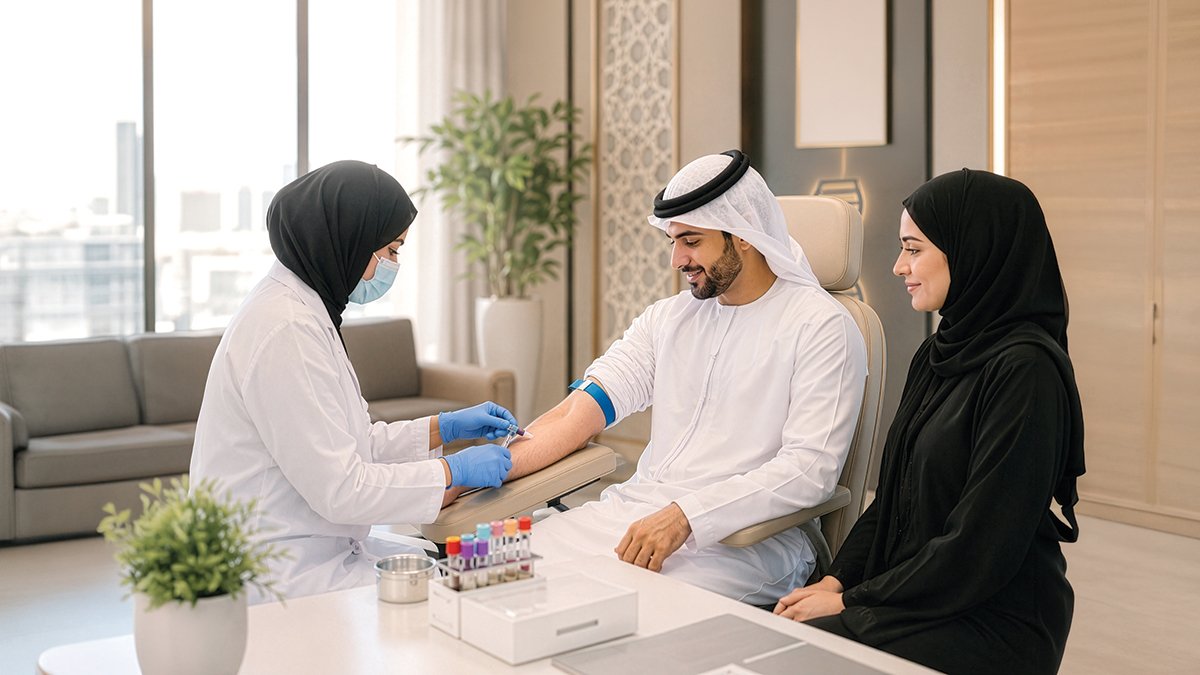
She added to “Emirates Today” that providing medical consultations related to the service virtually, since August 2025, has greatly contributed to simplifying procedures and shortening the customer’s journey, as the attendance of those about to get married has become limited to performing a laboratory examination only, while the examination certificate is received electronically through the institution’s application, which enhances the quality of digital health services and improves the customer experience, as well as saving time and effort and reducing the need for repeated visits to health centers.
She revealed that the data showed that the number of couples benefiting from the service, from the start of the program until the end of May 2026, amounted to 5,506 couples, and the test recorded 5,294 cases of genetic compatibility and 212 cases of incompatibility, including 75 cases of incompatibility during the current year 2026, pointing out that the number of related couples out of the total incompatible cases reached 95 couples, which highlights the pivotal role of genetic testing in early detection of potential health risks associated with genetic diseases.
Al-Raisi explained that the results of the program reflect a remarkable development in the level of community awareness of the importance of genetic testing and benefiting from its results, explaining that the percentage of continuing marriage among genetically incompatible cases decreased from about 90% when the service was implemented, to 75% during the current year 2026, (that is, the equivalent of 15 percentage points between the two percentages), in a clear indication of the increased awareness of those about to get married about the importance of benefiting from the results of the examination and the genetic counseling that accompanies it when making the right decision, which contributes to reducing the possibility of transmission of genetic diseases. To the children.
She stressed that genetic counseling is an essential part of the genetic testing system, as it provides couples with an accurate scientific explanation of the results, and explains to them the possibilities of transmission of genetic diseases and the available health options, which helps them make decisions based on knowledge and awareness, and enhances the quality of family and healthy life in the future.
The Emirates Health Services Corporation explained that it provides premarital genetic screening services through 21 health centers distributed across the various emirates of the country, ensuring easy access to the service for all customers, while the period for issuing test results ranges between 10 and 14 working days. Genetic counseling is also provided for positive cases through qualified doctors and geneticists to explain the results and provide the necessary scientific advice to the couple.
As part of its efforts to spread community awareness and promote a preventive health culture, the Foundation implemented during the past year 2025 about 27 customer councils in various emirates of the country, with the aim of informing community members about the importance of genetic testing and its role in preventing hereditary diseases, in addition to publishing 10 awareness-raising materials across social media platforms, and carrying out seven television and radio interviews to introduce the service and highlight its role in protecting the health of the family and society.
She explained that these awareness efforts come within a comprehensive strategy aimed at consolidating the concepts of health prevention, and encouraging those about to get married to perform the necessary examinations before entering into marriage, in a way that supports the state’s goals in building a healthier and more sustainable society, and reducing the health, social, and economic burdens resulting from hereditary diseases.
In the context of enhancing specialized national competencies, the Emirates Health Services Corporation paid special attention to building national capabilities in the field of medical genetics, as it trained 53 doctors to provide genetic counseling in cooperation with the UAE University, which contributes to enhancing the quality of services provided and raising the efficiency of medical personnel working in genetic screening and genetic counseling programs, and ensuring the provision of specialized services in accordance with the highest approved medical standards.
The Foundation confirmed the continued development of genetic testing and genetic counseling services within an integrated health system that focuses on prevention and early detection, in a way that supports the country’s efforts to enhance the quality of life, establishes healthier generations, and contributes to building stable Emirati families enjoying a sustainable, healthy future.
The premarital genetic screening program embodies the UAE’s approach to strengthening the preventive health care system and moving from the treatment model to prevention and proactiveness, as it contributes to reducing the spread of hereditary and chronic diseases, and reducing the health and economic burdens resulting from them in the future. The program also reflects the country’s keenness to build healthier and more stable families, by enabling those about to get married to make decisions based on scientific knowledge, in a way that supports the country’s goals in improving the quality of life, enhancing community health, and sustaining healthy development for future generations.
The Ministry of Health and Community Protection announced the start of the mandatory implementation of genetic testing, as part of the pre-marital examination program for all citizens intending to get married at the state level, starting from January 2025, based on the decision of the Emirates Genome Council. Genetic testing within pre-marital examinations is a preventive health measure that allows those approaching marriage to undergo genetic examinations to determine whether they carry common genetic mutations, which they may transmit to their offspring in the future, and which may cause their children hereditary diseases that can be prevented in the future.
5294 cases of genetic compatibility, with a rate of about 96.1%.