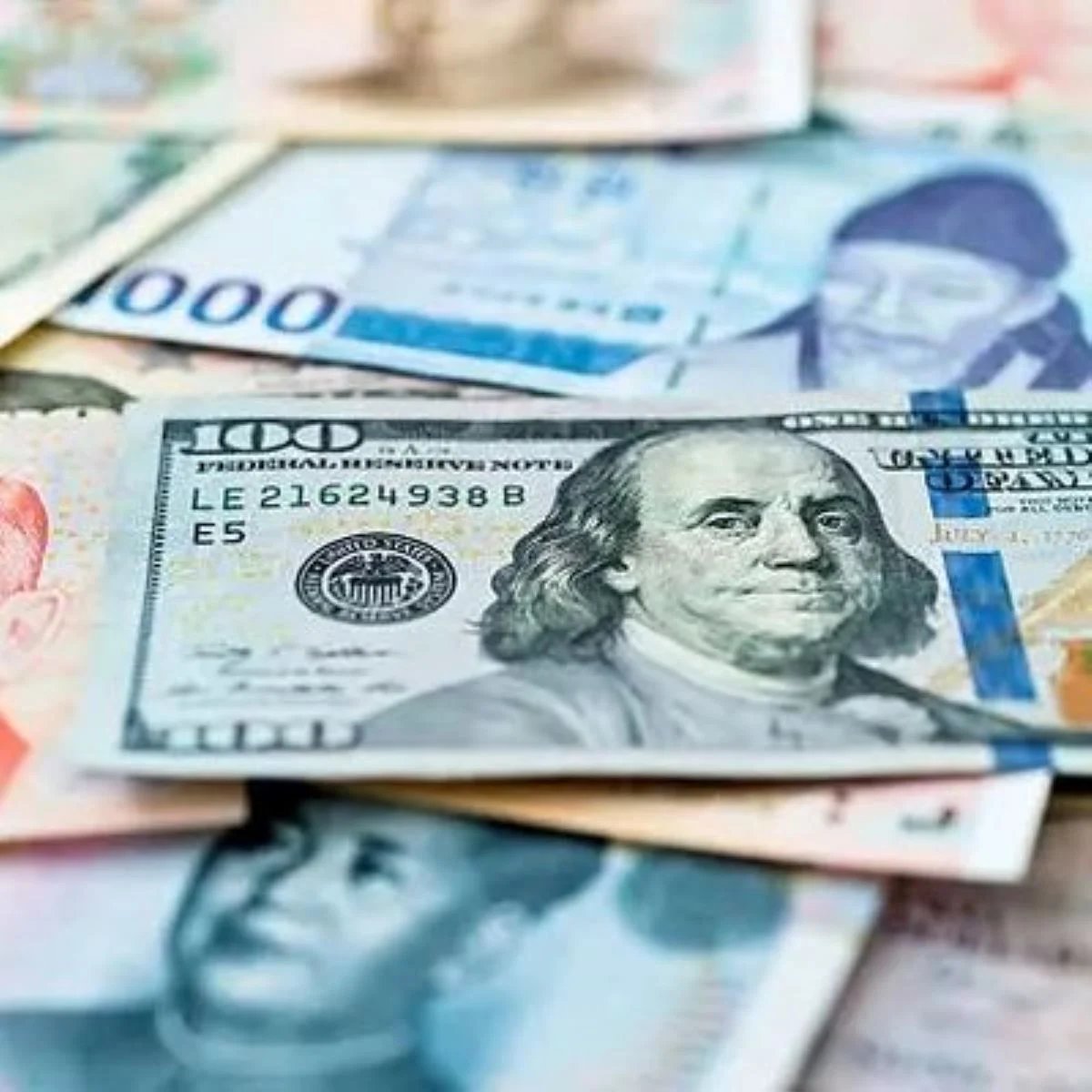
Most countries have a national currency that their central bank issues and manages. But that is not the case everywhere across the globe. A small group of sovereign states has chosen to use another country’s currency as legal tender rather than maintain a separate national currency.
Meanwhile, the reasons vary. Some turned to foreign currencies after severe economic crises, while others adopted them because of long-standing political, financial, or geographic ties.
For instance, for tiny island nations, to use an established currency can be more practical than maintaining an independent monetary system.
Therefore, the International Monetary Fund (IMF) classifies 15 economies under “no separate legal tender,” including countries that use the US dollar, euro, or another foreign currency.
In this article, Tribune Online highlights ten countries that do not have their own currency.
El Salvador — US dollar
El Salvador is one of the world’s most prominent examples of dollarization. It adopted the US dollar as legal tender in 2001, replacing the colón after years of economic difficulties.
Although the decision was aimed at improving monetary stability and reducing exchange-rate risks. However, the arrangement also means the country cannot independently adjust its currency or set monetary policy in response to domestic economic conditions.
Ecuador — US dollar
Ecuador abandoned its sucre in 2000 after a major financial and economic crisis and adopted the US dollar as legal tender. The move represented a dramatic shift in the country’s monetary system.
Dollarization removed the risk of a sudden collapse in the domestic currency and helped stabilize prices over time. The trade-off is that Ecuador has no independent currency with which to respond to economic shocks.
Panama — US dollar
Panama has one of the world’s longest-standing dollar-based monetary systems. The US dollar is legal tender, while the country also has the balboa, which is used mainly in coin form.
This makes Panama a slightly unusual case, being classified by the IMF as having no separate legal tender, even though Balboa coins remain part of its monetary system. The US dollar notes dominate everyday cash transactions.
ALSO READ: 5 strongest African currencies as of January 2026
Timor-Leste — US dollar
Timor-Leste uses the US dollar as its official currency rather than operating a separate national currency. The country adopted dollarization after independence as part of its effort to establish a stable monetary and financial system.
The country also issues centavo coins, but these operate alongside the US dollar rather than constituting an independent currency. The arrangement gives Timor-Leste access to a widely recognised currency while limiting its control over monetary policy.
Marshall Islands — US dollar
The Marshall Islands also uses the US dollar as its official currency. The Pacific island country retained the currency after independence and continues to maintain close economic and institutional ties with the United States.
The IMF identifies the Marshall Islands, Micronesia and Palau as Pacific island economies that continued using the US dollar after becoming independent. For these small economies, using an established currency can simplify international payments and reduce the costs of operating a separate monetary system.
Federated States of Micronesia — US dollar
The Federated States of Micronesia also uses the US dollar as its official currency. Like the Marshall Islands, it maintained the dollar after independence instead of introducing a separate national currency.
The arrangement removes the need to manage an independent exchange rate. However, it also means Micronesia has little room to conduct monetary policy independently because the currency is issued by the United States.
Palau — US dollar
Palau is another Pacific island country that uses the US dollar. The country became independent in 1994 but retained the dollar through its close relationship with the United States.
According to the IMF, Palau, the Marshall Islands and Micronesia all use the US dollar as their official currency. For small economies with strong external links, this can provide monetary continuity and make international transactions more straightforward.
Montenegro — Euro
Montenegro does not issue a separate national currency and uses the euro instead. It began using the euro after previously relying on the German mark and continued with the currency after becoming independent.
Montenegro is not a member of the European Union or the euro area. The European Central Bank notes that Montenegro uses the euro without a formal monetary agreement with the EU.
The benefit is currency stability and easier transactions with European economies. The downside is that Montenegro cannot set an independent monetary policy or control the euro’s interest-rate environment.
Kosovo — Euro
Kosovo is another European country without a separate national currency. It uses the euro and, like Montenegro, does so without a formal monetary agreement with the European Union.
The European Central Bank says both Kosovo and Montenegro have used the euro since 2002 and do not issue a domestic currency. The decision has helped provide monetary stability, although Kosovo has no direct control over euro-area monetary policy.
Liechtenstein — Swiss franc
Liechtenstein takes a different route from the other countries on this list. Instead of the dollar or euro, it uses the Swiss franc as its official currency.
The tiny European state has exceptionally close economic ties with neighboring Switzerland, making the Swiss franc a practical choice. Its monetary arrangement allows Liechtenstein to benefit from an established and stable currency without maintaining a completely separate national monetary system.
Why give up their own currencies?
Giving up a national currency really looks unusual, but the decision often has a clear economic rationale. Because, a country facing severe inflation or currency instability may adopt a stronger foreign currency to restore confidence and reduce exchange-rate uncertainty.
For very small economies, maintaining a central bank, issuing banknotes and coins, managing foreign reserves and operating an independent monetary policy can be expensive relative to the size of the economy.
The IMF described a system with no separate legal tender as one in which another country’s currency is used as legal tender or countries share a common legal tender through a monetary union. Such arrangements involve giving up independent control of monetary policy.
That trade-off is at the heart of the decision. Countries may gain greater currency stability, simpler international transactions and lower exchange-rate risk, but they lose the ability to devalue their currency, or independently adjust monetary policy during economic downturns.
WATCH TOP VIDEOS FROM NIGERIAN TRIBUNE TV