
Deliberation forum expected to deliver final recommendation this month
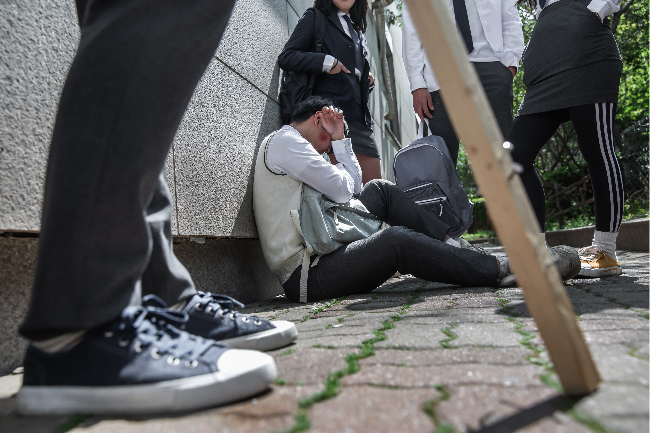
South Korea is once again debating whether or not to change the disputed minimum age of criminal responsibility, which has been left unchanged at 14 for over 70 years.
A deliberation forum entered its second day on Sunday, gathering opinions from residents on whether the current age below which juvenile offenders are exempt from criminal punishment should be lowered. Children aged 10-13 are legally called criminal minors and are not subject to criminal penalties, but are placed under protective measures in accordance with the Juvenile Act.
According to the Ministry of Gender Equality and Family, the forum held at Sejong University in Seoul brought together around 100 participants from the Seoul metropolitan area, following a similar session held a day earlier in Osong, North Chungcheong Province.
The discussions are part of a broader social dialogue aimed at collecting public input before the government makes a final decision.
System unchanged for seven decades
The current legal age thresholds were established when South Korea’s Criminal Act was first enacted in 1953.
Calls for reform have resurfaced in recent years, fueled by public concern over increasing youth crime cases. The number of criminal minors caught breaking the law nearly doubled from 11,677 in 2021 to 21,095 last year, according to the National Police Agency.
President Lee Jae Myung in February ordered the government to gather public opinion and reach a conclusion within two months.
In response, the ministry formed a consultative body involving government agencies, experts and residents. A total of about 200 participants, including adults and youth both in and outside formal education systems, were selected to take part in the deliberations.
The forum is structured around expert presentations, debates and policy discussions. Participants review predistributed materials before engaging in group discussions.
“This is not a simple binary issue of whether to strengthen punishment,” said Gender Equality and Family Minister Won Min-kyong, who co-chairs the consultative body.
“It is a complex and important task that concerns how we design the future of our children and the safety net of our society.”

The debate traces back to a 2017 case in Busan, where teenage girls brutally assaulted a middle school student, drawing national outrage after images of the incident spread on social media.
Since then, successive administrations have floated proposals to lower the age threshold. In 2022, the Justice Ministry proposed revising the law to reduce the age limit, but related bills were scrapped after failing to pass the National Assembly before the end of its term.
The consultative body is expected to present its final recommendation later this month, after which the Cabinet will make the ultimate decision.
Public opinion remains divided.
Supporters of lowering the age argue that 13-year-olds are sufficiently mature to bear criminal responsibility, especially compared to the early 1950s when the law was first established.
They also note a rise in youth crime: The number of juvenile offenders increased by around 80 percent between 2021 and 2025. Serious offenses, including sex crimes, have also risen over the same period.
Opponents counter that children in this age group lack the cognitive and emotional maturity to fully control their actions. Experts note that the brain’s prefrontal cortex —responsible for judgment and impulse control — is still developing in early adolescence.
They also argue that the perceived rise in youth crime may be overstated. Data shows that the number of cases dismissed without formal proceedings has increased significantly, suggesting that many incidents are relatively minor.
Internationally, the minimum age of criminal responsibility varies widely, typically ranging from 10 to 16.
Japan maintains the age at 14, emphasizing protective and welfare-based measures. The United Kingdom sets it at 10 but often uses diversion programs to avoid formal prosecution. Germany sets the age at 14 but applies criminal responsibility only when the juvenile demonstrates sufficient understanding and control.
Experts say the ongoing discussions should divert from whether to punish young offenders more harshly to how to build a more effective system overall.
jychoi@heraldcorp.com