Monday, June 22, 2026
    The GeoStrategic Consensus
    No Result
    View All Result
    • Login
    • HOME
    • AMERICAS
      • Argentina
      • Brazil
      • Canada
      • Chile
      • Colombia
      • Costa Rica
      • Cuba
      • Dominican Republic
      • Ecuador
      • El Salvador
      • Greenland
      • Guatemala
      • Honduras
      • Mexico
      • Nicaragua
      • Panama
      • Paraguay
      • Peru
      • United States
      • Uruguay
      • Venezuela
    • ASIA-PACIFIC
      • Australia
      • Brunei Darussalam
      • Cambodia
      • China
      • Federated States of Micronesia
      • Fiji
      • Indonesia
      • Japan
      • Kiribati
      • Laos
      • Malaysia
      • Marshall Islands
      • Mongolia
      • Myanmar
      • Nauru
      • New Zealand
      • North Korea
      • Palau
      • Papua New Guinea
      • Philippines
      • Samoa
      • Singapore
      • Solomon Islands
      • South Korea
      • Taiwan
      • Thailand
      • Timor-Leste
      • Tonga
      • Tuvalu
      • Vanuatu
      • Vietnam
    • CARICOM
      • CARICOM – Non-English
        • Haiti
        • Suriname
      • CARICOM Associates
        • Anguilla
        • Bermuda
        • British-Virgin-Islands
        • Cayman-Islands
        • Curacao
        • Turks-and-Caicos
      • CARICOM English
        • Antigua and Barbuda
        • Barbados
        • Belize
        • Dominica
        • Grenada
        • Guyana
        • Jamaica
        • Montserrat
        • Saint Kitts and Nevis
        • Saint Lucia
        • Saint Vincent and the Grenadines
        • The Bahamas
        • Trinidad and Tobago
    • EURASIA
      • Armenia
      • Azerbaijan
      • Balarus
      • Georgia
      • Kazakhstan
      • Kyrgyzstan
      • Moldova
      • Russia
      • Tajikistan
      • Turkmenistan
      • Ukraine
      • Uzbekistan
    • EUROPE
      • Albania
      • Andorra
      • Austria
      • Bosnia and Herzegovina
      • Bulgaria
      • Croatia
      • Cyprus
      • Czech Republic
      • Denmark
      • Estonia
      • Finland
      • France
      • Germany
      • Greece
      • Holy See
      • Hungary
      • Iceland
      • Ireland
      • Italy
      • Kosovo
      • Latvia
      • Liechtenstein
      • Lithuania
      • Luxembourg
      • Malta
      • Monaco
      • Montenegro
      • Netherlands
      • North Macedonia
      • Norway
      • Poland
      • Portugal
      • Romania
      • San Marino
      • Serbia
      • Slovakia
      • Slovenia
      • Spain
      • Sweden
      • Switzerland
      • United Kingdom
    • MIDDLE EAST AND NORTH AFRICA
      • Algeria
      • Bahrain
      • Egypt
      • Iran
      • Iraq
      • Israel
      • Jordan
      • Kuwait
      • Lebanon
      • Lybia
      • Morocco
      • Oman
      • Palestinian Territories
      • Qatar
      • Saudi Arabia
      • Syria
      • Tunisia
      • Turkey
      • United Arab Emirates
      • Western Sahara
      • Yemen
    • SOUTH ASIA
      • Afghanistan
      • Bangladesh
      • Bhutan
      • India
      • Maldives
      • Nepal
      • Pakistan
      • Sri Lanka
    • SUB-SAHARAN AFRICA
      • Angola
      • Benin
      • Botswana
      • Burkina Faso
      • Burundi
      • Cabo Verde
      • Cameroon
      • Central African Republic
      • Chad
      • Comoros
      • Cote d’Ivoire
      • Democratic Republic of the Congo
      • Djibouti
      • Equatorial Guinea
      • Eritrea
      • Eswatini
      • Ethiopia
      • Gabon
      • Gambia
      • Ghana
      • Guinea
      • Guinea Bissau
      • Kenya
      • Lesotho
      • Liberia
      • Madagascar
      • Malawi
      • Mali
      • Mauritania
      • Mauritius
      • Mozambique
      • Namibia
      • Niger
      • Nigeria
      • Republic of the Congo
      • Rwanda
      • Sao Tome and Principe
      • Senegal
      • Seychelles
      • Sierra Leone
      • Somalia
      • South Africa
      • South Sudan
      • Sudan
      • Tanzania
      • Togo
      • Uganda
      • Zambia
      • Zimbabwe
    • HOME
    • AMERICAS
      • Argentina
      • Brazil
      • Canada
      • Chile
      • Colombia
      • Costa Rica
      • Cuba
      • Dominican Republic
      • Ecuador
      • El Salvador
      • Greenland
      • Guatemala
      • Honduras
      • Mexico
      • Nicaragua
      • Panama
      • Paraguay
      • Peru
      • United States
      • Uruguay
      • Venezuela
    • ASIA-PACIFIC
      • Australia
      • Brunei Darussalam
      • Cambodia
      • China
      • Federated States of Micronesia
      • Fiji
      • Indonesia
      • Japan
      • Kiribati
      • Laos
      • Malaysia
      • Marshall Islands
      • Mongolia
      • Myanmar
      • Nauru
      • New Zealand
      • North Korea
      • Palau
      • Papua New Guinea
      • Philippines
      • Samoa
      • Singapore
      • Solomon Islands
      • South Korea
      • Taiwan
      • Thailand
      • Timor-Leste
      • Tonga
      • Tuvalu
      • Vanuatu
      • Vietnam
    • CARICOM
      • CARICOM – Non-English
        • Haiti
        • Suriname
      • CARICOM Associates
        • Anguilla
        • Bermuda
        • British-Virgin-Islands
        • Cayman-Islands
        • Curacao
        • Turks-and-Caicos
      • CARICOM English
        • Antigua and Barbuda
        • Barbados
        • Belize
        • Dominica
        • Grenada
        • Guyana
        • Jamaica
        • Montserrat
        • Saint Kitts and Nevis
        • Saint Lucia
        • Saint Vincent and the Grenadines
        • The Bahamas
        • Trinidad and Tobago
    • EURASIA
      • Armenia
      • Azerbaijan
      • Balarus
      • Georgia
      • Kazakhstan
      • Kyrgyzstan
      • Moldova
      • Russia
      • Tajikistan
      • Turkmenistan
      • Ukraine
      • Uzbekistan
    • EUROPE
      • Albania
      • Andorra
      • Austria
      • Bosnia and Herzegovina
      • Bulgaria
      • Croatia
      • Cyprus
      • Czech Republic
      • Denmark
      • Estonia
      • Finland
      • France
      • Germany
      • Greece
      • Holy See
      • Hungary
      • Iceland
      • Ireland
      • Italy
      • Kosovo
      • Latvia
      • Liechtenstein
      • Lithuania
      • Luxembourg
      • Malta
      • Monaco
      • Montenegro
      • Netherlands
      • North Macedonia
      • Norway
      • Poland
      • Portugal
      • Romania
      • San Marino
      • Serbia
      • Slovakia
      • Slovenia
      • Spain
      • Sweden
      • Switzerland
      • United Kingdom
    • MIDDLE EAST AND NORTH AFRICA
      • Algeria
      • Bahrain
      • Egypt
      • Iran
      • Iraq
      • Israel
      • Jordan
      • Kuwait
      • Lebanon
      • Lybia
      • Morocco
      • Oman
      • Palestinian Territories
      • Qatar
      • Saudi Arabia
      • Syria
      • Tunisia
      • Turkey
      • United Arab Emirates
      • Western Sahara
      • Yemen
    • SOUTH ASIA
      • Afghanistan
      • Bangladesh
      • Bhutan
      • India
      • Maldives
      • Nepal
      • Pakistan
      • Sri Lanka
    • SUB-SAHARAN AFRICA
      • Angola
      • Benin
      • Botswana
      • Burkina Faso
      • Burundi
      • Cabo Verde
      • Cameroon
      • Central African Republic
      • Chad
      • Comoros
      • Cote d’Ivoire
      • Democratic Republic of the Congo
      • Djibouti
      • Equatorial Guinea
      • Eritrea
      • Eswatini
      • Ethiopia
      • Gabon
      • Gambia
      • Ghana
      • Guinea
      • Guinea Bissau
      • Kenya
      • Lesotho
      • Liberia
      • Madagascar
      • Malawi
      • Mali
      • Mauritania
      • Mauritius
      • Mozambique
      • Namibia
      • Niger
      • Nigeria
      • Republic of the Congo
      • Rwanda
      • Sao Tome and Principe
      • Senegal
      • Seychelles
      • Sierra Leone
      • Somalia
      • South Africa
      • South Sudan
      • Sudan
      • Tanzania
      • Togo
      • Uganda
      • Zambia
      • Zimbabwe
    No Result
    View All Result
    Agentially
    No Result
    View All Result
    Home EUROPE Lithuania

    We’re buying more, wearing less: What’s really happening to our clothes and why it’s worrying | Life

    The Analyst by The Analyst
    June 22, 2026
    in Lithuania
    We’re buying more, wearing less: What’s really happening to our clothes and why it’s worrying | Life


    “There is a term in the fashion industry called ‘planned wear and tear.’ Manufacturers predict the quality of the product in advance so that after a relatively short time it wears out or tears, and a person comes to buy a new one. Most of the time, it’s just a matter of a few months,” she says.

    READ ALSO

    Lrytas – knowledge that shines. We’ve upgraded to shine even brighter

    Parcels from outside the EU to cost more from July

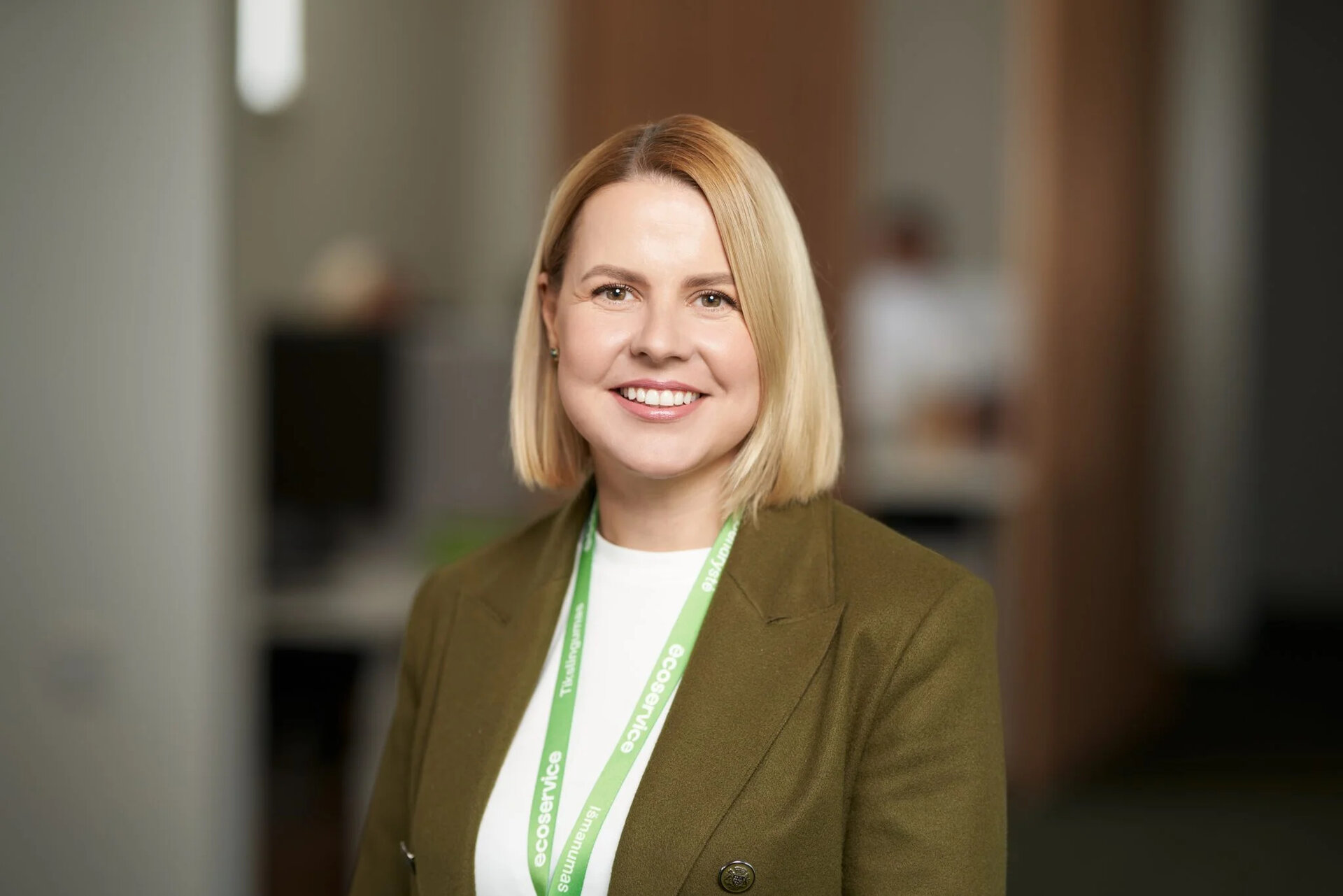
    This trend is confirmed by Rasa Guobė, a representative of the environmental management company “Ecoservice”, according to which, in the stream of textiles collected and sorted by them, an increasing part is made up of poor quality clothes that are no longer suitable for reuse or recycling.

    “Textile waste is increasing rapidly, and recycling technologies are still being developed and improved. Therefore, the best solution today is to give clothes a second life,” emphasizes R. Guobė and adds that this requires higher quality clothes.
    Personal arch. photo/Rasa Guobė

    Personal arch. photo/Rasa Guobė

    According to A. Svarauskaitė, the pursuit of this goal is hindered by the myth that is still prevalent in society that a more expensive or well-known brand necessarily guarantees good quality. However, when looking for it, it turns out that it is worth paying attention elsewhere than the logo.

    Cheaper is actually more expensive

    According to sustainable fashion expert A. Svarauskaitė, one of the biggest problems today is impulsive buying of clothes and less and less attention to their quality.

    “People often buy what is fashionable at the time or looks nice in a photo. However, they don’t think about whether they will really wear that garment for more than one season. Cowboy style is especially fashionable this year – hats, clothes with fringes, cowboy boots. Before buying, it is worth asking yourself whether you will wear all this next year as well,” says A. Svarauskaitė.

    According to her, a stylish wardrobe does not require a large amount of clothes. It is much more important that they are easily combined with each other.

    “15-20 well-coordinated clothes for a season are absolutely enough. By changing shoes, handbags or jewelry, you can create many different combinations,” explains the expert.

    Before buying new clothes, she also advises to remember that cheap clothing often becomes a more expensive choice in the long run.

    “There is such a term “cost per wear” – the price of one wear. If you buy a cheap garment that becomes unsuitable after a few washes, it costs more than one quality garment that you will wear for a year,” she explains.

    Personal arch. photo/Aistė Svarauskaitė

    Personal arch. photo/Aistė Svarauskaitė

    We buy five times more clothes

    The boom in fast and ultra-fast fashion is changing not only people’s shopping habits, but also the amount of textile waste. It is estimated that in the last 20 years, Europeans started to buy 3-5 times more clothes than before, and in the European Union (EU) about 12.6 million are generated annually. tons of textile waste.

    Statistics show that each European buys on average more than 10 kg of new clothes per year. Although a wardrobe may contain more than 100 items of clothing, only 20-30% are worn regularly. their

    Waste managers can also see the rapidly growing consumption levels. “Ecoservice” collected about 7 thousand last year alone. tons of textile waste – almost a fifth more than a year earlier.

    “Unfortunately, the number of ultra-fast fashion clothes that are no longer suitable for reuse increases every year in textile containers. The logic is simple – when you buy a high-quality garment, not only will you wear it for longer, but when you throw it away, it will most likely be suitable for wearing and will still serve someone else,” says R. Guobė, business director of the environmental management company Textile Sorting.

    According to her, part of the population still thinks that textiles thrown into the container will automatically be recycled or reused, but the reality is much more complicated.

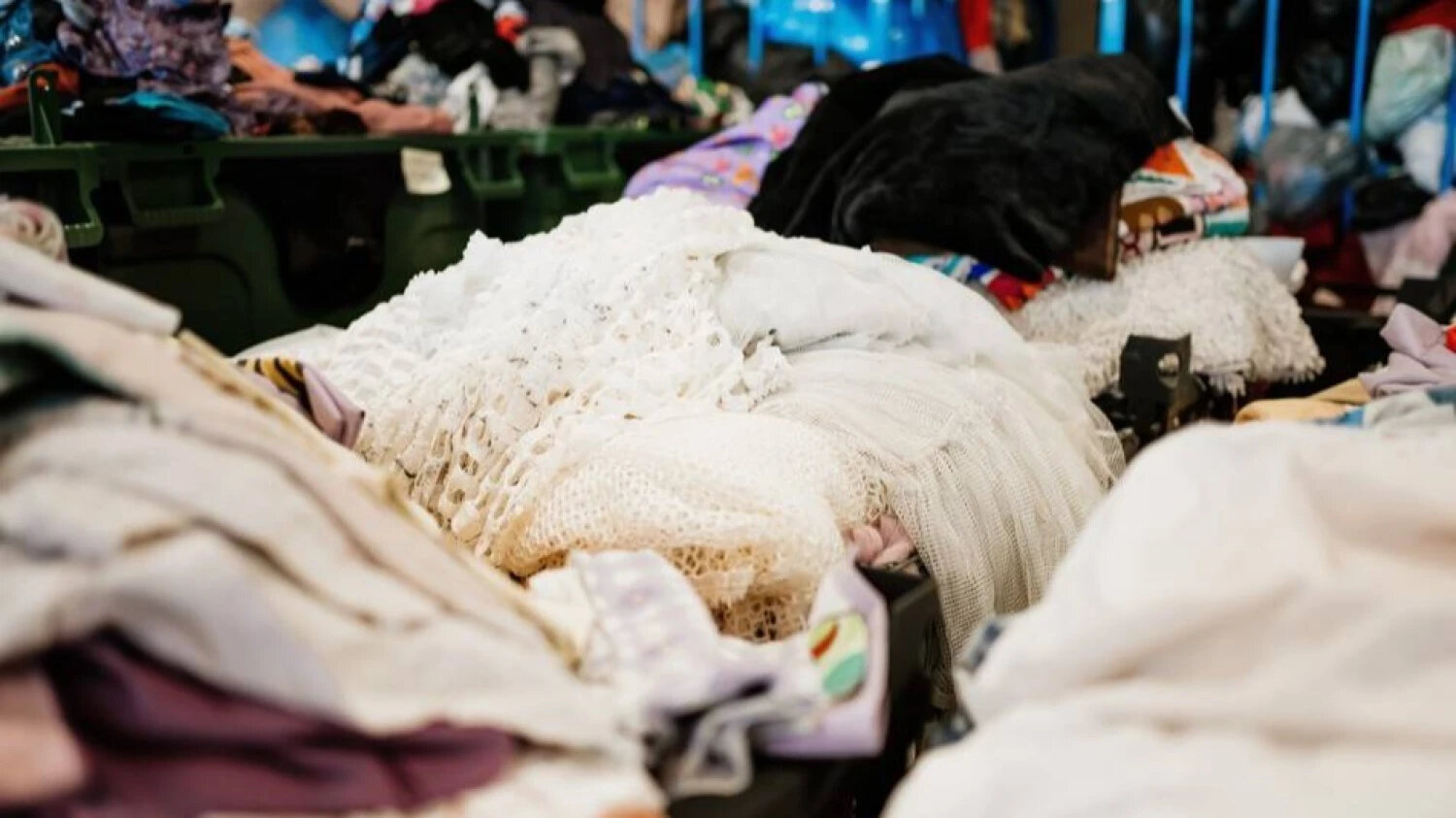
    “While textile recycling options are limited in the world, the first goal of sorting is to separate what can still be reused. Suitable clothes, footwear or home textiles are sorted according to quality and reusability. After sorting, we currently direct about 75 percent of the collected textiles to be reused,” she explains.

    Part of the textiles, which are no longer suitable for reuse, but have a suitable composition and quality, are used to produce lower-value products, such as industrial cloths. Such textiles make up about 5 percent. of the total flow.

    Damaged, wet, moldy or otherwise unusable textiles become waste. Approximately one fifth of the total textile flow collected is used for energy extraction.

    “The fate of collected textiles depends greatly on how they are disposed of. The more residents bring their clothes and other textile products to special containers neatly packed in bags, instead of throwing them away together with municipal waste, the more they can be reused or recycled,” emphasizes R. Guobė.
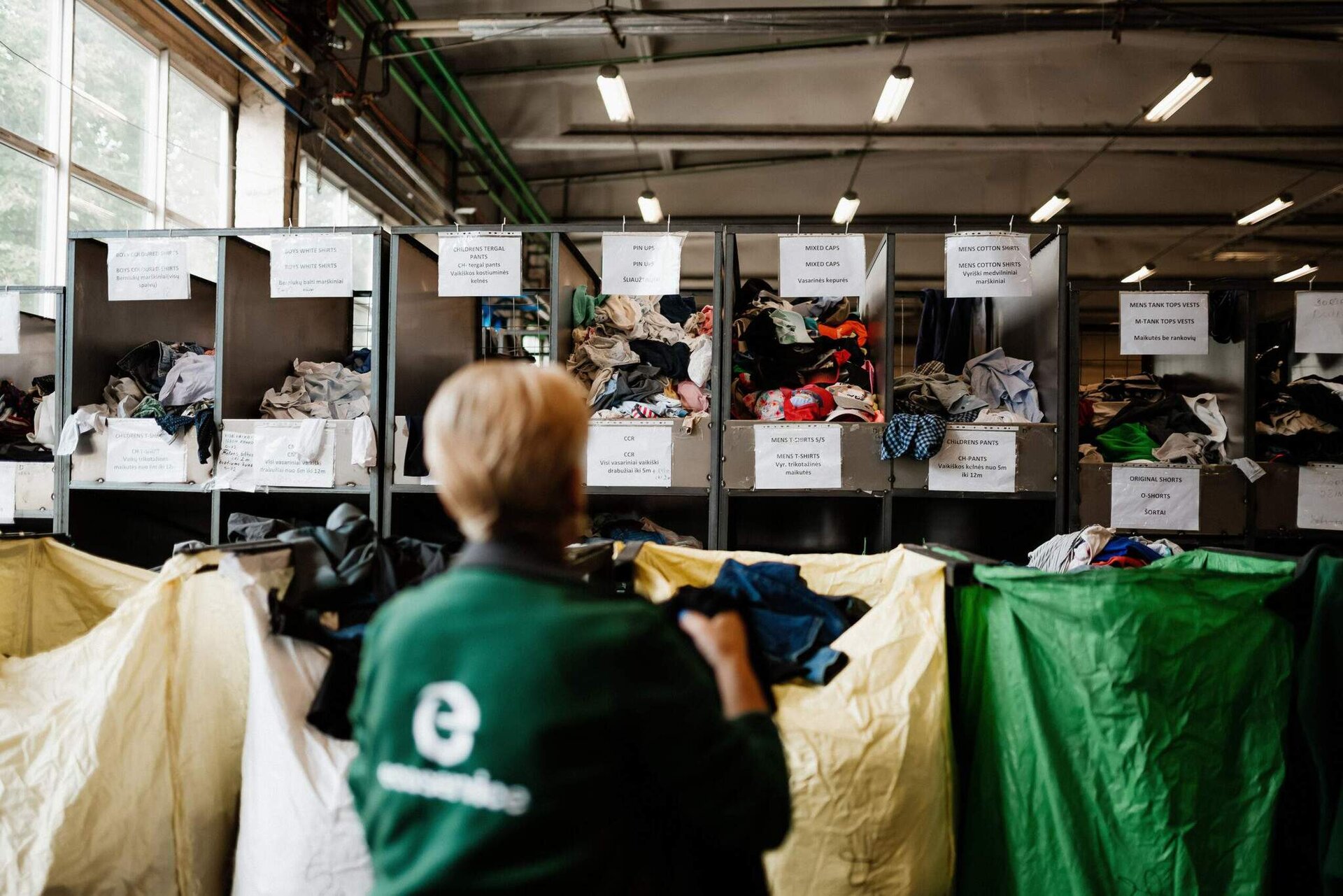
    Ecoservice photo/Ecoservice textile sorting

    Ecoservice photo/Ecoservice textile sorting

    The best bargains are at thrift stores

    A sustainable fashion expert says that quality clothing should last for ten years or more, but these days it is becoming increasingly difficult to find them. Still, she notes, good finds can still be found at thrift stores.

    “In the past, even fast fashion brands sewed higher-quality clothes from better fabrics. That’s why it’s easy to find older collections made from good-quality fabrics in second-hand clothing stores. It’s especially worth looking at second-hand clothing stores in smaller cities, preferably non-chain stores,” advises A. Svarauskaitė.

    However, she notices that people are often tempted by extremely low prices and buy clothes for one euro, which they never wear.

    “When shopping at a thrift store, I always follow one simple rule – I ask myself, would I buy this garment at full price? If the answer is no, I probably don’t need it from a thrift store,” says the expert.
    Ecoservice photo/Textile

    Ecoservice photo/Textile

    What fabrics to choose for summer?

    A. Svarauskaitė says that when choosing clothes for the beginning of summer, just like clothes for other seasons, the most important thing is not to pay attention to the brand, but to the composition of the fabric and the quality of the garment.

    For the warm season, she recommends choosing natural and “breathable” fabrics – linen, cotton, silk, high-quality viscose or thin merino wool.

    “For me, linen is irreplaceable in the summer – this fabric is breathable, has antibacterial properties and is pleasant to the body. The biggest mistake is when people choose nice-looking synthetic clothes, but after putting them on for the first time, they don’t want to wear them anymore, because they are hot and make you sweat a lot,” says A. Svarauskaitė.

    According to her, natural silk is also suitable for summer, but the specialist warns not to confuse it with so-called artificial silk, which is usually synthetic. A. Svarauskaitė also recommends carefully evaluating viscose, as it is often of lower quality in fast fashion stores.

    According to A. Svarauskaitė, it is important to look not only at the composition of the fabric, but also at the sewing of the garment itself – seams, fabric thickness, fall and general construction. This often gives away how long the garment will last.






    Source link

    Related Posts

    Lrytas – knowledge that shines. We’ve upgraded to shine even brighter
    Lithuania

    Lrytas – knowledge that shines. We’ve upgraded to shine even brighter

    June 22, 2026
    Lithuania

    Parcels from outside the EU to cost more from July

    June 22, 2026
    Family nightmare: the story, which resembles a crime thriller, shocked even those who have seen everything
    Lithuania

    Family nightmare: the story, which resembles a crime thriller, shocked even those who have seen everything

    June 22, 2026
    These lips are turning heads: the new beauty trend that’s taking the internet by storm | Life
    Lithuania

    These lips are turning heads: the new beauty trend that’s taking the internet by storm | Life

    June 22, 2026
    Lithuania

    Lithuanian intelligence warns of nihilistic extremism spreading among minors

    June 22, 2026
    The billionaire received another cash injection and immediately began to continue shopping
    Lithuania

    The billionaire received another cash injection and immediately began to continue shopping

    June 22, 2026
    Next Post
    Lrytas – knowledge that shines. We’ve upgraded to shine even brighter

    Lrytas - knowledge that shines. We've upgraded to shine even brighter

    POPULAR NEWS

    The Minister of Justice reviews the experience of the judicial system and the development of justice in the Sahrawi state

    The Minister of Justice reviews the experience of the judicial system and the development of justice in the Sahrawi state

    June 21, 2026
    Colombia’s electoral body expects to give results in less than an hour

    Colombia’s electoral body expects to give results in less than an hour

    June 21, 2026
    VTU likely to issue notice for another strike

    VTU likely to issue notice for another strike

    June 22, 2026
    Guizhou’s cultural performance deepens ties in Chile

    Guizhou’s cultural performance deepens ties in Chile

    June 22, 2026
    Cultural aspects dominate coverage as sumo enthralls Paris

    Cultural aspects dominate coverage as sumo enthralls Paris

    June 22, 2026

    EDITOR'S PICK

    Australian Labor government covers up cruelty of refugee detention in Nauru

    Australian Labor government covers up cruelty of refugee detention in Nauru

    June 22, 2026
    The President of Poland said that he deprived Zelensky of the Order of the White Eagle due to the “threshold of pain”

    The President of Poland said that he deprived Zelensky of the Order of the White Eagle due to the “threshold of pain”

    June 22, 2026
    Jordan Emerald Secondary School praise Pacific Baptist Mission 

    Jordan Emerald Secondary School praise Pacific Baptist Mission 

    June 21, 2026
    Repression: Cuesta Morúa is beaten and threatened with death by State Security

    Repression: Cuesta Morúa is beaten and threatened with death by State Security

    June 21, 2026

    Recent Posts

    • VTU likely to issue notice for another strike
    • Guizhou’s cultural performance deepens ties in Chile
    • Cultural aspects dominate coverage as sumo enthralls Paris
    • COP17: Exterior Works for 12 Temporary Facilities Complete 7 days

      © 2026 Agentially - Navigating shifting sovereignties and global risk .

      Welcome Back!

      Login to your account below

      Forgotten Password?

      Retrieve your password

      Please enter your username or email address to reset your password.

      Log In
      No Result
      View All Result

        © 2026 Agentially - Navigating shifting sovereignties and global risk .

        This website uses cookies. By continuing to use this website you are giving consent to cookies being used. Visit our Privacy and Cookie Policy.