The US and Iran have engaged in one of the heaviest firefights since the ceasefire began. There were also missile alarms in Kuwait and Bahrain.

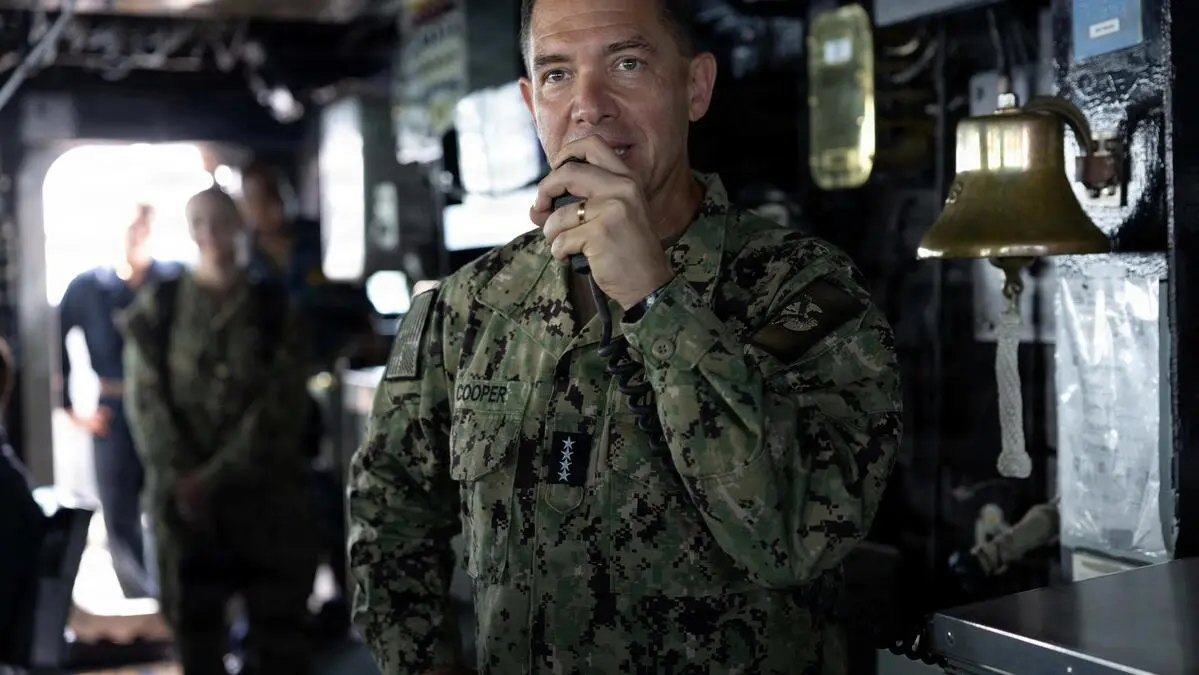
US Navy Admiral Brad Cooper, CENTCOM commander on the USS Tripoli. The picture was taken in May 2026. Reuters / Senior Chief Petty Officer Amanda Dunford
Iran’s Revolutionary Guards fired ballistic missiles and drones at the neighboring Gulf states of Kuwait and Bahrain during the night, and the US military in turn attacked an Iranian military facility on the island of Qeshm in the Strait of Hormuz. According to Tehran, the target of the Iranian attacks were US military bases in the Persian Gulf states.
These were not the first mutual attacks since the ceasefire came into force on April 8, but with each new attack the fear of a renewed escalation of the war increases. The latest exchange of blows came amid stalled negotiations over a framework agreement to end the war and reopen the Strait of Hormuz to shipping.
The US military says it successfully repelled Iran’s attacks. The regional command responsible for the Middle East said several ballistic missiles and drones had been intercepted (Centcom) on X with. In response, “self-defense strikes” were also carried out on Qeshm. Shortly afterwards, the US military said it repelled another “wave of Iranian drones” that targeted US military facilities in Kuwait. The US military’s information about the night’s events could initially be independently verified.
The reason for the latest mutual shelling appeared to be an operation by the US military on Tuesday. According to their own statements, the armed forces attacked an unloaded oil tanker off the island of Kharg, which is important for Iran’s oil exports. He is said to have tried to call at an Iranian port despite the US blockade. It was said that the ship ignored warnings and was ultimately put out of action by a missile.
An Iranian military spokesman confirmed on Platform We were warned that “any aggression would result in a different and more decisive reaction, and we implemented this. These reactions should be a lesson,” it said. Any threat to the security of the Strait of Hormuz would “cost the US military dearly,” he warned.
Shortly after the start of the war, Iran’s armed forces took control of the strait, which is of great importance to the global economy as an export route for fertilizer, oil and liquid gas. The USA, for its part, has imposed a naval blockade to prevent Iran from exporting oil. The USA wants to achieve an unrestricted reopening of the Strait of Hormuz.
Kuwait and the island state of Bahrain reported attacks with missiles and drones during the night. Several people were injured at the airport in Kuwait’s capital, a defense ministry spokesman said. The Civil Aviation Authority said all flights scheduled for today had been suspended or diverted to other airports. Iranian missiles and drones hit the airport building and damaged several facilities, the state agency said Kuna according to. An emergency plan was activated at the airport.
According to the US, Iran’s recent attacks missed their targets, either because missiles malfunctioned or because they were intercepted by air defenses. The US military also said three drones fired by Iran at civilian ships had been shot down. The ships were legally in the waters of the region.
Claims by the Iranian Revolutionary Guard, the headquarters in Bahrain US Navy Centcom denied having hit a US air base in the region with missiles and drones. This is wrong. All Iranian attacks on US forces have failed. It said it remains ready to defend itself against “unprovoked Iranian aggression.”
US President Donald Trump Despite statements to the contrary from Iran, confirmed on Tuesday that negotiations between Washington and Tehran on the Iran war are ongoing. “Fake news reports that the Islamic Republic of Iran and the US stopped talks a few days ago are false and misleading,” he wrote on his Truth Social platform. The conversations continued uninterrupted. “You never know where they will lead,” Trump continued. But he told Iran it was time to “make a deal one way or another.”
Before Trump’s post, the Iranian news agency Fars, which is close to the Revolutionary Guards, reported that there had been no talks between Tehran and Washington for several days. The Iranian agency had already announced on Monday Tasnim similarly reported and the end of indirect negotiations with Israel’s ongoing war against the pro-Iranian Hezbollah-Militia founded in Lebanon.
On Monday, Trump announced an end to the fighting in Lebanon. Political talks between representatives of Israel and Lebanon are scheduled to continue today in the US capital Washington. Lebanon’s government is not itself a party to the conflict. However, Hezbollah rejects negotiations with Israel. (APA/dpa)