Lead Editor – Politics
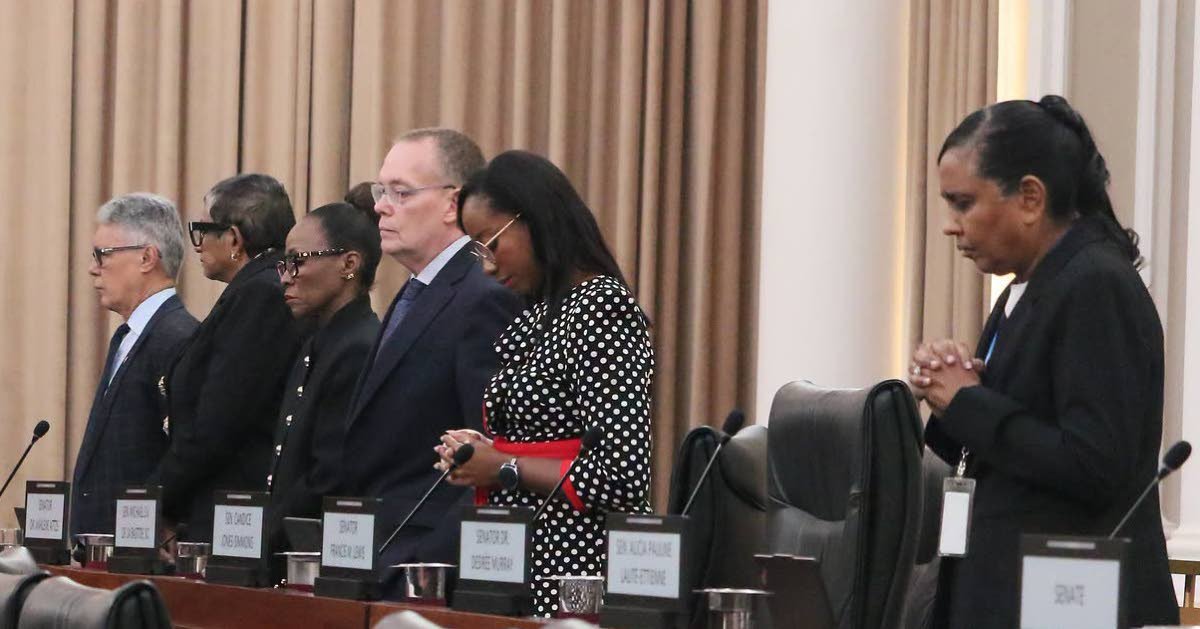
Independent Senators Anthony Vieira and Dr Marlene Attzs have pushed back against Prime Minister Kamla Persad-Bissessar’s attack on the Independent Bench, defending their constitutional role and warning that inflammatory rhetoric does little to unite an already divided country.
Vieira also described as “deeply regrettable” the Prime Minister’s declaration that her Government would no longer entertain amendments from Independent Senators, arguing that scrutiny, disagreement and amendment are fundamental elements of the parliamentary process.
Attzs questioned the tone of Persad-Bissessar’s comments, particularly as they were made on Republic Day, saying the occasion should have prompted reflection on a Constitution that deliberately established a place for Independent Senators in the legislative process.
Their responses came after Persad-Bissessar described Independent Senators as “satanic,” “demons” and “scumbags” following their unanimous rejection of the Special Operations Bill in the Senate.
Vieira said he had no intention of responding in kind.
“Trinidad and Tobago faces serious challenges, and I do not believe that describing Independent Senators as ‘satanic’ or ‘demons’ contributes anything useful to addressing them,” he told Guardian Media.
He stressed that Independent Senators are neither Government nor Opposition representatives and are constitutionally required to assess legislation on its merits.
“Independent Senators have a constitutional responsibility. We are not appointed to support the Government or the Opposition,” Vieira said.
“We are there to consider legislation independently, exercise our judgment and act in what we believe to be the national interest.”
He said that was the approach he took to the Special Operations Bill. While acknowledging improvements over the Government’s previous Zones of Special Operations legislation, Vieira maintained that several provisions required stronger safeguards.
During the committee stage, he proposed amendments, including defining “special operations” and addressing concerns over the Prime Minister’s role in selecting Heads of Special Operations. Government rejected those proposals.
Vieira said Government was fully entitled to disagree with him and reject his amendments. However, he argued that Persad-Bissessar’s reported declaration that future amendments from Independent Senators would not be entertained was a far more troubling issue.
“What concerns me much more than the personal remarks, however, is the reported statement that the Government will no longer entertain amendments from Independent Senators,” he said.
“If that is indeed the Government’s position, I find it deeply regrettable.”
According to Vieira, Parliament’s purpose is not simply to endorse legislation placed before it by the Executive.
“A strong Government should be sufficiently confident to listen to criticism, consider amendments on their merits, accept good ideas wherever they come from, and reject those with which it disagrees.”
Attzs echoed those concerns, taking issue with the language reportedly used by the Prime Minister.
“If they were indeed made by the Prime Minister, such language does little to reassure the country or advance respectful nation-building discourse,” she said.
She noted the irony of the remarks being made as T&T celebrated 50 years as a Republic and honoured the Constitution that created the Independent Bench.
Attzs recalled a colleague’s contribution during the Senate debate, in which Independent Senators were reminded of their duty to look beyond the political colours of “yellow and red” and instead assess legislation through “the unifying prism of our national colours, red, white and black.”
Vieira also urged political leaders to be mindful of the impact of their words.
“At a time when our country is already deeply divided, I would hope that those entrusted with the highest offices would seek to lower the temperature rather than raise it,” he said.
Despite the controversy, Vieira said he would continue approaching legislation independently, supporting Government measures he considered sound and proposing changes where he believed improvements were necessary.
“If that sometimes means disagreeing with the Government, that is not hostility to the Government,” he said.
“It is the Independent Bench doing its job.”