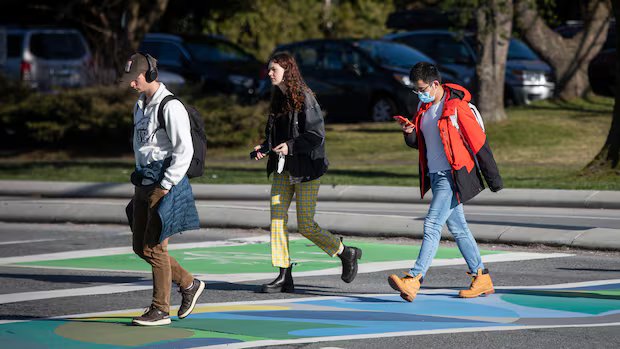
With millions of Canadian kids heading back to school and temperatures set to drop, it’s time to brace for another fall of seasonal illnesses — and medical experts say staying healthy takes more than just a flu shot.
The latest federal surveillance report, which tracks influenza, COVID-19 and respiratory syncytial virus (RSV), shows it’s likely the calm before the storm, with low and stable levels of all three respiratory threats that are set to come roaring back in the months ahead.
“As we transition to colder weather and we’re inside more, that’s when the bugs spread … and that’s when we see our emergency department visits start to go up, and then kids in the hospital more,” said Saskatoon-based pediatrician Dr. Ayisha Kurji, an assistant professor at the University of Saskatchewan.
McMaster University immunologist Matthew Miller says Canadians should already start assessing their options to get seasonal vaccines. For flu specifically, he noted that last year included a “really unusual severe early peak” in influenza circulation.
“We saw really high case counts in … early December, which is about a month in advance of when we normally see flu season peak,” Miller said.
“What that means is that it’s really important to be immunized in a timely manner in the fall to ensure that our immune systems have time to respond to the vaccine and mount that protective immunity.”
It typically takes around two to four weeks for the body to hit a peak immune response to the shot, he said.
And Miller stressed that a fall flu shot — which is recommended for all Canadians aged six months and up — is just one piece of the “suite of vaccines” families should consider.
Measles, for example, has continued circulating, and this fall may see further spread.
“Coming out of the summer months where families have often travelled … puts everybody at increased risk when the school year starts again,” said Miller, “and all these young children, who have been to all kinds of different places, are now in close quarters again in classrooms.”

Measles may start like a bad cold — with symptoms like a high fever and cough — but in rare cases, it turns deadly. For one child, complications emerged about a decade later, robbing her of speech, movement and, eventually, her life.
Flu, COVID, RSV shots available for fall
Canada’s national vaccine advisory body recommends a COVID shot for higher-risk individuals, including older adults 65 and up and anyone who is pregnant or has underlying medical conditions.
“I still recommend the COVID vaccine because it’s still something that’s around, and still sends people into hospital,” said Kurji.
RSV vaccines are also available for older adults and pregnant individuals, to combat what Miller called an “extraordinarily dangerous virus to newborns.”
Real-world research has shown these relatively new shots are making a huge difference in serious RSV-related illness, with one large study showing the vaccine given during pregnancy cut babies’ hospital risk by more than 80 per cent.
“It’s really having a profound impact on reducing rates of infection and particularly severe infection in these age groups — older adults and, in particular, newborns,” Miller said.
Beyond seasonal vaccines, experts stress Canadians need to stay up to date on their routine shots as well, given the resurgence of a range of vaccine-preventable diseases like measles, which can lead to flu-like symptoms and a blotchy rash, or in more serious cases, pneumonia, brain swelling, or even death.
“We have seen, since the pandemic, a decrease in uptake in the basic regular childhood vaccines,” said Dr. Joss Reimer, Canada’s chief public health officer.
“The recent spread of measles really shows us exactly what we need to be worried about,” she added.
“As soon as our numbers dip below a certain level, we do start to see these viruses come back and put children at risk, especially those kids who are either too young or, for some other health reason, can’t get vaccinated.”

A national organization of women physicians is calling on B.C. to adopt a universal infant RSV immunization program ahead of this year’s cold and flu season. Currently, pregnant people can elect to get the maternal RSV vaccine but they must pay out of pocket. The Federation of Medical Women of Canada is calling for a provincial program that would cover the costs for all. We spoke with Dr. Shelley Ross, who co-chairs the RSV task force.
Measles resurgence across Canada, U.S.
Just 85 per cent of two-year-olds in Canada were fully vaccinated against measles, mumps and rubella by the end of 2025, federal data shows — a far cry from the 95 per cent medical experts say is needed population-wide to keep measles at bay.
The same data shows less than 80 per cent of children that age were fully vaccinated with the shot targeting diphtheria, tetanus, and whooping cough.
Middling vaccination rates in recent years have contributed to an explosion of measles, one of the world’s most contagious viruses, across North America.
The U.S. has seen 37 new outbreaks so far in 2026, involving thousands of cases, while Canada lost its official measles elimination status last November after racking up more than 5,000 infections since late 2024, and more than 1,000 new cases just this year.
B.C.’s provincial health officer Dr. Bonnie Henry recently said most of the 30 people hospitalized since the start of that province’s outbreak last year have been unvaccinated children.
“It’s sad to me that’s that where we are,” Kurji said. “Measles is an illness that is highly preventable [through vaccines]… one dose is great, two doses is almost perfect.”
Most modern clinicians haven’t even witnessed a real measles infection in their lifetime, Kurji added, which means cases can be tougher to spot and precautions to prevent onward transmission may not be put in place fast enough.