Munir Ahmed and Eduardo Castillo
Islamabad: The United States and Iran ended a historic round of face-to-face talks on Sunday without reaching an agreement, with the fate of the fragile, two-week ceasefire still unclear.
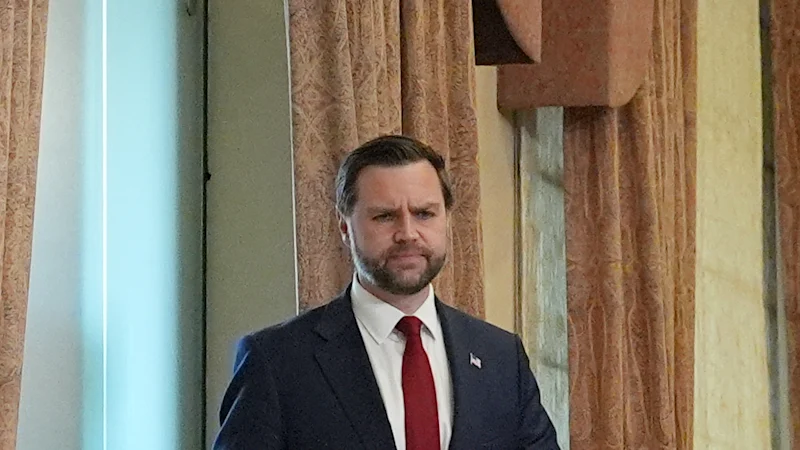
Vice President JD Vance, who led the American delegation during the 21 hours of talks in Pakistan’s capital, Islamabad, said negotiations finished without a deal after the Iranians refused to accept Washington’s terms to refrain from developing nuclear weapons.
There was no immediate comment from the Iranian delegation or the Pakistani mediators.
The discussions began on Saturday, a few days after a fragile ceasefire was announced, as the war that has killed thousands of people and shaken global markets entered its seventh week.
Vance said he had remained in constant communication with President Donald Trump and other leading figures in the administration during the negotiations, including Secretary of State Marco Rubio, Treasury Secretary Scott Bessent and Admiral Brad Cooper, head of the US Central Command.
“The bad news is that we have not reached an agreement and I think that’s bad news for Iran much more than it’s bad news for the United States of America,” Vance told reporters shortly before leaving Islamabad.
“But the simple fact is that we need to see an affirmative commitment that they will not seek a nuclear weapon and they will not seek the tools that would enable them to quickly achieve a nuclear weapon,” he said.
“That is the core goal of the president of the United States. And that’s what we’ve tried to achieve through these negotiations.”
Two Pakistani officials, speaking on condition of anonymity because they were not authorised to brief the press, said a third round of discussions between the delegation heads had finished, and the talks would resume after a break.
But Vance then addressed the press, announced there was no agreement and went to the airport to leave Pakistan.
The BBC reported that Iranian state media said “unreasonable demands” from the US had left the negotiations deadlocked.
“Despite various initiatives from the Iranian delegation, the unreasonable demands of the American side prevented the progress of the negotiations. Thus, the negotiations ended,” Iranian state broadcaster IRIB said in a post on Telegram.
Trump, who has not yet commented on the end of the talks, previously said he would suspend attacks on Iran for two weeks. Vance’s remarks did not indicate what would happen after that period expired, or whether the ceasefire would remain in place.
Pakistan’s Foreign Minister Ishaq Dar called on Iran and the US to maintain their truce, saying it was “imperative that the parties continue to uphold their commitment to the ceasefire”.
Australian Foreign Minister Penny Wong warned that any further escalation in the conflict would create a greater human cost and further damage the global economy.
“The priority now must be to continue the ceasefire and return to negotiations,” Wong said in a statement. “We continue to want to see a swift resolution to this conflict.”
Before the talks concluded, Trump reshared an article on social media suggesting that the US could blockade Iran to pressure the nation to make a deal after talks collapsed.
The story, from conservative news outlet Just the News, framed a naval blockade as “the Trump card the president holds if Iran won’t bend”.
The president was seen attending a UFC fight in Miami, alongside several members of his family and Marco Rubio, while negotiations were under way.
US destroyers move through Hormuz
Meanwhile, the US military said two destroyers had transited the Strait of Hormuz ahead of mine-clearing work, a first since the war began. Iran’s joint military command denied that, however, according to Iranian state media.
“We’re sweeping the strait. Whether we make a deal or not makes no difference to me,” Trump told journalists, describing the talks as “very deep”, while Iranian state TV noted what it called “serious” differences.
The US delegation, led by Vance, and the Iranian team, led by parliamentary speaker Mohammad Bagher Ghalibaf, discussed with Pakistan how to advance the ceasefire already threatened by deep disagreements and Israel’s continued attacks against Iranian-backed Hezbollah in Lebanon.
Iran’s delegation told state television it had presented “red lines” in meetings with Pakistan Prime Minister Shehbaz Sharif, including compensation for damage caused by US-Israeli strikes and releasing Iran’s frozen assets.
Iranian Foreign Minister Abbas Araghchi said Tehran had entered negotiations with “deep distrust” after attacks on Iran during previous talks, and said his country was prepared to retaliate if attacked again.
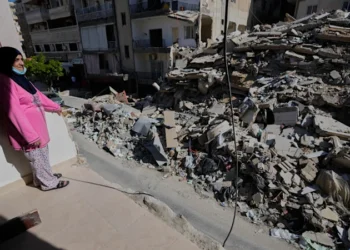
The war has killed at least 3000 people in Iran, 2020 in Lebanon, 23 in Israel and more than a dozen in Gulf Arab states, and caused lasting damage to infrastructure in half a dozen Middle Eastern countries. Iran’s grip on the Strait of Hormuz has largely cut off the Persian Gulf and its oil and gas exports from the global economy, sending energy prices soaring.
The closure of the Strait has proved to be Iran’s greatest strategic advantage. About a fifth of the world’s traded oil had typically passed through on more than 100 ships a day. Only 12 have been recorded transiting since the ceasefire.
Negotiations between Israel and Lebanon are expected to begin on Tuesday in Washington after Israel’s surprise announcement authorising talks despite the countries’ lack of official relations.
AP, Reuters
Get a note directly from our foreign correspondents on what’s making headlines around the world. Sign up for our weekly What in the World newsletter.