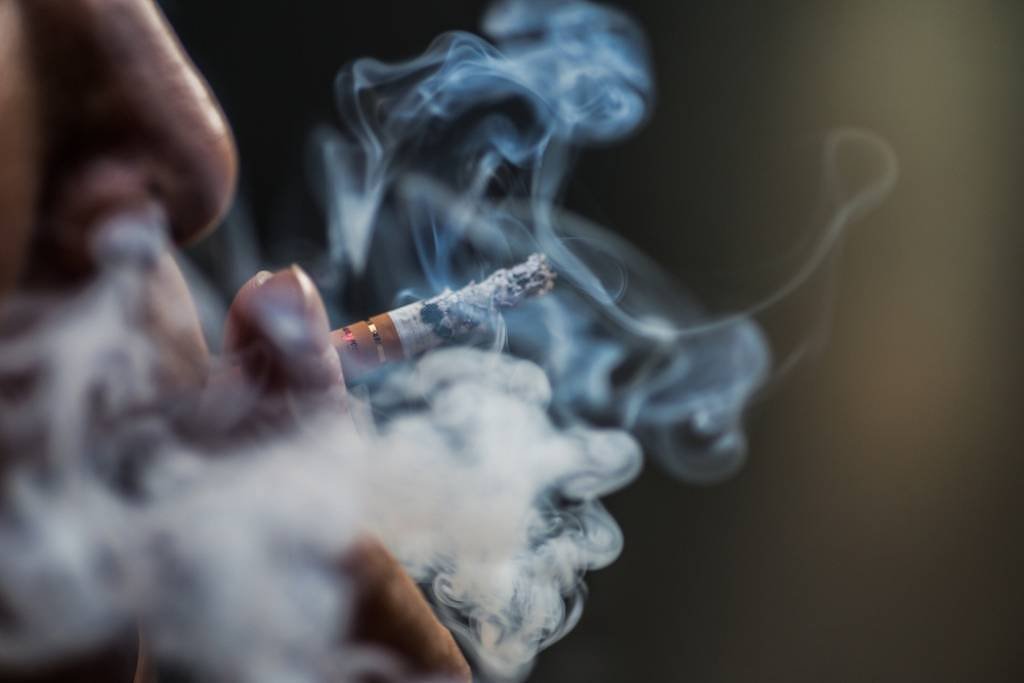
British parliamentarians approved a bill banning the purchase of cigarettes and vapes by people born on or after January 1, 2009. The measure creates a permanent restriction and prevents those who are currently 17 years old or younger from purchasing these products throughout their lives, even after reaching the age of majority.
Enforcement of the Tobacco and Vapes Law will be the responsibility of local authorities, who may issue fines when they identify infractions. The rules cover cases such as the sale of tobacco to those born on or after January 1, 2009, the sale of vapes or nicotine to minors under the age of 18, the purchase of these products on behalf of third parties, the irregular display of products or prices and irregularities in retail licensing.
The expected fine is 200 pounds (around R$1,340). For specific infractions related to retail licenses, the value of the fine follows a higher range, which can reach around 2,500 pounds (R$16,750). The resources collected from the penalties will be allocated to actions to monitor the tobacco and vapes law itself or to activities related to health public.
Health Minister Wes Streeting called the law’s passage a “historic moment for the nation’s health” that will lead to “the first smoke-free generation with lifetime protection against addiction and harm.”
Once it receives royal sanction and becomes law, the regulation will give the government powers to extend the ban on indoor spaces to outdoor areas, such as playgrounds and places close to schools and hospitals. It will also give authorities new powers to restrict e-cigarette flavors and packaging (vapes), as well as prohibiting its consumption in places where smoking is already prohibited.
The bill is part of a series of initiatives to strengthen preventative health measures and alleviate long-term pressure on the National Health Service (NHS). United Kingdomfinanced by the State.
Node United Kingdomsmoking causes around 75,000 deaths a year and is responsible for approximately a quarter of all deaths, according to the NHS.
The UK’s strategy of banning the sale of cigarettes to people born after a certain date is part of a wider set of policies considered promising for reducing smoking in the long term, especially by preventing initiation among young people. The assessment is by epidemiologist Vera Luiza da Costa e Silva, executive secretary of Conicq (National Commission for the Implementation of the Framework Convention for Tobacco Control), linked to Inca (National Cancer Institute).
According to her, this approach is already appearing in different parts of the world, although it is still in the implementation or testing phase. Countries such as New Zealand and the Maldives have adopted or announced similar measures, while initiatives have also emerged in states in the United States, provinces in Canada and regions in Australia.
In 2022, the New Zealand became the first country to enact a law of this type against smokingprohibiting the sale of cigarettes to those born after 2008. But, less than a year later, a conservative coalition that had just been elected repealed the law, in November 2023.
For Silva, the British initiative also represents a response to previous more permissive policies in the United Kingdom, especially in relation to electronic cigarettes. “The industry stopped being just a tobacco industry and became a nicotine industry. And what we saw was a significant increase in consumption among teenagers, especially vapes,” he says.
Cardiologist Jaqueline Scholz, director of the Smoking Treatment Program at Incor (Instituto do Coração), says that this type of policy works as a “signal that the product is not acceptable”.
“When you restrict, you create a culture that is not permissible. For teenagers, this is fundamental”, he explains, remembering that young people’s behavior is strongly influenced by their social group, and that public policies can directly interfere with this dynamic.
In Brazil, although legislation is considered advanced, with a ban on the sale of electronic cigarettes and restrictions on consumption, the main challenge is still supervision. “The law exists, but enforcement and punishment leave something to be desired. This ends up creating a culture of impunity”, says Scholz.
Family and Community doctor, Uno Vulpo, a specialist in harm reduction in substance use, views the UK measure with skepticism and questions its practical effectiveness. Para ele, proibir a venda com base no ano de nascimento não deve impedir o consumo. “Restrictions like this already exist for other substances and continue to be disregarded,” he says.
In the expert’s assessment, one of the main effects could be the strengthening of the illegal market. “When you restrict too much, you open up space for clandestine products, without quality control,” he says. He argues that prohibition alone is not enough. “Education is needed, explaining the risks and the reason for the measure”, he states.