Last day to sign up for citizenship and permanent residency tests, majority of voters want a new government soon and rare Viking-era coins found in Jutland. Here’s Denmark’s news on Wednesday.
Last day to sign up for citizenship and permanent residency tests
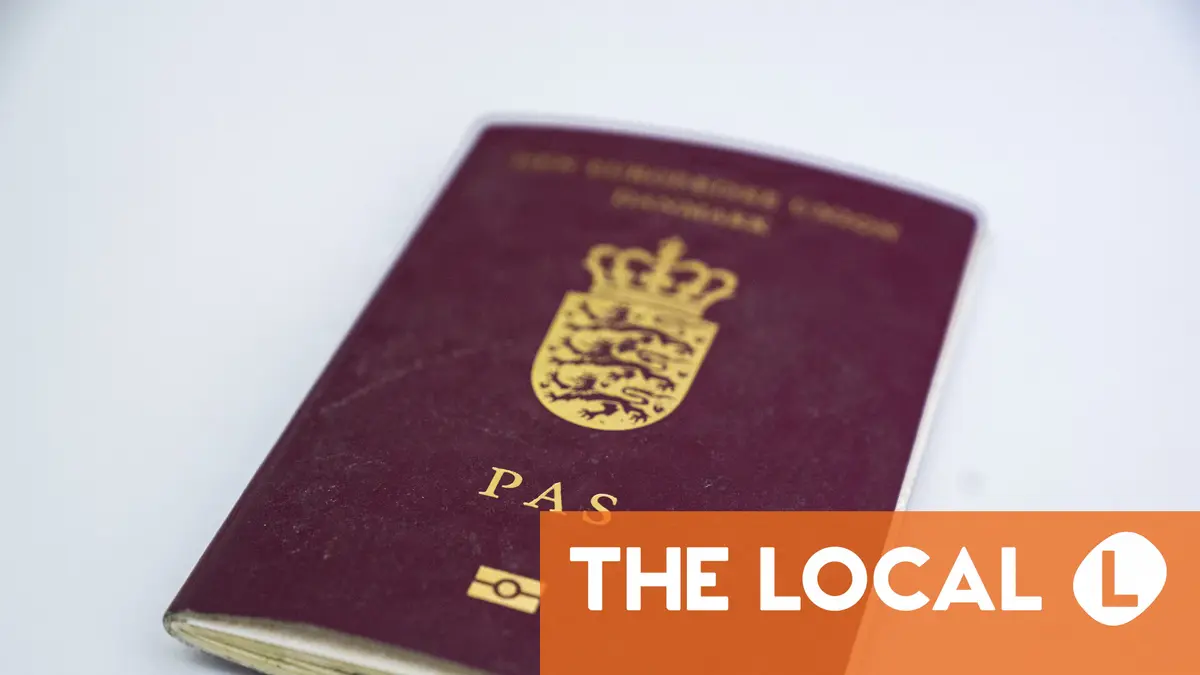
Today is the deadline to sign up for Denmark’s tests for citizenship and permanent residency ‒ the citizenship test spirit the citizenship testrespectively.
Both tests are set to be held on June 3rd this year, and they each cost DKK 946. Sign up at the language center (language center) where you want to take the test.
If you miss the signup for either test, then it’s still possible to apply after the deadline, although you’ll need to first apply to the Agency for International Recruitment and Integration (SIRI) for permission to contact a language center with an empty spot, and if that’s approved, you’ll have to find a language center yourself and see if they can offer you a place.
In other words, sign up before the deadline if you can, as it will save you a lot of effort.
The next tests will be held on November 25th, 2026, with a sign-up deadline of October 21st, 2026.
Processing of citizenship applications is still paused while Denmark’s political parties try and form a new government, although citizenship tests are unaffected.
Danish vocabulary: citizenship ‒ citizenship
Majority of voters want a new government soon
A new poll by Voxmeter for the Ritzau news wire has shown that 55 percent of voters think post-election negotiations have been going on for too long, and 57 percent want a new government quickly.
Denmark’s election was on March 24th, well over a month ago, and negotiations are now in their fifth week. Negotiations after the last election in 2022 lasted six weeks, which at the time was a new record.
A majority ‒ 52 percent ‒ is also in favor of introducing a time limit for politicians to form a government after elections.
According to the parties taking part in negotiations on Monday, discussions have entered a new phase, but sources speaking to Ritzau do not believe that a new government is just around the corner.
Negotiations are expected to continue today, Wednesday.
Danish vocabulary: majority ‒ majority
Authority: Multiple near misses on North Zealand train lines in recent years
The accident on the Gribskov train line last week, where two trains collided head-on, closed the line for days and injured 17 people, five of them critically.
Denmark’s Accident Investigation Authority, The accident commissionhas warned that there have been four cases in the past five years on routes in northern Zealand which could have ended in a similar serious accident.
The reason behind this, according to a report by Berlingskeis that there is no ATS (automatic train stop) system in place to stop a train which passes through a red signal. The routes in question only have one track, which means that trains heading in opposite directions cannot pass each other.
The ATC system is used on railways run by the state, but not local lines like the northern Zealand lines run by the Lokaltog train company.
The accident commission believes that the crash on Thursday was due to human error ‒ the train driver had misunderstood which train station the two trains were set to pass at.
Danish vocabulary: four incidents ‒ four events, cases, occasions
English coins to ward off Vikings found in Jutland
Two English coins from 1009 designed to ward off Viking attacks have been found by members of the public by Løgumkloster and Kåstrup in Jutland, according to Denmark’s national museum.
Unfortunately for King Æthelred II, also known as Æthelred the Unready, who made the coins in response to a number of Viking raids, the warding off does not appear to have been particularly successful ‒ the coins appear to have been worn as jewelery by Danish Vikings.
Only around 30 of the coins have ever been found – four or five in England, with the rest in Scandinavia and the Baltic countries. They are referred to as ‘Lamb of God’ coins due to the fact that the reverse side of the coin does not have a portrait of the king, but rather a lamb pierced by a cross.
National Museum curator Gitte Tarnow Ingvardson told Ritzau that the coins are “very rare”.
“They carry an unusual, but also paradoxical, history. They were created in an attempt to gain protection against the Vikings, but instead ended up as valued jewelery or amulets around Viking necks. It’s a bit tragicomic,” she said.
Danish vocabulary: protection coins ‒ protective coins