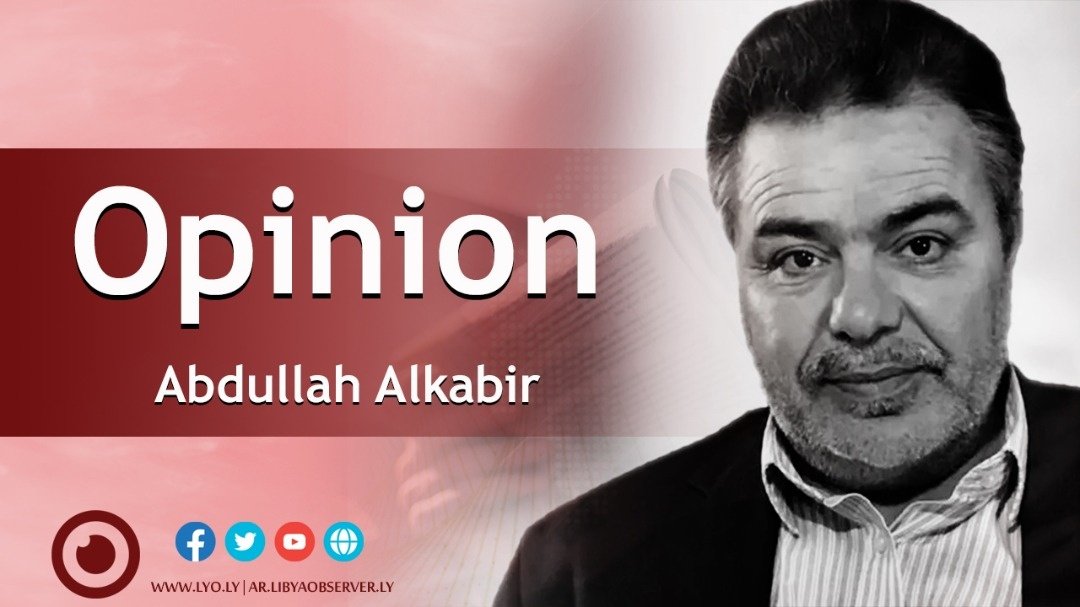
By Abdullah Alkabir, political writer and commentator
Another possible path was announced by the UN envoy in her latest briefing to the UN Security Council, as part of her efforts to achieve a breakthrough in the Libyan crisis. After the failure of the first attempt through the House of Representatives and the High Council of State, and the lack of progress, up to the time of the briefing, in the second attempt through the 4+4 Joint Military Committee, which has not yet achieved the mission’s goals, as Ms. Tetteh stated in her briefing: “The Joint Military Committee has made some progress, but there is still much to be done.” Given the assumption that the Joint Military Committee will be unable to overcome the disagreement over electoral laws, Ms. Tetteh plans to move towards a broader political dialogue committee, hoping it will achieve what previous paths have failed to do. This alternative, which she has mentioned on more than one occasion, requires strong and clear support from the Security Council to be implemented, without neglecting other internal difficulties regarding the criteria for selecting participants and the extent of their representation of the various political, military, and social forces.
In parallel with the UN mission’s initiative and its efforts to chart an acceptable path to elections, the initiative of Massad Boulos, advisor to US President Trump, has resurfaced. This follows Boulos’s recent statements published by the Financial Times, outlining his vision for restructuring the executive authority by appointing Haftar’s son as head of the Presidential Council and retaining Dbeibah as head of the government. The most significant development was the issuance of a statement from Haftar’s camp announcing its acceptance of the initiative and its openness to discussing its details. However, the opposition to the initiative in western Libya remains intact.
Just hours before Tetteh’s briefing, the three-member Presidential Council (Mohamed Menfi, Aguila Saleh, and Takala) issued a document of national principles. This document reaffirms Libyan ownership of the political solution and pledges to address the constitutional basis for elections based on the outcomes of the 6+6 Joint Military Committee and the agreements reached at the meeting of the three presidencies on March 10, 2024, under the auspices of Ahmed Aboul Gheit, Secretary-General of the Arab League. It also sets a date for presidential and parliamentary elections no later than February 17 of the following year.
The unexpected document was a clear and explicit response to the Boulos initiative. Its primary motivation stemmed from the perception among its proponents that it excluded or marginalized them in the political arena. Menfi would lose his position to Saddam Haftar, and Aguila Saleh and his House would have no role in the political process, either now or in the future, after power is divided between the two main actors in the east and west. This is despite the Haftar brothers’ rejection or reservations, fearing the loss of their privileges if power falls to their brother. They want to be equal partners in power and influence, not have all power concentrated in one hand.
All initiatives seem to be going around in circles for years. The path to genuine change through the constitutional process or parliamentary elections is avoided by everyone: the UN mission, the international community, and local actors. The Prime Minister’s public call for a referendum on the draft constitution is merely a message of reassurance to his political, military, and social supporters, especially given his failure to declare a clear position on the Boulos initiative. He cannot openly reject it because doing so would place him in the camp of those who oppose a political solution. The Libyan people, who have a genuine stake in establishing a constitution that unifies the country and preserves national sovereignty, are absent and inactive in the political process. This absence has created a massive vacuum that international and regional powers have exploited, turning the country into a battleground for conflict and rivalry.
The international stance on the Libyan crisis remains divergent, as evidenced by the statements of the permanent members of the Security Council. While American diplomacy supports the Boulos initiative, European reservations are reflected in the British perspective. Russia, on the other hand, opposes the Boulos initiative and speaks positively to the tripartite house document. The Russian representative stated, “We believe that the most viable paths are those implemented through existing Libyan institutions and in accordance with existing agreements.”
This divergence in international positions does not help Tetteh make any progress in implementing her initiative. She needs real support to pressure the actors so that a response will occur. Perhaps her last chance is to present the mechanism of expanded political dialogue in her next briefing, as an alternative that can accomplish what previous paths have failed to do.