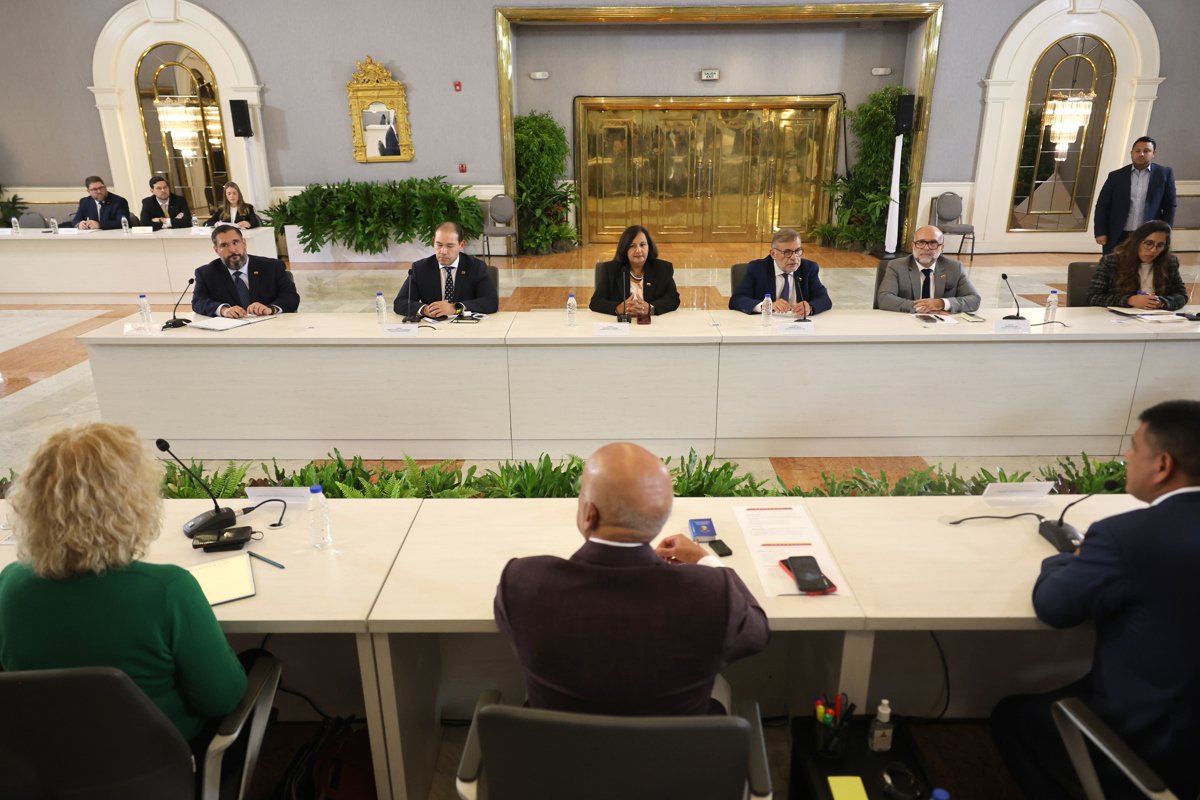
The second round of talks between the government of Venezuela and the 2015 National Assembly delegation concluded this week with progress in the process of renewal of the Supreme Court of Justice (TSJ), measures related to freedom of expression and the commitment to resume the discussion on the political and civil guarantees.
The second cycle of talks ended on Friday, September 25 in Caracas. Dinorah Figuera, president of the 2015 National Assembly and head of the opposition delegation, assured that one of the main results was progress in the re-institutionalization of the highest court.
“I feel very pleased to inform all the Venezuelan people that we have begun the re-institutionalization of the Supreme Court of Justice with very accelerated steps because this constitutes a roadmap of a deliverable for the month of November“Figuera stated in a interview with Venevisión.
The leader also pointed out that during this stage there was an opening in terms of freedom of expression. According to him, more than 60 digital information networks that were blocked were opened, although He indicated that between five and six digital information centers were still blocked.
The TSJ concentrates part of the advances
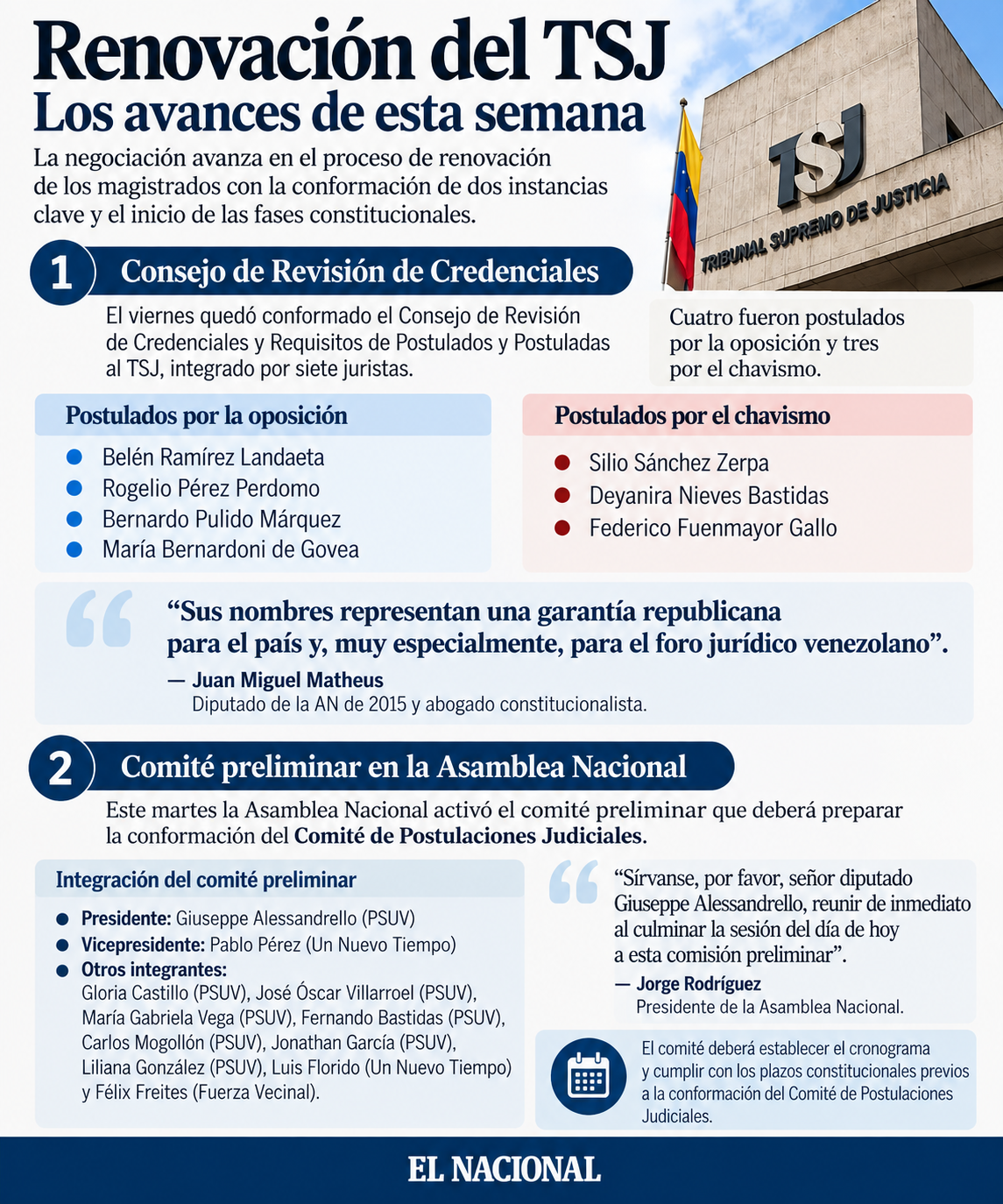
The process to renew the judges of the TSJ advanced during the week with the activation of the preliminary committee in charge of prepare the formation of the Judicial Nominations Committee.
The president of the National Assembly, Jorge Rodríguez, commissioned deputy Giuseppe Alessandrello to gather the members of the body and begin the corresponding actions.
“Please, Mr. Deputy Giuseppe Alessandrello, gather this preliminary commission immediately at the end of today’s session,” said Rodríguez.
The committee will be chaired by Alessandrello and will have as vice president Pablo Perez. It is also made up of Gloria Castillo, José Óscar Villarroel, María Gabriela Vega, Fernando Bastidas, Carlos Mogollón, Jonathan García and Liliana González, in addition to Luis Florido and Félix Freites.
Rodríguez pointed out that this body must comply with the established deadlines to advance towards the formation of the Judicial Nominations Committee.
“Today is the formation of the preliminary committee by the board of directors of the National Assembly so that it can proceed to comply with the deadlines and the objects established in the Constitution for the appointment of the nominations committee”he declared.
In parallel, the Credentials and Requirements Review Council for Applicants to the TSJ was formed, made up of seven jurists.
Juan Miguel Matheusdeputy of the National Assembly in 2015 and member of the opposition delegation, described as a “guarantee” the appointment of four of the seven members of the council who were nominated by their sector.
The constitutional lawyer especially highlighted Belén Ramírez Landaeta, Rogelio Pérez Perdomo, Bernardo Pulido Márquez and María Bernardoni de Govea, to whom he attributed “recognized ethical solvency and legal” to review the credentials of the applicants.
“Their names represent a republican guarantee for the country and, especially, for the Venezuelan legal forum,” said Matheus.
The opposition leader Dinorah Figuera pointed out, for her part, that the people who participate in the process must have “high credentials” and be “honorable, verifiable people” who represent a vote of confidence for the population.
Political guarantees are left for October
The main issue that remained pending in the second round was the installation of the political and civil guarantees table. Jorge Millán, member of the 2015 National Assembly delegation, confirmed that this instance was not installed during the second cycle and that their discussion was scheduled for the next meeting, scheduled for mid-October.
“On this occasion, the table of political and civil guarantees was not installed, which is the one that is responsible for the issue and we hope that the next cycle, which it will be mid octoberand to vigorously begin the review of all these political guarantee processes,” Millán stated.
The agenda includes issues such as the situation of political leaders who remain outside Venezuela, the lifting of disqualifications and the recovery of political parties. Millán maintained that the delegation maintains the objective that “all Venezuelans recover their full rights, each and every one of them.”
The discussion is also linked to the conditions for an eventual electoral process. “An issue that is fundamental for Venezuela has remained pending for us, which is the political guarantees” to “have the necessary columns to go to free and democratic elections,” he noted.
The date of the presidential elections was also not defined on the table. Millán described Jorge Rodríguez’s announcement that the elections will be held as a unilateral statement “within the period established by the Constitution.”
“It is a unilateral declaration, we do not know what he meant by this about the Constitution, but I believe that all Venezuelans are clear that there is a constitutional default.”l so that the people can express themselves and decide who represents them“, held.
Freedom of expression and Law against Hate
Freedom of expression was also part of the results presented after the second round.
Figuera assured that the opening of more than 60 digital information networks and stated that there are still blocked sites waiting to be enabled.
Another issue linked to public liberties was the Law against Hate.
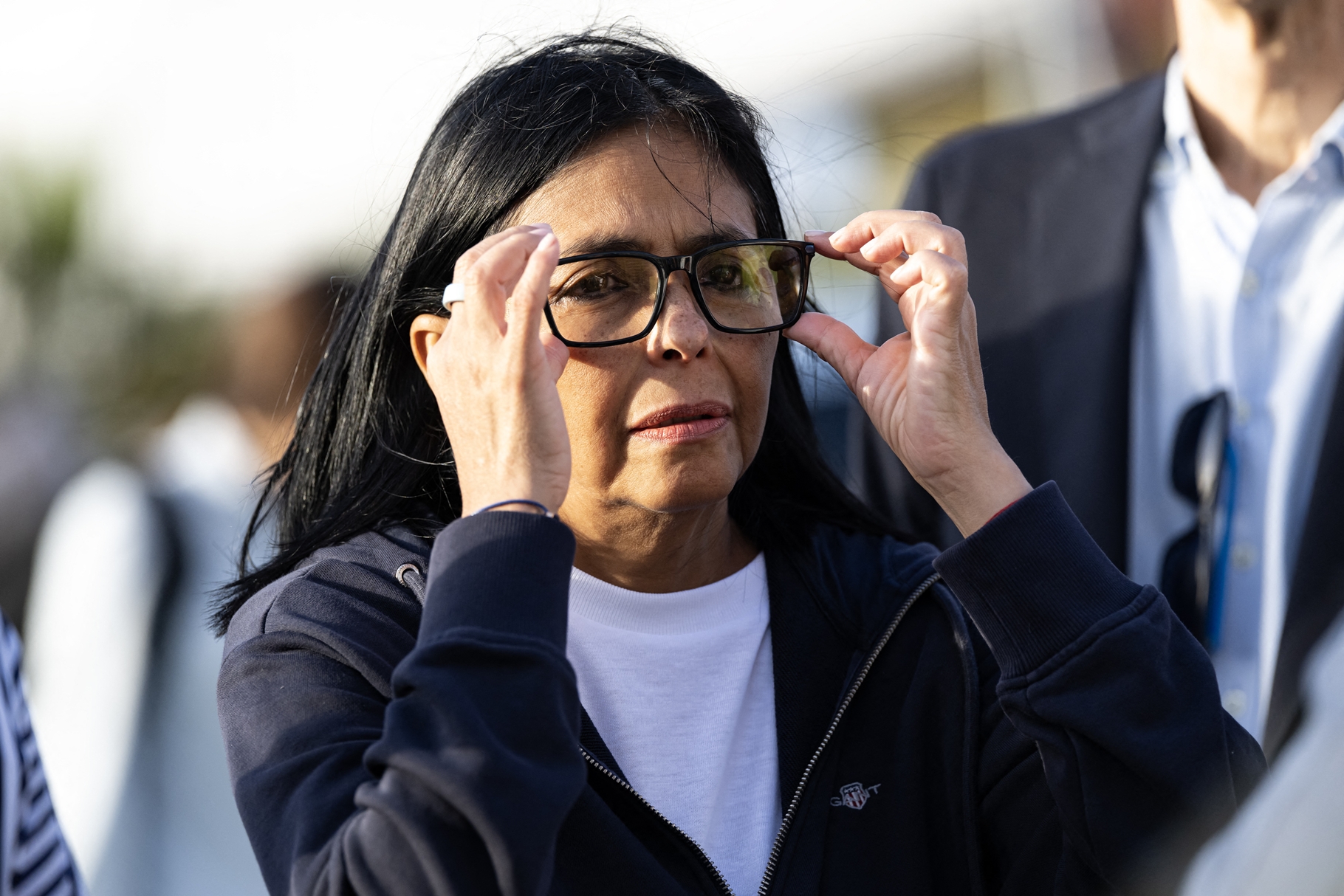
This week, Delcy Rodríguez sent a communication to the National Assembly to request the reform of the regulations approved in 2017. In the letter she proposed “moving forward in the decriminalization of the conduct provided for in the aforementioned regulatory instrument, as part of the actions adopted by the national Executive to transform the criminal justice system and favor reunion and democratic coexistence.”
The proposal generated questions among human rights organizations that consider a reform insufficient and propose the repeal of the norm.
Rafael Uzcátegui, director of the Peace Laboratory, stated: “There is an implicit confession that there were abuses. A reform is insufficient because, although it is one of the most used mechanisms, it is not the only one. It is of little use if the logic of seeing the critic as the enemy is maintained.”
Martha Tineo, director and co-founder of Justicia, Encuentro y Perdón, maintained that the application of the rule caused damage and defended its repeal as a guarantee against new processes based on opinions.
“The only real guarantee that someone will not be imprisoned again for expressing an opinion is to remove the law from the legal system. The ideal scenario is repeal; however, if we move towards transitional justice, orA reform that guarantees effective decriminalization represents a first step”, he stated.
Figuera also referred to the instrument during his interview and pointed out that its modification is a demand from human rights organizations. “What matters to me is that they change the entire criminalization structure.” who has been the subject or object of this law“, said.
The electoral calendar remains undated
Although the elections are part of the background discussion, the table has not yet established a date for the presidential elections.
Figuera maintained that before setting a date he considers it necessary to advance in the formation of electoral institutions and in the conditions that allow confidence in the process.
“We have the moral responsibility to offer the country a credible, transparent, vigorous National Electoral Council, so that people feel reflected and that in this case your vote will be recognized and you will choose”, he stated.
The president of the 2015 National Assembly avoided setting an electoral date and indicated that she prefers that the parties first reach a principle of consensus. “At this moment, I dare to say a date, with all the responsibility I say that I prefer that we sit at the table, that we achieve a principle of consensus and work so that with this responsibilityd that the country has given us in this case, to constitute a respectable electoral process.”
November and December, next milestones
While the political guarantees were left for October, the TSJ renewal process has the month of November as a reference.
Figuera pointed out that there are “deliverables” planned for that month. The process must continue with the review of credentials and the different stages for the selection of new magistrates.
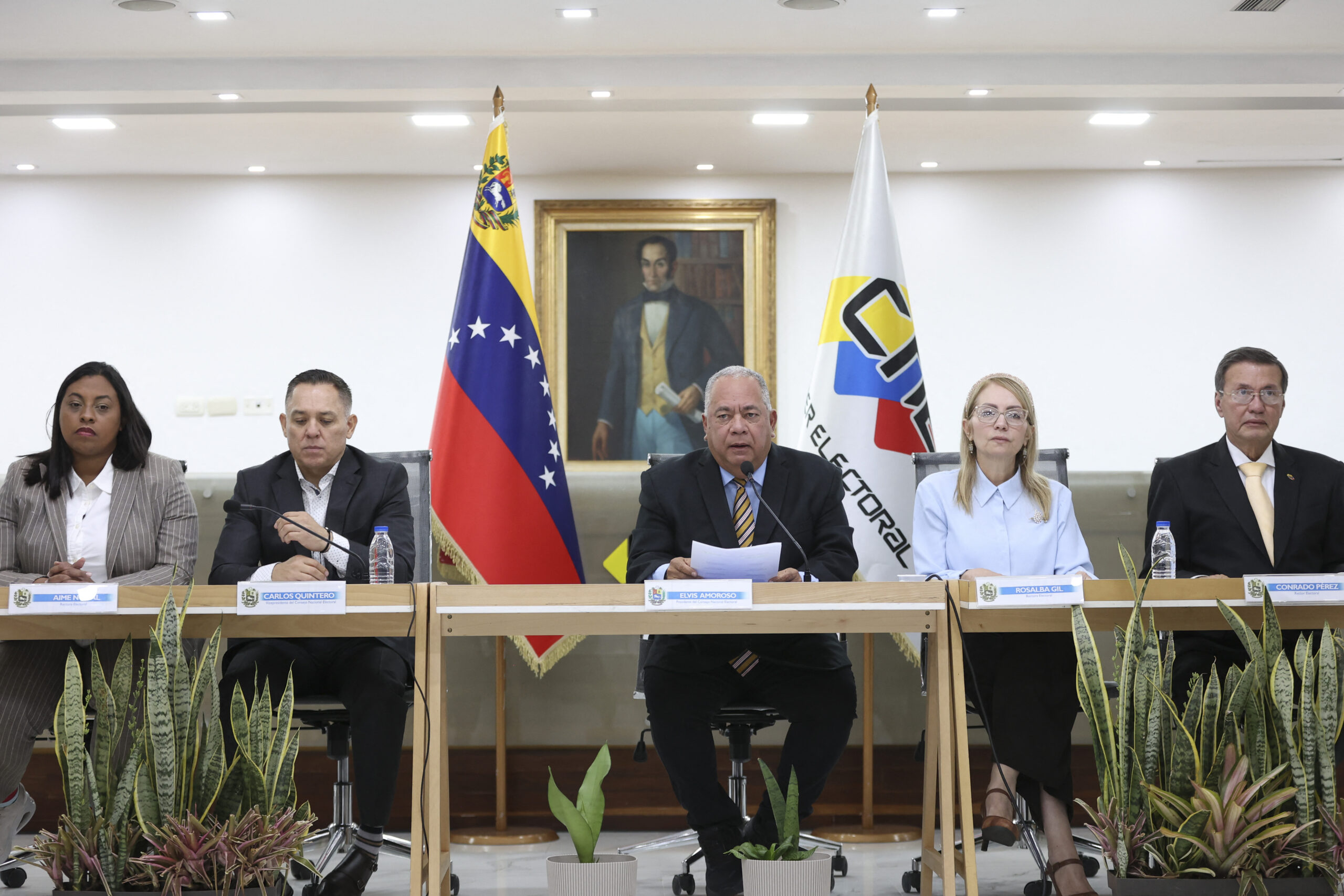
The National Electoral Council appears as another of the pending issues. Figuera pointed out that the designation of his authorities is part of the discussions that must be addressed before establishing an electoral route.
Thus, at the end of the week, the negotiation leaves three reference dates: October to resume the discussion on political and civil guarantees, November as a horizon for progress related to the renewal of the TSJ and December as a scheduled time to address issues related to the National Electoral Council and the transition route.