Peru is preparing for elections whose results are likely to be disputed as much or more than in 2021. This is in line with a regional trend: between May 2020 and April 2024, one in three elections was marked by some type of dispute, whether boycotts, non-recognition of results or judicial challenges (Global State of Democracy, 2024). In this scenario of greater electoral conflict, it is reasonable to think that errors or failures by polling station members can fuel this problem, even when there is no real intention or ability to distort the results. For this reason, the performance of those who assume this role is of greater concern now, in an environment where distrust finds fertile ground.
Additionally, there is one element that has not been part of our recent electoral experience, and that could be important for confidence in the process: the vote count. If a record has serious errors or inconsistencies that cannot be corrected by comparing it with other copies, a Special Electoral Jury can activate the mechanism. In simple terms, this would involve manually recounting the ballots at a public hearing. Although its purpose is to correct errors and prevent valid votes from being annulled, as it is a public procedure and probably broadcast in real time on digital platforms, it can affect the perception of legitimacy of the process.
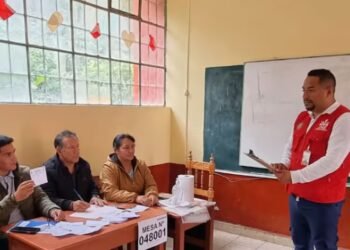
Do the board members worry us then? Yes. They will have a demanding and long day, as in previous processes, but this time with more formats to complete due to the bicameral system and the mixed Senate election, in addition to longer formats due to the greater number of competing political organizations. It is also possible that the lower participation of polling station members will continue, which would force them to resort more frequently to citizens in line; However, measures such as increasing the financial compensation to S/165 and expanding the number of substitutes could help maintain or even improve it. To better support them, it is advisable to start from your own experience. An ONPE survey of almost 24,000 polling station members after the 2022 elections showed that their main problem was lack of time for lunch (43%). This was followed by difficulties in filling out the minutes (27%), counting the votes (21%) and doubts about the validity of the votes (17%).
But they are not the only ones who support the day. The process works as an ecosystem in which multiple actors intervene inside and outside the voting locations: the personnel of the electoral organizations, who accompany and supervise the development of the day; the representatives and observers; as well as the political organizations themselves, the media and networks of journalists in the regions. Added to this is the coordination between the three electoral organizations to deal with any contingency in a timely manner. It is in this network of shared responsibilities where the credibility of the electoral process is sustained and reinforced.
*El Comercio opens its pages to the exchange of ideas and reflections. In this plural framework, the Diario does not necessarily agree with the opinions of the columnists who sign them, although it always respects them.