BAKU, Azerbaijan, November 10.
Total investments of the State Oil Company of Azerbaijan (SOCAR) in
Türkiye will reach $20 billion through a new project, General
Manager of Petkim and Head of Refinery and Petrochemicals Business
Unit at SOCAR Türkiye, Kanan Mirzayev, said.
According to SOCAR Türkiye, a new investment project worth
approximately 6 billion Turkish liras ($120 million) is being
launched at the STAR Oil Refinery in Türkiye. The project includes
the construction of a new jet fuel (Kero-Merox) unit. With the
commissioning of this new unit, the refinery’s annual diesel
production is planned to increase by 600,000 tons.
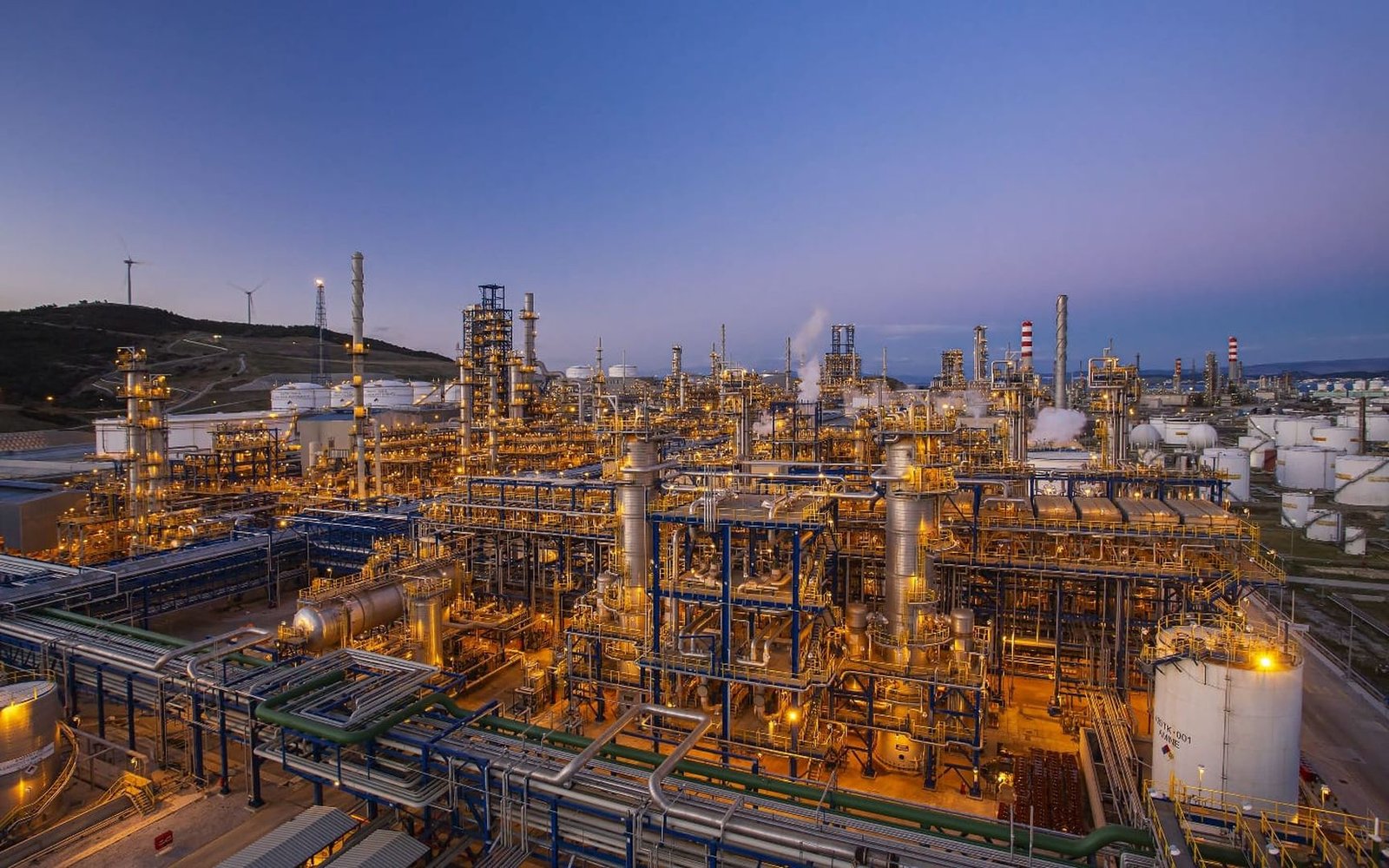
The report said that the STAR Oil Refinery, owned by SOCAR, one
of the world’s leading energy companies, has signed a contract with
an international consortium for the engineering, procurement, and
construction (EPC) of a new unit.
Engineering, procurement, and construction activities are set to
begin in the coming days, with the project scheduled for completion
and commissioning in the first quarter of 2029.
This new investment will enable the STAR Oil Refinery to adjust
its production structure and expand its manufacturing capabilities.
Specifically, the existing Kerosene Hydrotreating Unit (KHT) unit,
currently used for jet fuel production, is planned to be converted
to a diesel production mode. Jet fuel production will instead be
carried out in a new Kero-Merox unit.
As a result of this change, the refinery’s annual diesel
production will increase by approximately 600,000 tons. At the same
time, the existing KHT unit can still be used for jet fuel
production, depending on market conditions. Thus, the refinery will
gain greater flexibility to adjust the production volumes of both
diesel and jet fuel in line with market demand.
Speaking about the strategic importance of the investment,
Mirzayev said that the new unit will enhance the production
flexibility and energy efficiency of the STAR Oil Refinery.
According to him, shifting jet fuel production to the new unit
will create an additional annual production capacity of 600,000
tons of diesel. This will allow for the adjustment of product
output in line with market conditions.
Mirzayev noted that one of the primary objectives of this
investment, amounting to approximately 6 billion Turkish liras, is
to help reduce Türkiye’s reliance on imported diesel and decrease
its current account deficit.
The STAR Oil Refinery began operations at the end of 2018 with
an annual processing capacity of 10 million tons. Annual processing
capacity of the facility, which initially was the third-largest oil
refinery in Türkiye by production capacity, grew to 13 million tons
as a result of work carried out in recent years. Thus, STAR has
become Türkiye’s largest oil refinery.
The new investment project is expected to contribute to
expanding the refinery’s production capabilities, strengthening
Türkiye’s fuel supply, and reducing the country’s dependence on
diesel imports. During the construction and installation phases of
the project, special attention will be paid to occupational health
and technical safety requirements.