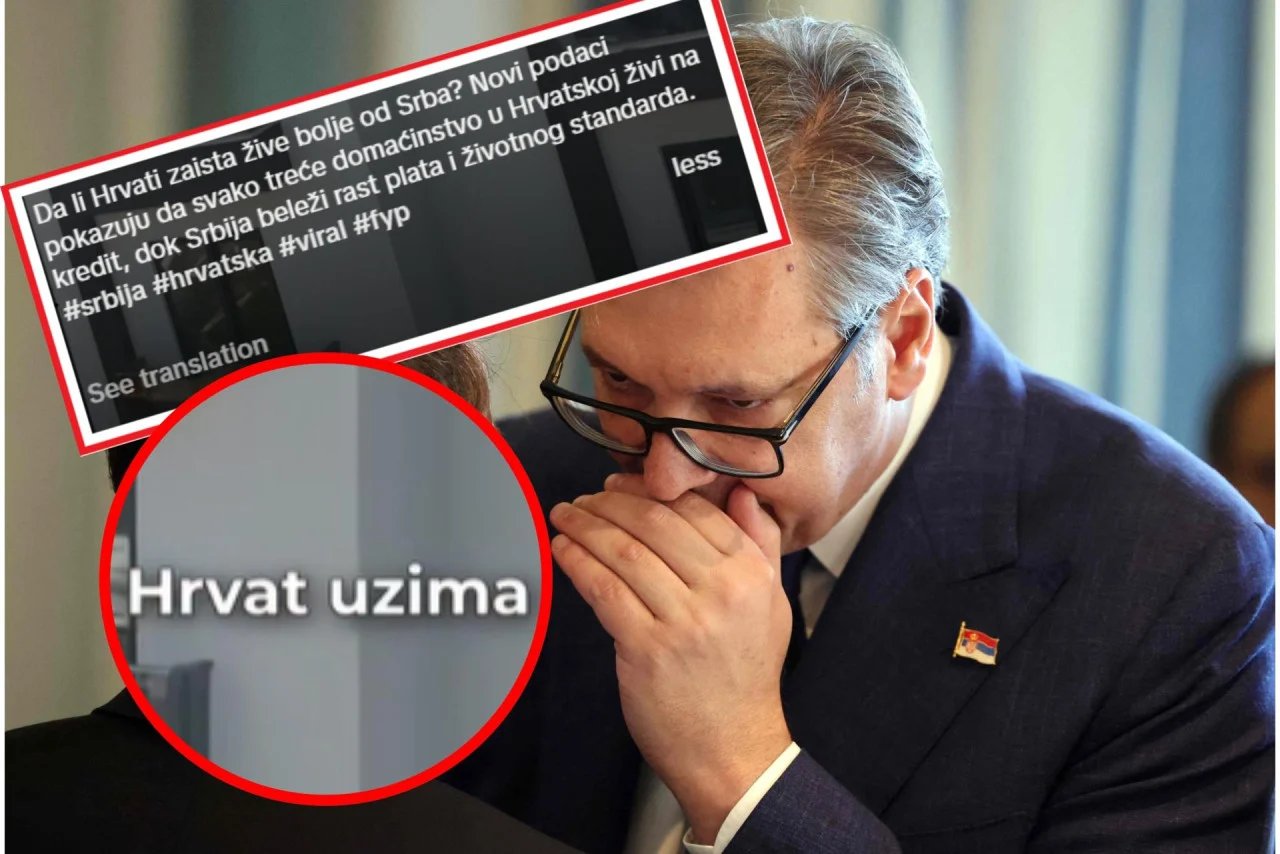
In recent months, a whole wave of profiles with AI-generated content have appeared on TikTok aggressively promoting the narrative of the “economic miracle of Serbia”, praising Aleksandar Vučić and suggesting that life is better in Serbia than in Croatia. In these videos, Croatia is described as over-indebted and “failed”, while Serbia is portrayed as a flourishing country – but such an image ignores the real economic indicators, as well as the very specific fact that it is precisely from Serbia that for decades people have been leaving “belly for bread” to Croatia and other EU countries.
TikTok propaganda bubble
AI-generated content on TikTok functions as a new version of political PR: synthetic voices, simple graphics, dramatic messages about record wages, GDP growth and “Serbian economic fortress”, often without any specific source. For years, the Vučić regime has been building a narrative about Serbia as a regional leader, and social networks are a natural environment for spreading such messages, which rely on emotions, salary comparisons for individual months, and selective quoting of growth forecasts. The problem arises when such propaganda content starts to be presented as an objective economic analysis – because the numbers tell a different story.
GDP and real economic indicators
According to comparisons based on official data, the total GDP of Croatia and Serbia is similar in absolute terms, but the differences become clear as soon as GDP per capita is looked at. In 2025, Croatia had a GDP of around 93 billion euros, with a GDP per capita of approximately 24 thousand euros, while Serbia was at around 89 billion euros, with around 13 thousand euros per capita – so almost twice as much. In other words, the nominal size of the economy does not tell enough about the standard; what matters is how much the average citizen realistically has at his disposal.
Wages, unemployment and standard
Analyzes show that Croatia has a higher average income, lower unemployment and greater institutional security thanks to its membership in the European Union. According to recent regional comparisons, the average net salary in Croatia is around 1,300 euros, while in Serbia it is much lower, despite the growth in recent years. In addition, Croatian workers have access to a wider range of social rights, the EU labor market and freedom of movement, which is almost never mentioned in propaganda TikTok videos. Croatia, despite all its problems, unfortunately for Vučić, according to all relevant external analyses, has a better quality of life, better wages, greater purchasing power, better access to education, better lending and safer institutions. Moreover, according to some indicators, we have overtaken Slovakia, Hungary and Portugal, and soon we will join the group of the safest and most promising countries in the world – OECD. Serbia, on the other hand, is often ranked among the poorest countries, media freedom is non-existent, security is getting worse, and Vučić is only welcomed to the courts of dictators like the Chinese or Russian president. of course, Vučić had to “take off his pants” in return.
Debt, investments and growth model
Vučić’s rhetoric often relies on the story that “Croatia is in debt and Serbia is stable”, but the reality is more nuanced. Both Croatia and Serbia have public debt and structural challenges, but after joining the EU, Croatia uses funds and a relatively stable credit rating, while Serbia relies heavily on foreign investors, supposedly favorable and dubious Chinese loans, and the sale or concession of key infrastructure. Critical analyzes of Serbian economic policy warn that it is a model that increases dependence on foreign capital and political trade, and the debt is often pushed under the carpet through propaganda about the “highest growth in the region”.
Then why do Serbs come to work in Croatia?
If life is really better in Serbia than in Croatia, the logical question is why thousands of Serbian citizens work in Croatia in tourism, construction, healthcare and other sectors. The answer is simple: Croatian wages and conditions, despite all the flaws, offer a better standard and perspective than is possible in Serbia, especially for younger people and workers without political connections. Serbs in Croatia today are mostly not “guest workers of the second class”, but workers and neighbors who are accepted, integrated into everyday life and clearly show that they are doing well in Croatia.
Vučić’s “economic truths” and the lie about Serbian supremacy
Vučić has repeatedly declared Serbia the “leader in the region” and announced that it will overtake Croatia in all economic parameters, but independent analyzes regularly show that these announcements are exaggerated or completely incorrect. Even when Serbia records a faster percentage of GDP growth in certain years, it is growth from a lower starting position – Croatia starts from a higher level of standards, which TikTok videos deliberately ignore. When you look at the whole picture – GDP per capita, wages, unemployment, institutional framework, EU membership and migration flows – the narrative about “economically stronger Serbia” in relation to Croatia simply does not hold up.