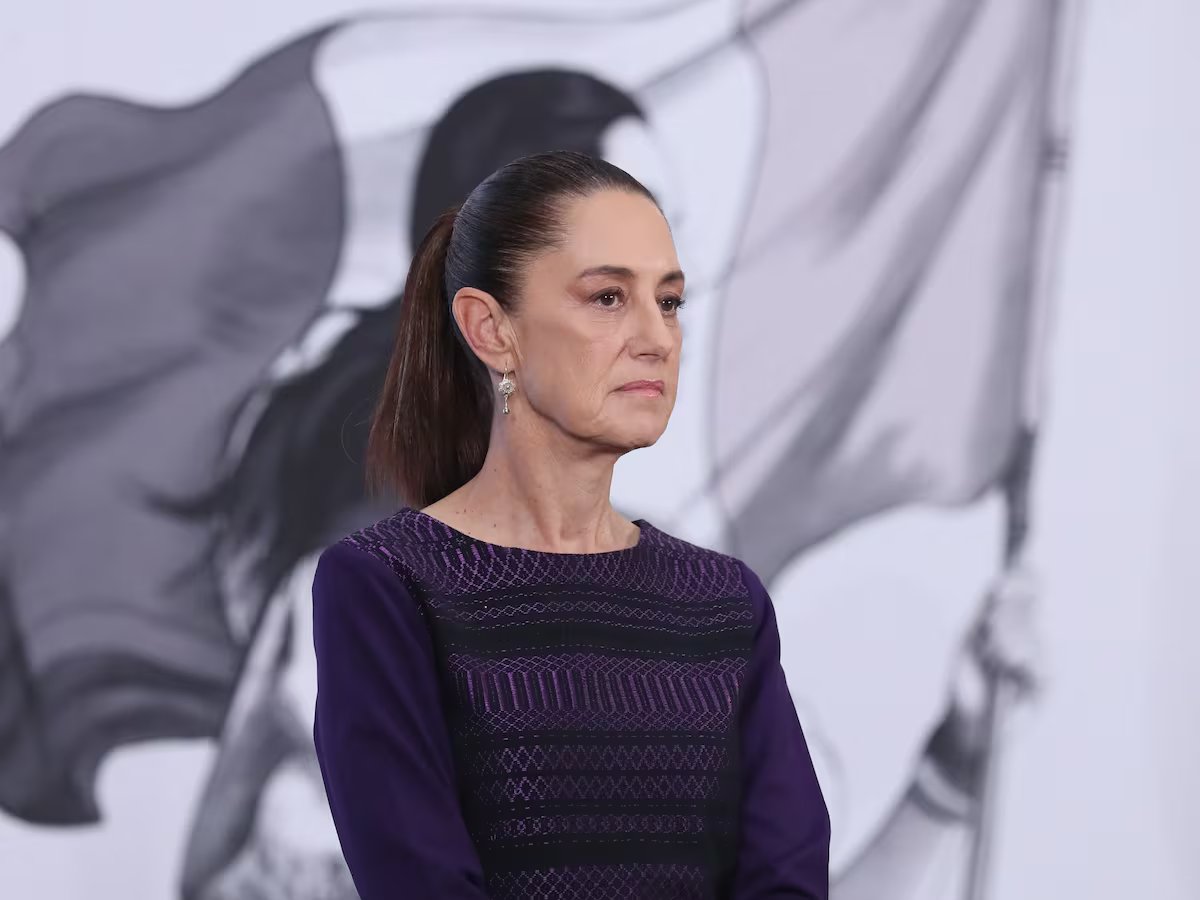
There are fewer and fewer corners of the Mexican power apparatus that do not bear the president’s seal. Not even two years have passed since Claudia Sheinbaum’s mandate and her influence is spreading at an accelerated pace. Since last summer, the president has been making progress in consolidating her own project, renewing the leadership inherited from the previous six-year term with significant changes, such as the head of the Attorney General’s Office or the coordination of the Morenoist group in the Senate. Some movements that have picked up even more speed in recent weeks. The president has also begun to operate movements at the top of the party, in embassies and, subsequently, even in the teams of negotiators. of the USMCA. Sheinbaum is taking a step forward by taking control of more and more levers of power, putting to good use the Mexican political jargon used to explain the system’s strong presidential bias. The president on duty is usually called “the one.” In case there was any doubt, Sheinbaum is “the one.”
The intervention in the National Executive Committee (CEN) of Morena has included several maneuvers at the same time and, although it was a long-standing rumor, it has taken the party’s leadership bodies by surprise. The president of the party, Luisa María Alcalde, elected less than two years ago, will leave office in a climate of internal crisis. Instead, in the absence of the statutory procedure, it will be Ariadna Montielcurrent Secretary of Welfare. In parallel, Sheinbaum announced days before the entry on the scene of Citlalli Hernandezwho leaves the Women’s Secretariat to lead next year’s electoral operation, where Morena is primarily at stake in retaining its majority in the Chamber of Deputies. Two of the president’s most trusted cadres. The underlying reasons for the changes also have to do with the ballot boxes. The president blames the Mayor for last year’s fiascos in Durango and Veracruz. In addition, the president of the CEN also suffered the biggest parliamentary setback so far in the six-year term.
The castling of the allies of the ruling coalition, the Green and the PT, ended up blocking one of the president’s star reforms. The electoral reform ended up being approved in a weak way due to the demands of two minority parties, which even threatened a fracture in the coalition. With the opposition still on the canvas, the unexpected resistance to Morena’s parliamentary steamroller was at home. Mayor was one of the operators in those negotiations just a month ago that, after many twists and turns, precipitated a failure that still echoes through the halls of the National Palace.
Sheinbaum’s intervention in the party’s crisis also has added symbolism. Break with the prudent line distance he had maintained from the party former president Andrés Manuel López Obrador, founder and undisputed leader of a formation born, at least rhetorically, as a party-movement. A combination of hierarchy and horizontality. “The president’s decision represents the final nail in the coffin of the party-movement. Faced with this internal crisis, Sheinbaum is trying to reformulate Morena’s hegemony under a different logic than López Obrador’s charismatic leadership,” says Colmex historian Humberto Beck.
This closing of ranks also has a reading in terms of foreign policy. “The president is facing a double crisis,” adds the Colmex historian. “In addition to the internal party, the constant threat of an increasingly insidious Donald Trump, with the imminent renewal of the USMCA. Sheinbaum cannot allow himself to show weakness and is recovering the old presidential tradition to send a message: in the face of the crisis he is deploying all presidential power as the last instance of political decision.”
The replacement at the embassy in Washington announced this week follows that same pattern. He removes another position inherited from the previous six-year term, Esteban Moctezuma, and promotes a young, technical and trustworthy profile as head of the negotiations for the renewal of the TMEC. A movement that also represents a counterweight to the leadership in these negotiations of the Secretary of the Economy, Marcelo Ebrardanother inherited painting that was Sheinbaum’s rival in the Morena primaries for presidential candidate. Luis de la Calle, an expert in international trade, points out that the changes in the economic cabinet are a sign that Sheinbaum is aware that the matter requires the involvement of the presidents, in this case, Trump, Sheinbaum and Mark Carney, Canadian Prime Minister. “The effectiveness of an ambassador in Washington depends on his closeness to the Executive. If there is a good relationship between the new ambassador and the Secretary of Foreign Affairs (Roberto Velasco, also recently appointed) and with the presidency, that will give him much more scope for action.”
In the midst of the working groups with the USMCA and with the growing complaint by American companies based in Mexico of “abusive” practices by the Mexican treasury, the president has also begun to move pieces in the Tax Administration Service (SAT). Starting next month, Jennifer Krystel Castillo will assume the Large Taxpayer Administration, a strategic area that concentrates the supervision of the largest companies in the country, a source of juicy income in recent years by putting old tax debts in order. Castillo, following the pattern, was part of Sheinbaum’s team when she was head of Government of Mexico City and, until now, she is the head of the Legal Affairs Unit of the Ministry of Energy.