
With hotter-than-normal conditions forecast to continue into early 2027, schools are increasing access to drinking water, adding fans, shortening outdoor activities and allowing more flexible uniforms to reduce the risk of heat-related illness among pupils.
Several primary and secondary school administrators have told Barbados TODAY of their focus on facility upgrades, flexible uniform policies and regular hydration to keep classrooms functional and pupils safe.
The latest forecasts of warmer-than-normal temperatures persist into early 2027, alongside recurring periods of intense heat stress.
At Darryl Jordan Secondary School in St Lucy, Principal Ken Layne explained that the school’s elevated location provides an initial advantage against rising temperatures.
“In terms of the physical plant and where we’re located, we’re slightly elevated, so for the most part we are breezy,” Layne said. Hydration there is provided through dedicated water stations and distributed supplies.
“We have a water cooler on the compound and we have distributed water bottles to all the first years… we get our water tanks filled by the Barbados Water Authority, so there is always clean water coming from the taps.” Pupils are permitted to drink water freely during lessons and buy additional fluids at the canteen.
Regarding physical education, Layne confirmed that adjustments are in place: “In terms of PE… we started physical sessions late last week, but we try to keep them short; we don’t keep them outside in the sun too long.” The current PE gear remains light and breathable, he added.
At Grantley Adams Memorial in St Joseph, Principal Major Andrew Skeete described similar structural and operational measures: “Because we are in the country, so to speak, we have a natural cooling system.”
He pointed to planned facility upgrades: “We got some fans that we need… electrical fans as well as the upgrade of the plant.” To help keep pupils safe, assemblies and outdoor gatherings have been shortened.
“We try not to keep our assembly longer than necessary… we have to keep them for a 10-to-15-minute period.”
Some specialised areas such as IT labs are already airconditioned.
He recalled that the Ministry of Education had previously issued guidance on managing heat: “Last year the ministry would have presented and given a directive with regards to how to manage the situation… by making provisions for additional cooling systems and encouraging our children to hydrate.”
Primary schools are also adjusting classroom arrangements to cope with the heat. Bridgetown S.D.A. Primary’s Principal Dr Cheryl Weekes outlined how additional equipment is being deployed.
“We’re adding fans to the classrooms as we speak… some classrooms might have four fans in it,” Dr Weekes said, specifying that a combination of ceiling, wall and standing units is in use. “It is not affecting them really… because the classrooms are fairly airy also, with windows on both sides of the room.”
Assemblies at the school are held indoors with wallmounted fans, while outdoor sports continue under observation.
Dr Weekes expressed gratitude for community support: “We’re happy for the support of the PTA and the parents who have been very good in terms of assisting us with additional fans.”
At A. DaCosta Edwards Primary School at Belleplaine, St Andrew, Principal Janelle Jones highlighted the continued difficulty of teaching in extreme temperatures and called for more private sector assistance.
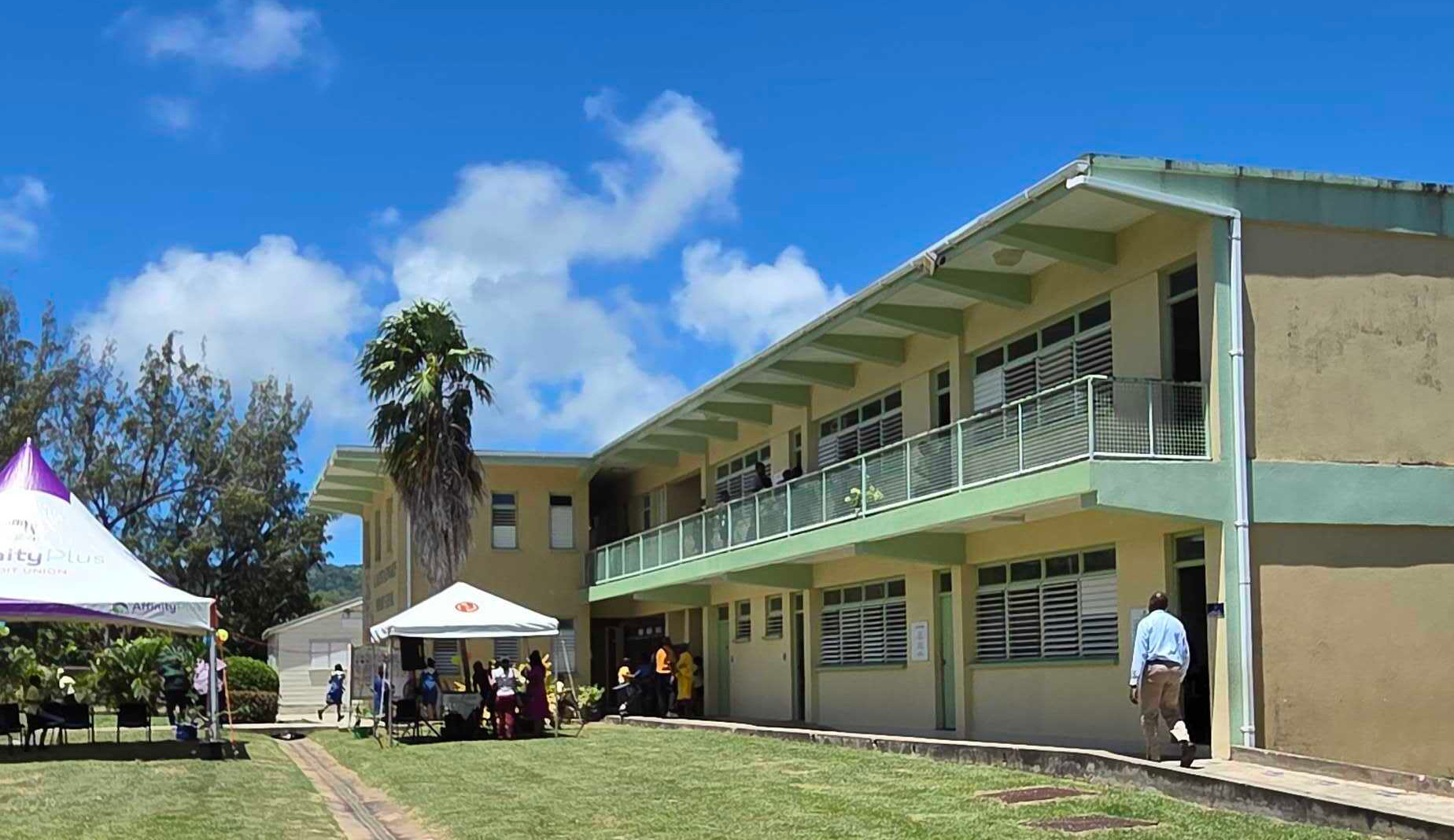
A DaCosta Edwards Primary School. (Photo Credit: Ricardo Roberts)
“It has been difficult, but we’re managing. We would appreciate the kind donation of corporate bodies with some fans. We usually have some outdoor classes to brace the heat under the tree. Anything like that would assist.”
While pupils are encouraged to drink extra fluids and minimise intense outdoor play, Jones noted that enforcing strict limits remains difficult: “We have been going along with the protocols, but it’s a challenge. It’s hot everywhere.”
Addressing uniform policy changes — a topic highlighted by recent trials of climate-friendly uniforms at Princess Margaret Secondary — Principal Valerie Routley of the private St Winifred’s School said her school has already introduced greater flexibility in dress.
“For the last couple of years, particularly during this term, we have allowed our students to wear their PE kits to school rather than their full school uniform because of the heat, because of course the PE kits are much cooler.”
She disclosed ongoing plans for a permanent change: “I have a couple of meetings set up to discuss what a new, more climate-friendly school uniform might look like.”
In addition to water stations and hat requirements, outdoor sessions are carefully planned: “We do have one tennis court that is covered, so the PE teachers try to do as much as they can under the shade.” The school nurse actively monitors children for signs of heat exhaustion, she added.
(RR)