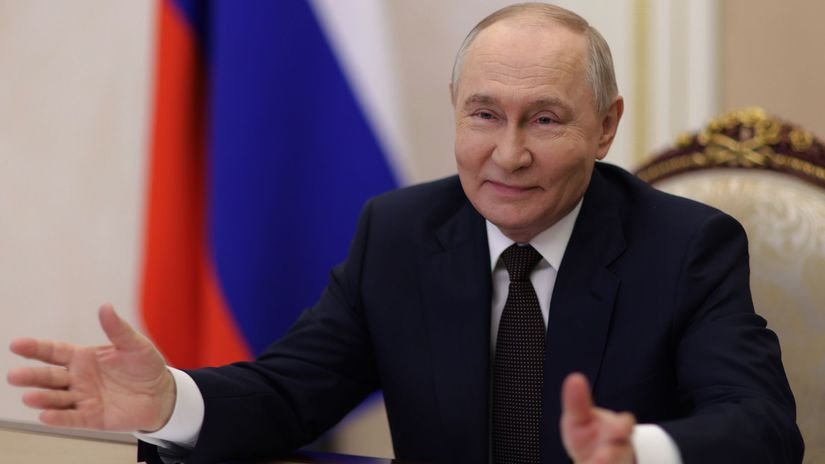
Until recently it seemed that they were untouchable, now they are afraid of losing everything. Russian oligarchs amassed huge fortunes and lived in lavish luxury. However, the war against Ukraine is expensive, and in order to patch up the hole in the budget, the head of the Kremlin, Vladimir Putin, reached for radical solutions. Loyal rich people and big businessmen are not safe. The state has already accused dozens of them of corruption and confiscated all their property.
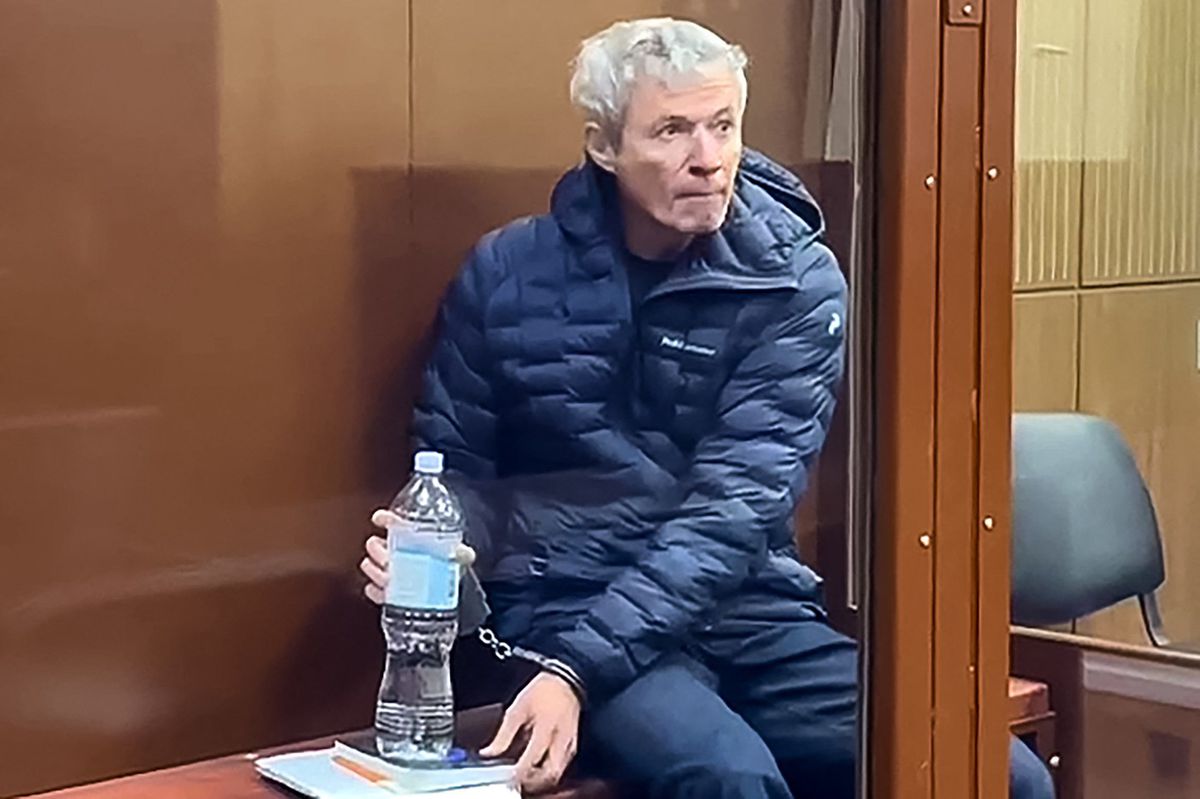 Photo: Profimedia/AFP/Moscow City Court press service
Vadim Moshkovich, Vadim Moshkovich Vadim Mošković during the court hearing that deprived him of billions. Moscow, March 2025.
As Bloomberg reported, the Kremlin is increasingly resorting to “nationalization” to raise funds to run a “special military operation.” Since its inception in February 2022, it has already confiscated property in more than 100 cases.
According to the Moscow law firm Nektorov, Saveliev & Partners, the Russian state expropriated wealth totaling up to 1.1 trillion rubles, which corresponds to about 12.9 billion euros, as part of corruption cases last year alone. That’s eight times more than he seized in 2024.
Accusations of corruption
The oligarchs are particularly worried about the fact that Vadim Moškovič, the 59-year-old founder of the agricultural concern Rusagro, also became a victim of the confiscation. They estimated the value of his property at 2.7 billion dollars.
In February of last year, the influential businessman was arrested and accused of embezzling 30 billion rubles (more than 352 million euros). In May of this year, the court decided that his share in the company would be forfeited to the state.
The indictment claimed that he violated anti-corruption laws when he was a member of the Federation Council – the upper chamber of the Russian parliament. He allegedly used political power to obtain economic benefits for his company.
Mošković denied the accusations, but did not go. The ruling caused panic among the oligarchs, as at least five of the 20 richest Russians once held or still hold government positions.
For example, Roman Abramovich, with assets worth approximately nine billion dollars, served as the governor of Chukotka for seven years, and the former head of the holding company PhosAgro, Andrey Gurjev, was, like Moskovic, a member of the upper chamber of the Russian parliament.
If they were accused of corruption, they could both lose billions of dollars. And this despite the fact that they are devotedly standing by Putin.
Inventing a pretext for a lawsuit would not be a problem for the Russian prosecutor’s office, which serves the Kremlin. It was already shown at the time when Putin, as the new head of state, began to consolidate his power.
He got rid of oligarchs who opposed him – they either went to prison (like the head of the oil giant Yukos, Mikhail Khodorkovsky), or escaped by fleeing abroad (for example, businessman Boris Berezovsky).
Donations to the budget
In order to use accusations of corruption against the rich, the Constitutional Court also met the Kremlin. In 2024, he decided that the normal ten-year statute of limitations in corruption cases does not apply to the property of public officials.
Thus, former politicians can be sued even after a long time. An example is Konstantin Strukov, who owned gold and coal mines. It didn’t help that one of the richest people in the country was loyal to Putin and served as an MP and member of the presidency of his United Russia party.
The Russian president even awarded him the Order of Merit for the Fatherland five years ago “for work achievements and long-term conscientious work.” He was detained in July of last year when he was trying to escape abroad, he was sentenced and his property was confiscated.
The fears of the oligarchs grew so much after these experiences that some decided to take action until it was their turn too. For example, according to Bloomberg, billionaire and member of the upper house of the Russian parliament Suleiman Kerimov proposed to Putin at a secret meeting in March of this year that he would voluntarily contribute 100 billion rubles (approximately 1.2 billion euros) to the state budget.
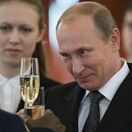 Read more Putin: Russian oligarchs got rich completely legally and have no influence on politics
He then developed the idea so that rich businessmen could pay such contributions to the budget regularly. Revenues from donations for this year were originally planned at 1.7 billion rubles (about 20 million euros), but so far they have received up to 220 billion rubles (roughly 2.6 billion euros). This already shows how generous the richest Russians are when they are afraid of ending up behind bars.
According to the British newspaper Financial Times, war spending in Russia is rising at a dizzying pace, last year it increased by 42 percent compared to the previous year. The Russian Ministry of Finance and the Central Bank have already warned that such developments are no longer sustainable.
In the first four months of this year alone, the state budget deficit reached 5.9 trillion rubles (about 70.5 billion euros) and economic growth hovered at 0.4 percent (instead of the planned 1.3 percent).