Wednesday, June 10, 2026
    The GeoStrategic Consensus
    No Result
    View All Result
    • Login
    • HOME
    • AMERICAS
      • Argentina
      • Brazil
      • Canada
      • Chile
      • Colombia
      • Costa Rica
      • Cuba
      • Dominican Republic
      • Ecuador
      • El Salvador
      • Greenland
      • Guatemala
      • Honduras
      • Mexico
      • Nicaragua
      • Panama
      • Paraguay
      • Peru
      • United States
      • Uruguay
      • Venezuela
    • ASIA-PACIFIC
      • Australia
      • Brunei Darussalam
      • Cambodia
      • China
      • Federated States of Micronesia
      • Fiji
      • Indonesia
      • Japan
      • Kiribati
      • Laos
      • Malaysia
      • Marshall Islands
      • Mongolia
      • Myanmar
      • Nauru
      • New Zealand
      • North Korea
      • Palau
      • Papua New Guinea
      • Philippines
      • Samoa
      • Singapore
      • Solomon Islands
      • South Korea
      • Taiwan
      • Thailand
      • Timor-Leste
      • Tonga
      • Tuvalu
      • Vanuatu
      • Vietnam
    • CARICOM
      • CARICOM – Non-English
        • Haiti
        • Suriname
      • CARICOM Associates
        • Anguilla
        • Bermuda
        • British-Virgin-Islands
        • Cayman-Islands
        • Curacao
        • Turks-and-Caicos
      • CARICOM English
        • Antigua and Barbuda
        • Barbados
        • Belize
        • Dominica
        • Grenada
        • Guyana
        • Jamaica
        • Montserrat
        • Saint Kitts and Nevis
        • Saint Lucia
        • Saint Vincent and the Grenadines
        • The Bahamas
        • Trinidad and Tobago
    • EURASIA
      • Armenia
      • Azerbaijan
      • Balarus
      • Georgia
      • Kazakhstan
      • Kyrgyzstan
      • Moldova
      • Russia
      • Tajikistan
      • Turkmenistan
      • Ukraine
      • Uzbekistan
    • EUROPE
      • Albania
      • Andorra
      • Austria
      • Bosnia and Herzegovina
      • Bulgaria
      • Croatia
      • Cyprus
      • Czech Republic
      • Denmark
      • Estonia
      • Finland
      • France
      • Germany
      • Greece
      • Holy See
      • Hungary
      • Iceland
      • Ireland
      • Italy
      • Kosovo
      • Latvia
      • Liechtenstein
      • Lithuania
      • Luxembourg
      • Malta
      • Monaco
      • Montenegro
      • Netherlands
      • North Macedonia
      • Norway
      • Poland
      • Portugal
      • Romania
      • San Marino
      • Serbia
      • Slovakia
      • Slovenia
      • Spain
      • Sweden
      • Switzerland
      • United Kingdom
    • MIDDLE EAST AND NORTH AFRICA
      • Algeria
      • Bahrain
      • Egypt
      • Iran
      • Iraq
      • Israel
      • Jordan
      • Kuwait
      • Lebanon
      • Lybia
      • Morocco
      • Oman
      • Palestinian Territories
      • Qatar
      • Saudi Arabia
      • Syria
      • Tunisia
      • Turkey
      • United Arab Emirates
      • Western Sahara
      • Yemen
    • SOUTH ASIA
      • Afghanistan
      • Bangladesh
      • Bhutan
      • India
      • Maldives
      • Nepal
      • Pakistan
      • Sri Lanka
    • SUB-SAHARAN AFRICA
      • Angola
      • Benin
      • Botswana
      • Burkina Faso
      • Burundi
      • Cabo Verde
      • Cameroon
      • Central African Republic
      • Chad
      • Comoros
      • Cote d’Ivoire
      • Democratic Republic of the Congo
      • Djibouti
      • Equatorial Guinea
      • Eritrea
      • Eswatini
      • Ethiopia
      • Gabon
      • Gambia
      • Ghana
      • Guinea
      • Guinea Bissau
      • Kenya
      • Lesotho
      • Liberia
      • Madagascar
      • Malawi
      • Mali
      • Mauritania
      • Mauritius
      • Mozambique
      • Namibia
      • Niger
      • Nigeria
      • Republic of the Congo
      • Rwanda
      • Sao Tome and Principe
      • Senegal
      • Seychelles
      • Sierra Leone
      • Somalia
      • South Africa
      • South Sudan
      • Sudan
      • Tanzania
      • Togo
      • Uganda
      • Zambia
      • Zimbabwe
    • HOME
    • AMERICAS
      • Argentina
      • Brazil
      • Canada
      • Chile
      • Colombia
      • Costa Rica
      • Cuba
      • Dominican Republic
      • Ecuador
      • El Salvador
      • Greenland
      • Guatemala
      • Honduras
      • Mexico
      • Nicaragua
      • Panama
      • Paraguay
      • Peru
      • United States
      • Uruguay
      • Venezuela
    • ASIA-PACIFIC
      • Australia
      • Brunei Darussalam
      • Cambodia
      • China
      • Federated States of Micronesia
      • Fiji
      • Indonesia
      • Japan
      • Kiribati
      • Laos
      • Malaysia
      • Marshall Islands
      • Mongolia
      • Myanmar
      • Nauru
      • New Zealand
      • North Korea
      • Palau
      • Papua New Guinea
      • Philippines
      • Samoa
      • Singapore
      • Solomon Islands
      • South Korea
      • Taiwan
      • Thailand
      • Timor-Leste
      • Tonga
      • Tuvalu
      • Vanuatu
      • Vietnam
    • CARICOM
      • CARICOM – Non-English
        • Haiti
        • Suriname
      • CARICOM Associates
        • Anguilla
        • Bermuda
        • British-Virgin-Islands
        • Cayman-Islands
        • Curacao
        • Turks-and-Caicos
      • CARICOM English
        • Antigua and Barbuda
        • Barbados
        • Belize
        • Dominica
        • Grenada
        • Guyana
        • Jamaica
        • Montserrat
        • Saint Kitts and Nevis
        • Saint Lucia
        • Saint Vincent and the Grenadines
        • The Bahamas
        • Trinidad and Tobago
    • EURASIA
      • Armenia
      • Azerbaijan
      • Balarus
      • Georgia
      • Kazakhstan
      • Kyrgyzstan
      • Moldova
      • Russia
      • Tajikistan
      • Turkmenistan
      • Ukraine
      • Uzbekistan
    • EUROPE
      • Albania
      • Andorra
      • Austria
      • Bosnia and Herzegovina
      • Bulgaria
      • Croatia
      • Cyprus
      • Czech Republic
      • Denmark
      • Estonia
      • Finland
      • France
      • Germany
      • Greece
      • Holy See
      • Hungary
      • Iceland
      • Ireland
      • Italy
      • Kosovo
      • Latvia
      • Liechtenstein
      • Lithuania
      • Luxembourg
      • Malta
      • Monaco
      • Montenegro
      • Netherlands
      • North Macedonia
      • Norway
      • Poland
      • Portugal
      • Romania
      • San Marino
      • Serbia
      • Slovakia
      • Slovenia
      • Spain
      • Sweden
      • Switzerland
      • United Kingdom
    • MIDDLE EAST AND NORTH AFRICA
      • Algeria
      • Bahrain
      • Egypt
      • Iran
      • Iraq
      • Israel
      • Jordan
      • Kuwait
      • Lebanon
      • Lybia
      • Morocco
      • Oman
      • Palestinian Territories
      • Qatar
      • Saudi Arabia
      • Syria
      • Tunisia
      • Turkey
      • United Arab Emirates
      • Western Sahara
      • Yemen
    • SOUTH ASIA
      • Afghanistan
      • Bangladesh
      • Bhutan
      • India
      • Maldives
      • Nepal
      • Pakistan
      • Sri Lanka
    • SUB-SAHARAN AFRICA
      • Angola
      • Benin
      • Botswana
      • Burkina Faso
      • Burundi
      • Cabo Verde
      • Cameroon
      • Central African Republic
      • Chad
      • Comoros
      • Cote d’Ivoire
      • Democratic Republic of the Congo
      • Djibouti
      • Equatorial Guinea
      • Eritrea
      • Eswatini
      • Ethiopia
      • Gabon
      • Gambia
      • Ghana
      • Guinea
      • Guinea Bissau
      • Kenya
      • Lesotho
      • Liberia
      • Madagascar
      • Malawi
      • Mali
      • Mauritania
      • Mauritius
      • Mozambique
      • Namibia
      • Niger
      • Nigeria
      • Republic of the Congo
      • Rwanda
      • Sao Tome and Principe
      • Senegal
      • Seychelles
      • Sierra Leone
      • Somalia
      • South Africa
      • South Sudan
      • Sudan
      • Tanzania
      • Togo
      • Uganda
      • Zambia
      • Zimbabwe
    No Result
    View All Result
    Agentially
    No Result
    View All Result
    Home CARICOM CARICOM - Non-English Suriname

    REVIEW — Suriname on the geopolitical divide: Between global storms and the promise of oil – the True Time

    The Analyst by The Analyst
    June 10, 2026
    in Suriname
    REVIEW — Suriname on the geopolitical divide: Between global storms and the promise of oil – the True Time


    A remarkable paradox is taking place around Suriname. As international institutions grow increasingly gloomy about the state of the global economy, the country is at the brink of what may be the greatest economic transformation in its modern history. On the one hand, the UN trade body UNCTAD paints a picture of the future of increasing geopolitical tensions, weakening growth and economic uncertainty. On the other hand, from 2028 a flow of billions from offshore oil production will beckon, which in theory offers Suriname an unprecedented opportunity for prosperity. In between, however, a sharp warning is sounded from the International Monetary Fund (IMF): Suriname is not yet institutionally insufficiently prepared for what is to come.

    READ ALSO

    DSB shareholders’ meeting adjourned – de Ware Tijd

    Justice wants to take cocaine profits from footballer Promes – de Ware Tijd

    Text Ivan Cairo

    Image Staatsolie

    These three developments together place Suriname at a historic crossroads. Not only between poverty and wealth, or between vulnerability and economic strength, but above all between two possible futures: that of a country that manages to convert natural wealth into sustainable development, and that of a country that is once again dragged down by the same economic pitfalls that have characterized previous commodity booms.

    A world in geopolitical unrest

    The Unctad report Trade and Development Foresights 2026 leaves little room for optimism about the global environment in which Suriname has to move. The initial growth acceleration of early 2026, driven by the rapid development of artificial intelligence and recovery in industrial production, is in danger of succumbing to geopolitical tensions. Trade conflicts give way to military escalations, regional power struggles and economic uncertainty.

    For a small open economy like Suriname, such global shifts are not abstract analyzes from distant capitals. The consequences directly affect society.

    Military tensions in the Middle East have already led to higher oil prices and rising international shipping costs. For a country that is highly dependent on imports, this almost automatically means more expensive fuel, higher transport costs and rising food prices. What is called an international crisis elsewhere translates here into the price of bread, rice, petrol and daily groceries.

    There is a second risk on top of this: financial uncertainty. Unctad signals an international “flight to safety”, with investors withdrawing capital from emerging markets and seeking safe havens. For Latin American economies, this led on average to significant pressure on national currencies.

    These are dangerous developments for Suriname, which is trying to restore price stability and control inflation after years of economic disruption. When external shocks coincide with internal fragility, a situation arises in which economic progress can quickly be undermined.

    Unctad thus touches on a sensitive point: food security and economic stability are no longer separate issues. They have become inextricably linked.

    The paradox of Suriname’s growth story

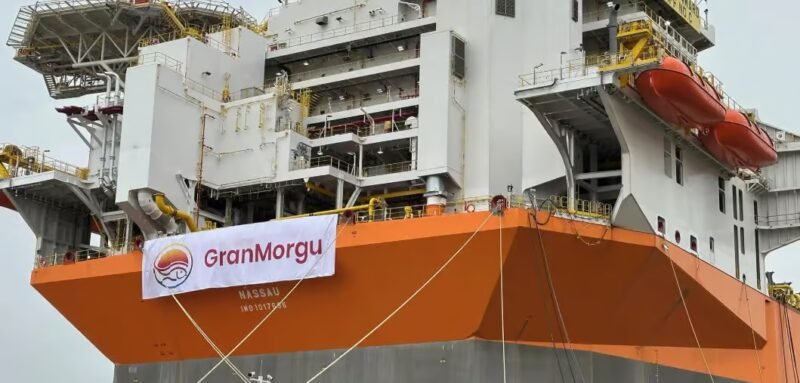
    Against this background, on paper Suriname almost seems an exception to the international trend. While global growth is weakening towards 2.6 percent according to Unctad, a much stronger economic expansion is expected for Suriname. From 2028, Suriname will experience explosive growth in its GDP, as will be the case in neighboring Guyana from 2020. The preparations for offshore oil and gas extraction, and in particular the billion-dollar investments around GranMorgu in Block 58, create an economic dynamic that differs from the rest of the world.

    There is a remarkable irony in that. It is precisely the geopolitical instability that causes economic uncertainty elsewhere that may increase the strategic attractiveness of Suriname. As energy supply becomes a geopolitical issue worldwide, the value of relatively stable extraction areas is growing. In a world where energy security is becoming increasingly important, the Surinamese basin takes on a new, more valuable meaning.

    IMF pulls the emergency brake

    But just at the moment when this perspective opens up, the IMF pulls hard on the emergency brake. In the technical advisory report released on Friday, the Fund warns that although Suriname has legally prepared itself to some extent for the oil period, it is hardly ready in practice for the billions expected from 2028.

    That warning is remarkably sharply worded. The legal foundations exist. The Public Financial Management Act was passed. The Savings and Stabilization Fund Act was amended. Important mechanisms have been built in on paper: a medium-term debt anchor, expenditure ceilings and a fund that must protect future generations against the vagaries of commodity markets.

    But according to the IMF, there is a dangerous gap between legislation and reality. The fund that is supposed to manage oil revenues does not yet have a fully operational board, investment procedures or institutional structure. Important implementation rules are missing. Budget processes do not function as intended. Essential data exchange between ministries, the Central Bank, the Planning Bureau and statistical authorities is poor.

    According to the IMF, even the multi-year budget strategy – intended as an instrument for long-term planning – hardly looks further than one year ahead. This is not an administrative shortcoming, but a structural problem.

    The Shadow of the Oil Curse

    Because the history of resource countries shows that economic disaster often does not arise from a lack of natural wealth, but precisely from the sudden possession of it.

    The so-called oil curse is now one of the best-known economic paradoxes in the world. Countries discover valuable resources, receive enormous revenues and appear to be heading towards a golden future. But then government spending derails, budget discipline weakens and political pressure arises to place short-term interests above structural investments. The consequences are well known: debt, inflation, dependency and economic crises.

    Suriname also knows such patterns from its own experience. Previous periods of resource prosperity have not led to a broad economic transformation. They created temporary financial space, but did not provide sufficient protection against future shocks. That makes the current situation significantly different. The challenge is no longer to extract oil. The real challenge is institutional maturity.

    The decisive years

    Unctad and the IMF ultimately touch on the same fundamental question, albeit from different angles: how do you build economic resilience in an increasingly unstable world? Unctad advocates strengthened fiscal frameworks and investments in structural economic resilience. The IMF insists on budget discipline, institutions and transparency. The core of both messages is almost identical: natural wealth alone does not create a prosperous society.

    Future oil revenues will only become meaningful when they are used to reduce existing vulnerabilities. This means investing in agriculture to reduce import dependence. It means investing in education, technical knowledge and institutions. It also means investing in renewable energy and economic diversification.

    The biggest mistake Suriname can make is to regard the coming billions inflow as an end point. Because oil is not a destination. It is at most an instrument. The coming years are therefore likely to be the most important policy window of this decade. Between now and 2028, Suriname has limited time to lay the institutional foundation necessary for the oil period to actually succeed.

    The wind is currently blowing hard in the global economy. Geopolitical tensions are increasing, trade flows are shifting and uncertainty is growing. But perhaps that is precisely the real test for Suriname. Not whether the country will become rich through oil. But will it finally learn how wealth is managed sustainably?



    Source link

    Related Posts

    DSB shareholders’ meeting adjourned – de Ware Tijd
    Suriname

    DSB shareholders’ meeting adjourned – de Ware Tijd

    June 10, 2026
    Justice wants to take cocaine profits from footballer Promes – de Ware Tijd
    Suriname

    Justice wants to take cocaine profits from footballer Promes – de Ware Tijd

    June 10, 2026
    US$450,000 paid for FIFA 2026 World Cup broadcasting rights – de Ware Tijd
    Suriname

    US$450,000 paid for FIFA 2026 World Cup broadcasting rights – de Ware Tijd

    June 10, 2026
    Women’s basketball: Defending champion De Arend dominates Yellow Birds – de Ware Tijd
    Suriname

    Women’s basketball: Defending champion De Arend dominates Yellow Birds – de Ware Tijd

    June 10, 2026
    No ‘specific resources’ for Heritage Month 2026 – the True Time
    Suriname

    No ‘specific resources’ for Heritage Month 2026 – the True Time

    June 10, 2026
    Next Post
    Purahéi Soul will sing the Paraguayan anthem at the opening of the 2026 World Cup – Music

    Purahéi Soul will sing the Paraguayan anthem at the opening of the 2026 World Cup - Music

    POPULAR NEWS

    Thousands march for French schoolgirl murdered after police failed to question suspect | France

    Thousands march for French schoolgirl murdered after police failed to question suspect | France

    June 10, 2026
    Garnbret makes history, the first woman at the top of the Bibliographie (VIDEO)

    Garnbret makes history, the first woman at the top of the Bibliographie (VIDEO)

    June 10, 2026
    American national champion hero of the fourth stage

    American national champion hero of the fourth stage

    June 10, 2026
    7 years for two defendants, with their deposit in the hearing regarding the incidents of desecration of the national flag – Al-Shorouk Online

    7 years for two defendants, with their deposit in the hearing regarding the incidents of desecration of the national flag – Al-Shorouk Online

    June 10, 2026
    Illegal money and self-deception – Islamic Affairs: Al-Khobar

    Illegal money and self-deception – Islamic Affairs: Al-Khobar

    June 10, 2026

    EDITOR'S PICK

    Bike, evening meal for soldiers and spartakiade. How we played sports under socialism

    Bike, evening meal for soldiers and spartakiade. How we played sports under socialism

    June 10, 2026
    Tageblatt.lu | Tsunami warning lifted | Earthquake in the Philippines: At least 32 dead and around 130 injured

    Tageblatt.lu | Tsunami warning lifted | Earthquake in the Philippines: At least 32 dead and around 130 injured

    June 10, 2026
    Health Ministry activates precautionary Ebola measures

    Health Ministry activates precautionary Ebola measures

    June 10, 2026
    Golden rule: When changing the oil in the automatic transmission

    Golden rule: When changing the oil in the automatic transmission

    June 10, 2026

    Recent Posts

    • Garnbret makes history, the first woman at the top of the Bibliographie (VIDEO)
    • American national champion hero of the fourth stage
    • 7 years for two defendants, with their deposit in the hearing regarding the incidents of desecration of the national flag – Al-Shorouk Online
    • Illegal money and self-deception – Islamic Affairs: Al-Khobar

      © 2026 Agentially - Navigating shifting sovereignties and global risk .

      Welcome Back!

      Login to your account below

      Forgotten Password?

      Retrieve your password

      Please enter your username or email address to reset your password.

      Log In
      No Result
      View All Result

        © 2026 Agentially - Navigating shifting sovereignties and global risk .

        This website uses cookies. By continuing to use this website you are giving consent to cookies being used. Visit our Privacy and Cookie Policy.