The Colombian health system today would not have enough insurers with the financial capacity to absorb a massive liquidation of the intervened EPS, even in the case of Nueva EPS, the entity with the largest number of affiliates. That is one of the main conclusions of a FrontierView analysis, which warns about the difficulties that the Government would have in transferring millions of users without increasing pressure on the receiving entities and the institutions providing health services (IPS).
The scenario poses a dilemma for the Government of Abelardo De la Espriella. On September 4, during the Governors’ Summit, the president stated that EPSs that are viable and guarantee good care will be able to recover, while those that do not meet these conditions must be liquidated in an orderly manner.
READ ALSO

That same day, the Minister of Health, Ana María Vesga, indicated that the Government’s immediate priority is to stabilize the system and not liquidate it. According to FrontierView, the financial picture of insurers supports the need to prioritize stabilization, because almost no EPS would currently have sufficient capacity to receive a mass migration of enrollees without compromising its own operation.
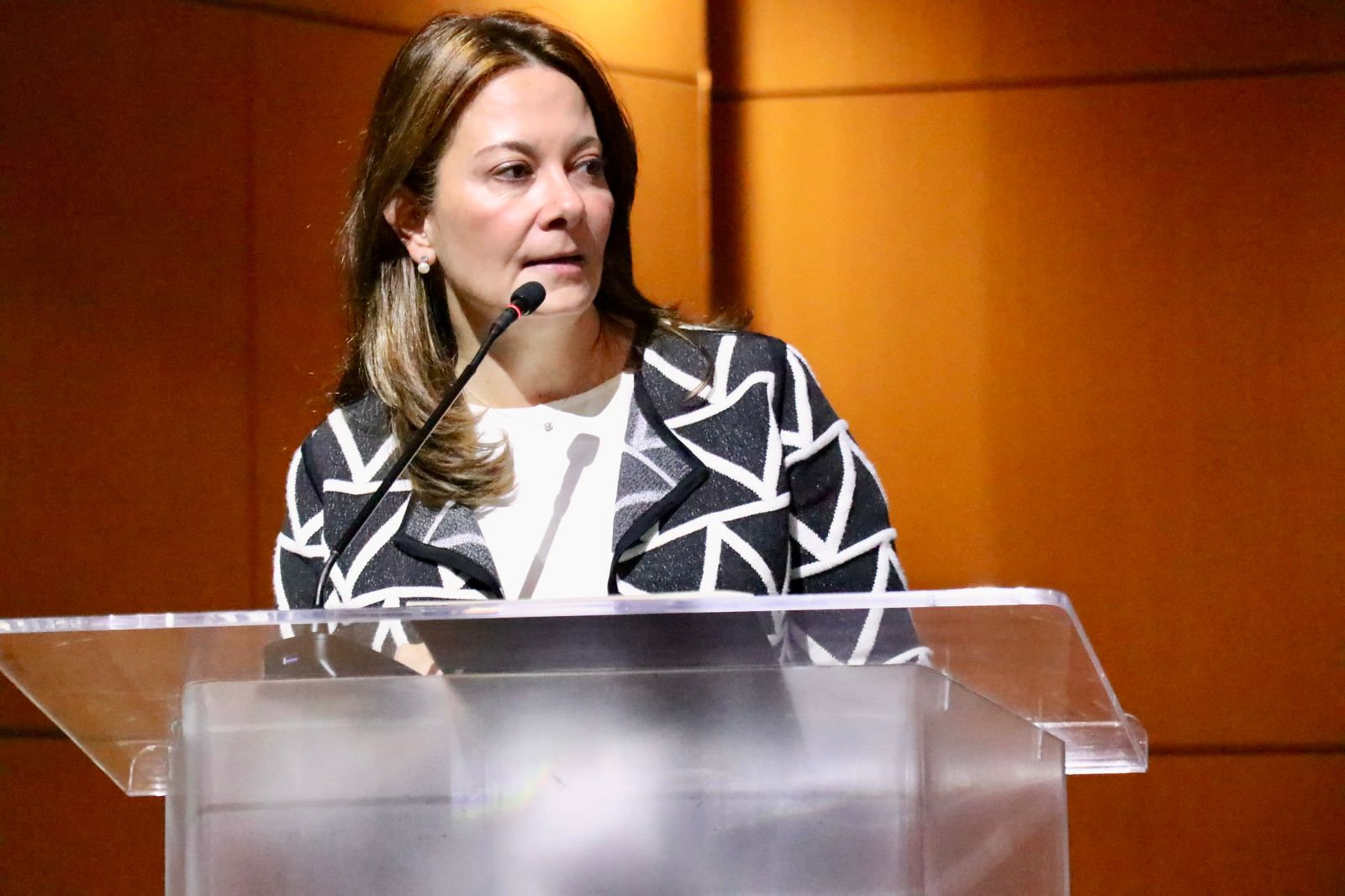
Ana María Vesga, Minister of Health. Photo:Acemi
The non-intervened EPS also face financial problems
The analysis reviewed the situation of the eight largest non-intervened EPSs in the country and found that three of them—Sanitas, Mutual Ser and Savia Salud—do not meet any of the three minimum financial criteria required by the Superintendency of Health: minimum capital, adequate equity and technical reserves.
The other entities analyzed—Compensar, Capital Salud and Familiar de Colombia—meet only one of those three requirements. Even Sura and Salud Total, identified in the report as the non-intervened EPS with better financial conditions and as the main candidates to receive affiliates from Nueva EPS, only meet two of the three criteria and present non-compliance with adequate equity.
The diagnosis coincides, according to FrontierView, with the most recent financial report of the Comptroller General of the Republic. According to this report, only Aliansalud, Salud Total, Salud Mía and Sura currently meet the required financial and solvency conditions, among a total of 23 active insurers in Colombia.
For Santiago González Barrera, analyst for the Andean Region at FrontierView, this situation limits the possibilities of using mass transfers as a mechanism to solve the problems of the intervened EPS.
“Today there is not a single EPS—intervened or not—with more than enough capacity to absorb a massive migration of affiliates without putting its own solvency at risk. This turns any liquidation into a very high-risk exercise for the affiliates, for the receiving EPS and for the IPS. It is far from being a solution,” he stated.
READ ALSO

Sura and Salud Total would be possible recipients, but with operational and territorial restrictions. Photo:Néstor Gómez – EL TIEMPO
Nine EPS intervened and few regional alternatives
The situation is even more complex among the nine EPS currently under intervention: Nueva EPS, Coosalud, Famisanar, Emssanar, Asmet Salud, EPS SOS, Capresoca, Proteger/Cajacopi and Dusawaki.
According to the analysis, these entities fail, together, to practically all the indicators of minimum capital, adequate equity and technical reserves required to operate. The only noted exception is Proteger/Cajacopi, which satisfies the minimum capital requirement.
FrontierView maintains that none of the nine EPSs have the capacity to achieve independent financial recovery or to guarantee quality care in the short or medium term, so their continuity would depend on state support.
Added to the financial difficulties is a territorial problem. Several of the EPSs intervened have a presence in regions where alternatives for affiliates are limited. The report mentions Coosalud, Emssanar, Asmet Salud, Capresoca and Dusawaki, with a presence in areas such as the southwest of the country, the isolated east of Casanare and the indigenous border between La Guajira and Cesar.
In these regions, a possible liquidation could leave members without sufficient options to move to other insurers with an effective presence in their territories.
READ ALSO
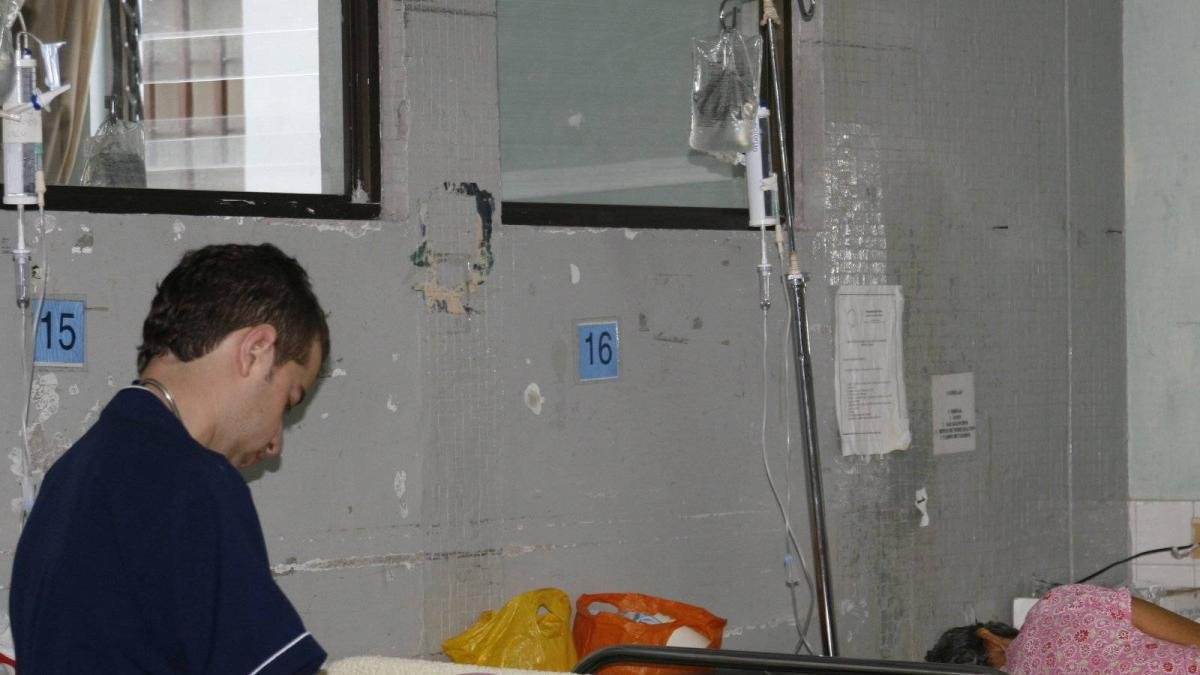
The intervened EPS could be necessary as a “bridge EPS” to receive affiliates. Photo:Coosalud
New EPS: the transfer of affiliates would have a limit
One of the main points of the analysis is the situation of Nueva EPS, which has 11.39 million members. FrontierView points out that moving users to EPS with better financial indicators would not be enough to substantially reduce the pressure on the entity.
Sura and Salud Total appear as possible recipients because they meet the requirements for minimum capital and technical reserves and have operations in areas of the north and center-west of the country. However, the report warns that both have limited operational capacity.
Its areas of “safe” expansion would be specific, while an important part of Nueva EPS affiliates is found in regions where the non-intervened EPS have no real presence.
For this reason, according to FrontierView, transfers would have to be concentrated in the subsidized regime and in certain geographic clusters, without reaching a sufficient volume to significantly alleviate the financial pressure of Nueva EPS.
The analysis then poses a contradiction for the liquidation strategy. If the Government wanted to decongest New EPS through transfers, it would also have to resort to other intervened EPSs as possible “bridge EPSs” to receive members in the most remote areas.
That would mean that, while seeking to reduce the burden of Nueva EPS, some of the other intervened entities would have to remain operational to absorb part of that population.
READ ALSO
The situation of Nueva EPS concentrates a good part of the problem. Photo:MAURICIO MORENO
The financial and fiscal problem
FrontierView also ties the settlement discussion to the size of the health system’s cumulative deficit.
In May of this year, Acemi proposed diluting in four years, through percentages of 40%, 30%, 20% and 10%, a shortfall of $34 billion corresponding to system obligations between 2021 and 2025. However, the statement indicates that more recent reports raise that figure to more than $58 billion.
According to the analysis, this would imply that, to avoid a fiscal overload, the financing period would also have to be extended.
The Government has ruled out presenting a health reform before Congress and has indicated the recalculation of the Capitation Payment Unit (UPC) as one of the mechanisms available to rebalance the flow of resources in the system. However, the statement indicates that there is still no clarity on how the $10 billion shock plan announced by De la Espriella will be financed.
According to FrontierView analysts, a structural solution would also require tax reform and long-term political commitment.
READ ALSO

Liquidating an EPS can take years
Added to the financial restrictions is the legal process involved in liquidating an EPS. According to the analysis, it is not an immediate administrative closure, since the legislation requires establishing a plan to pay the entity’s financial obligations.
The process, FrontierView adds, has historically taken years. A liquidation without sufficient support to respond to the obligations could also generate uncertainty among the IPS that have sustained their credit operation hoping to recover the resources owed.
The report warns that this scenario could trigger a wave of insolvencies and service closures, worsening the care crisis.
“Liquidating an EPS does not solve anything, it only transfers the problem to another that also does not have the means to receive it; in addition, the country cannot afford to liquidate anything: there is nowhere to reassign the members or with which to pay what is already owed. With a debt of $58 billion, this is not a problem that can be solved by liquidating, but rather by financing,” said González.
And he added: “A real financial plan, given the country’s fiscal capacity, is measured in years, not months.”
Thus, FrontierView’s diagnosis places the debate on the future of the intervened EPS in a double restriction: on the one hand, the lack of insurers with sufficient financial and operational capacity to receive millions of members; on the other, the magnitude of the accumulated obligations and the time it would take to resolve them. In this scenario, the transfer of users and the liquidation of entities would face financial, territorial and legal limits.
EDWIN CAICEDO
Environment and Health Journalist
@CaicedoUcros