Between Europe There are differences between car companies, and possibly also between German politicians and French-born EU Industry Commissioner Stéphane Séjourné, over French desires for advantages for smaller cars. It is clear that the French car manufacturer Renault, in which the French state has a 15 percent stake, will primarily benefit from this. A second beneficiary could also be Europe’s second-largest car company Stellantis, which has absorbed the French brands Peugeot and Citroën, among others.
Former Renault boss Luca De Meo had already laid the foundation for the current discussions during his term as President of the European car manufacturer association Acea for 2023 and 2024. At that time he wished from her EU the introduction of a new category of small cars modeled on the Japanese Kei Cars, which can be 3.40 meters long and 1.48 meters wide and receive privileges in taxes and parking requirements.
The then Renault boss for small cars called for a relaxation of regulations for safety equipment, which is required for all cars in the EU. This includes the electronic warning for speeding or warnings about leaving lanes. Although De Meo had seemingly unabashedly mixed the interests of the European Car Association and his company, he was unable to implement his idea of the European Kei Car. He didn’t find enough allies, possibly because other manufacturers found the whole concept economically uninteresting.
It’s no longer just about niches
The current plans of the French and their many allies in the EU Commission are now more dangerous for the interests of German car companies, but also for German jobs in the industry. Now it is no longer about a niche such as particularly small microcars, but about larger market segments, namely microcars and small cars: France’s car industry wants electric microcars and small cars to receive special treatment when it comes to limits on fleet emissions for CO₂.
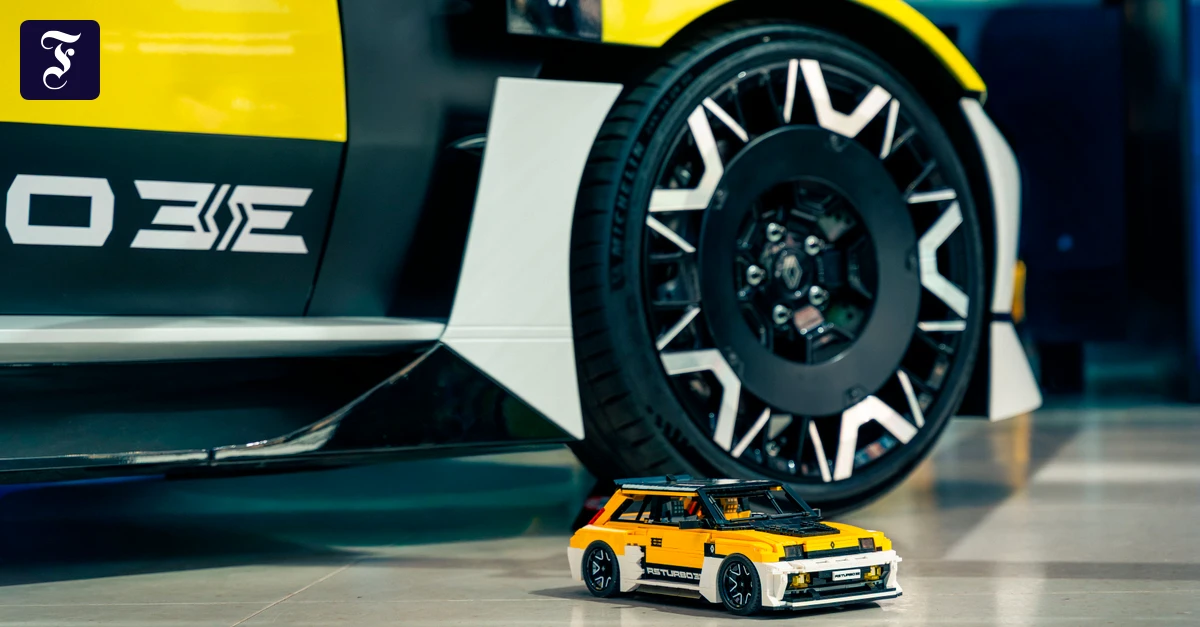
Each small electric car should be counted by a factor of 1.2 when calculating fleet emissions. So if you sell five small cars and register them in the EU, you can calculate the average fleet emissions for electric cars, hybrids and combustion engines as if you had actually sold six emission-free, purely electric cars. These small cars should be distinguished solely by their maximum length of 4.20 meters. It’s no coincidence that Renault’s two most important new electric models, the R5 and R4, are just 3.92 and 4.14 meters long.
The association is behind the project
The project is supported by the European automobile industry association Acea. “Europe must maintain the economic feasibility and competitiveness of producing small, affordable cars,” said an official response. The bonus will accelerate the availability of more affordable cars, which are important for urban mobility and the introduction of electric cars in the mass market.
Acea also talks about how desirable it is to produce small cars in Europe in general, including those with combustion engines. The French effort to seal off the European car market from imports beyond the anti-Chinese tariffs is also supported by generally requiring further discounts when calculating emissions for electric cars “Made in Europe”.
These positions are not well received in the German auto industry and with German associations. Although the representatives of the car companies and associations only want to speak if they are not quoted, the lines of conflict are clear: the Volkswagen Group could still benefit a little from a small car rule, and to a negligible extent, the BMW subsidiary Mini.
But in general, German companies make their money with larger cars, especially large, luxurious and fast models. Renault and many Stellantis brands, on the other hand, have difficulty gaining a foothold above the small car segment and do not even achieve respectable sales figures in the compact Golf class (4.20 to 4.40 meters long).
The French strategy runs counter to the German premium manufacturers BMW and Mercedes in particular – with the French then cleverly seeing the current Acea president and Mercedes boss Ola Källenius as having a duty to mediate and thus depriving him of freedom of action. It would be in the interests of German companies to adapt the rules for overall CO₂ emissions to the sluggish development of the electric car market, because there is a lack of charging infrastructure for small and large cars. In addition, German companies are export-oriented and interested in gaining access to foreign markets, while French industry sees itself under siege from abroad, wants to isolate Europe and is little concerned that German sales opportunities would be reduced in the event of retaliatory actions by other countries.
Experts in German car companies consider French efforts to introduce not only temporary discounts for small cars, but also legally binding two car categories, small and larger, to be even more worrying. From a German perspective, this would be a gateway for all kinds of “discrimination” against “evil” German cars with larger dimensions, for example when entering city centers, parking fees or special taxes for the newly emerging category of larger cars.
The project to introduce a new category of small cars is reportedly on the table at the EU Commission. However, the European Auto Industry Association has not made an official statement on this or simply did not want to make an official commitment.