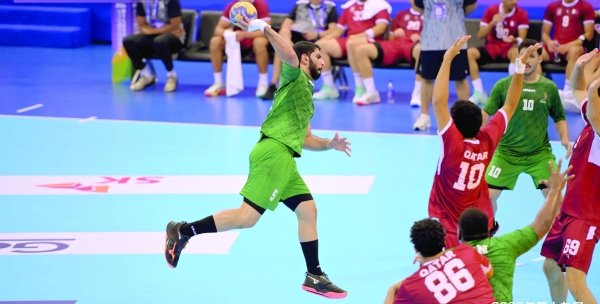
MUSCAT: Oman’s youth handball team concluded its campaign at the 19th Asian Men’s Youth Handball Championship with a 45-24 defeat against Qatar in Saturday’s ninth-place playoff, finishing the continental tournament in 10th place after two weeks of challenging competition in Zhuzhou, China.
Although the final score reflected Qatar’s superiority, the championship provided invaluable international experience for the young Omani squad, which faced some of Asia’s strongest teams in a tournament that also served as a qualification event for the 2027 IHF Men’s Youth World Championship.
Qatar controlled the match from the opening minutes, taking advantage of its greater depth and experience to establish an early lead. Oman, however, continued to fight throughout the contest despite dealing with injuries and fatigue accumulated over a demanding tournament schedule.
The Qatari side built a commanding 26-9 halftime advantage, capitalising on quick transitions and clinical finishing, while Oman’s attacking opportunities were limited by a well-organised defensive unit.
The Omani team showed greater determination after the break and produced a much-improved second-half performance. Captain Said al Hasani led the response with several goals, while Ghassan al Mashari continued his impressive offensive display, helping Oman score 15 goals in the second half compared to nine before the interval.
Despite the improvement, Qatar maintained control of the contest and secured a comfortable 45-24 victory, claiming ninth place, while Oman finished the tournament in 10th.
Throughout the championship, Oman competed against Saudi Arabia, Hong Kong China, China, Bahrain, Chinese Taipei and Qatar, gaining valuable exposure against different playing styles and some of the continent’s most established youth programmes. The experience is expected to play an important role in the development of the current generation of players.
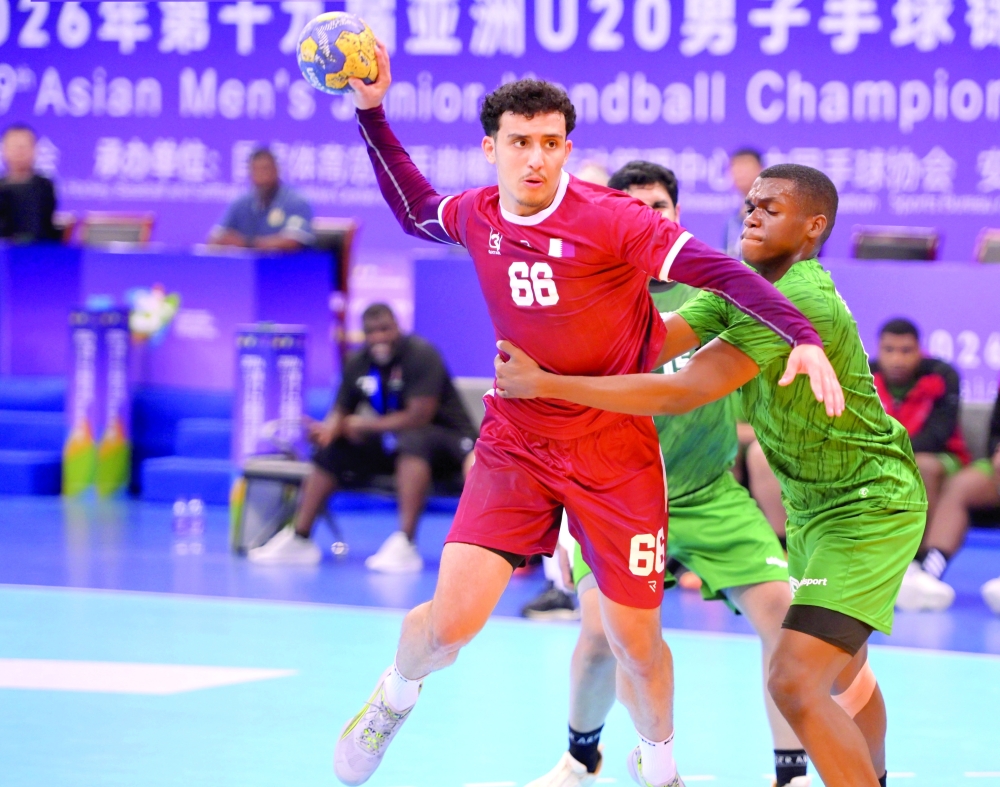
Head Coach Highlights Need for Long-Term Development
Oman head coach Kamel Hdidder acknowledged Qatar’s superiority, emphasising that the difference between the two teams extended well beyond the match itself.
“Qatar deserved the victory,” Hdidder said after the game. “They have a much larger player pool and greater squad depth than we do. We came into this tournament without four important players because of injuries and suspension, which forced us to rely on a very limited rotation throughout the competition.”
The Tunisian coach explained that fatigue had a significant impact on his team’s performances, with six or seven players carrying the workload over five demanding matches.
“It is extremely difficult to compete at this level when the same players are required to play almost every minute,” he said. “The players gave everything they had, but physically it became impossible to maintain the same intensity.”
He also stressed that the leading Asian nations benefit from well-established youth development systems, competitive domestic leagues and year-round training programmes.
“Countries such as Japan, South Korea, China, Bahrain and Qatar have been investing in youth development for many years. Their players compete regularly, attend training camps and gain continuous experience. Our preparation lasted only a short period before the championship.”
He concluded by calling for greater investment in Oman’s youth handball structure.
“If we want to compete with Asia’s best in the future, the work must begin at the grassroots level. We need stronger youth competitions, more training camps and long-term development programmes. That is the only way to close the gap.”
Players Remain Optimistic
Captain Said al Hasani said the players were disappointed with the result but proud of their commitment throughout the tournament.
“We wanted to finish with a victory, but we faced a very strong opponent. We never stopped fighting, especially in the second half. This experience will help us improve and come back stronger in future competitions.”
Ghassan al Mashari, one of Oman’s standout performers, described the championship as an important learning experience.
“Playing against the best teams in Asia teaches you lessons that cannot be learned anywhere else. We gained valuable experience and will continue working hard to improve.”