
One day in On August 33, 33-year-old Ivalu Juhl Petersen received a call from the medical clinic at Dronning Ingrid’s Hospital.
She was sitting at her new job at the reception desk in an office building in Nuuk. It was just around lunch time, so there was a lot of activity around her.
She told her colleagues that she had to take it.
On the phone, she was told that she had been thrown off the waiting list for psychiatry. A waiting list she had been on for two years after she was referred in January 2024 with a view to getting an assessment for ADHD.
– They said that there was a shortage of psychiatrists and that they had chosen to prioritize others before me, says Ivalu Juhl Petersen.
For a long time, Ivalu Jul Petersen has had problems with anxiety, depression and stress, for which she also receives medication, and at the moment it is bad. ADHD symptoms are always something that has lurked in the background, but they too have bubbled to the surface as she has gotten worse in recent years.
Therefore, she had hoped that an investigation by the psychiatrist could help her situation and give her some answers.
But it didn’t work out that way. On the phone, she was told that she had been chosen because she was able to hold a job and did not have an addiction.
The rejection backfired on her. Many things went through Ivalu Juhl Petersen’s mind.
– I was a little afraid to start crying at work. So I don’t really think I had time to react to it until the evening, she remembers.
Prioritization in psychiatry is a condition
Ivalu Juhl Petersen is not the only one who is currently experiencing being de-prioritized or rejected compared to other patients in psychiatry.

Among other things, AG has also spoken with Pia Rørby Frederiksen, who was told by the doctor that she should expect a rejection. In addition, we have spoken to several other people who, in their own way, have experienced the consequences of the pressured psychiatry and the long waiting times that are currently in care.
A pressure that became concrete after the health service was able to state that the waiting list for the psychiatrist in June had doubled since November last year. The record-high waiting time is due to the combination of a lack of staff and an increasing desire for psychiatric evaluation for ADHD in particular.
Prioritization of patients has always been a condition in psychiatry, which must accommodate everything from forensic psychiatric patients, patients for acute forced hospitalization, and for children, young people and adults who must be treated and investigated for various mental disorders and diagnoses.
At the moment, however, extra hard prioritization is necessary, says medical director of the Greenlandic Health Service, Jesper Olesen to AG.
– As the situation is now, staff within the psychiatric field is in short supply, and there are no signs of that changing. The employees are not available as it is at the moment – and that is our challenge, he says.
– When it comes to those who are referred to a psychiatrist, we will have to prioritize who we see. And there we prioritize those who need it most.
The hopelessness of the message
Recently, there have been a lot of changes in Ivalu Juhl Petersen’s life. Life has been hard lately.
– So I think I’ve been thinking for a long time that at least this time with the psychiatrist was on the way, she says.
– Now that it didn’t go through anyway, I’m left with a feeling of hopelessness.
Although it was gut-wrenching to be rejected for an appointment with the psychiatrist after two years of waiting, there is also a part of Ivalu Juhl Petersen who can understand it. She is a trained nurse and has previously worked in the health service herself, and therefore knows how stressful it can be.
– But it’s also just hard to accept anyway, she says.
According to the medical director, Jesper Olesen, there has not been a permanent psychiatrist in Greenland for years, and until recently there has been pressure to hire people for “very, very short appointments” in psychiatry.
In some cases on contracts that were only valid for one week.
– I think the most extreme thing has been where psychiatrists have simply covered over the weekend, he says.
Do you think it is okay that the prioritization on the part of psychiatry also means that you have to refuse help to others?
– Now I should not be able to say what it is that has been specifically said to people, but we do not refuse any help. In psychiatry, just as we are in relation to other diseases, we sometimes have to tell the patient that what they bring is too unspecific, Jesper Olesen replies and continues:
– In those cases, it is normal to ask the patient to return home and write a diary of their medical history and define what the challenge is. Even if you think that you may have ADHD, there may be something else at play, and here the doctor must try to find out what the patient is doing wrong. Is it anxiety? Is it depression? Is it ADHD?
He emphasizes that all patients who are referred to psychiatry are assessed by a psychiatrist.
– There is no question of being kicked off a waiting list, he says.
– The general picture is that, based on a picture of symptoms, you can assess that it is not psychiatry that has the best offer.
If the psychiatrists assess that it is not a psychiatric condition that needs to be investigated, then they must actually reject it – this is no different to other referrals in the system.
Will a rejection always depend on a psychiatric assessment, or could it also be because there are not enough staff?
– No, it should be because the referral has been looked through and that the psychiatrist assesses that there is either a lack of information, that social-pedagogical measures are needed or similar, replies Jesper Olesen.
Just an item on the doctor’s checklist
According to Jesper Olesen, it was always possible to offer reasonable help to the patients who turn to the system.
– There should be no doubt about that, he says.
But with the staffing and the work pressure that is the reality in the psychiatric ward right now, this is not possible. Not even patients who, for example, receive a diagnosis of ADHD can get much help other than medicine, Jesper Olesen says.
– And it’s not enough that you get the medicine, it’s also important to get training in dealing with your illness and how to build a lifestyle that suits you, he points out.
Help and guidance to deal with his challenges with anxiety, stress and depression is also something that Ivalu Juhl Petersen demands.
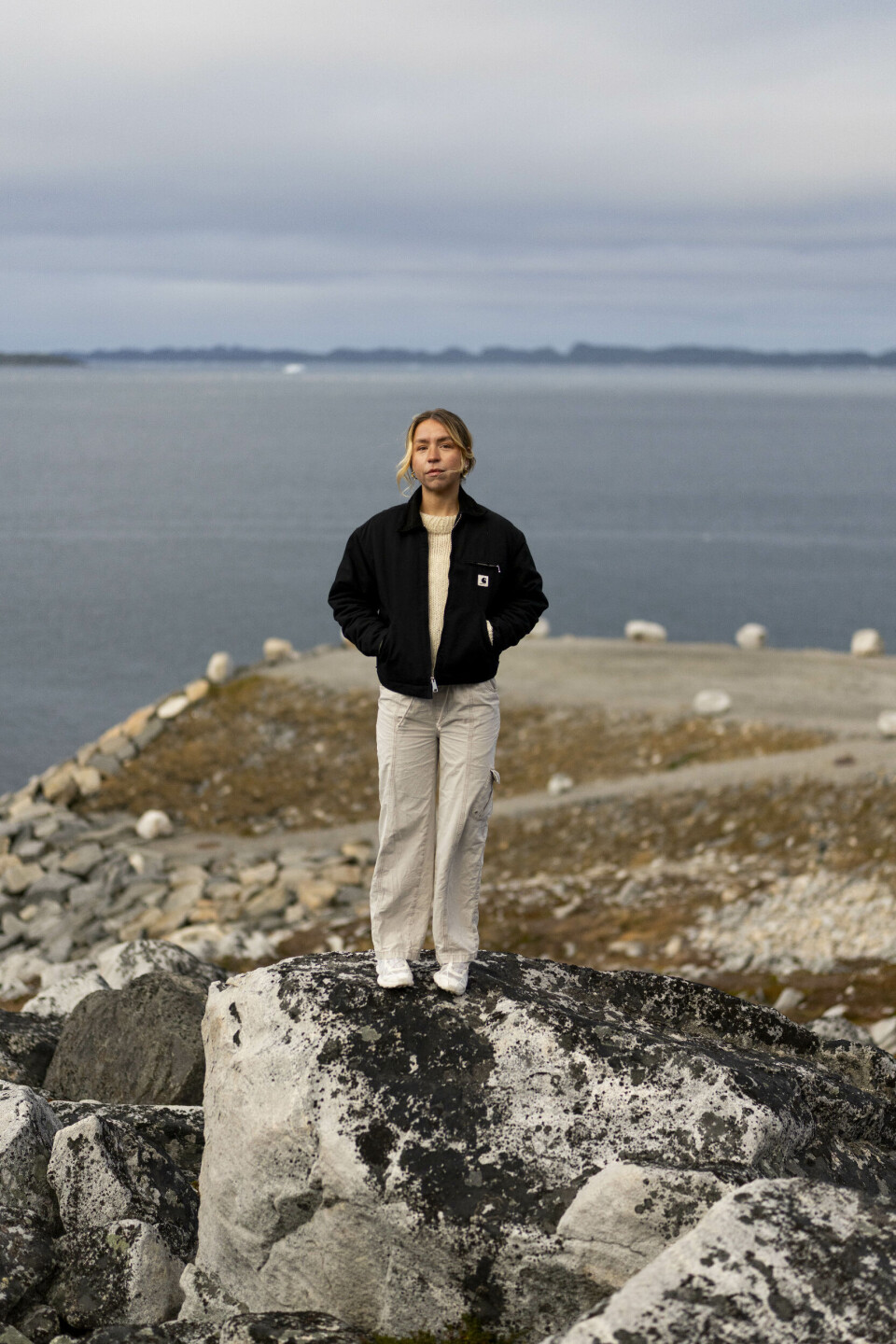
During the telephone conversation, where her referral to psychiatry was rejected, she was also given an appointment at the doctor’s clinic to talk about her anxiety. After this, her medication dose was increased.
– I asked the doctor a little about whether I could get back on the waiting list, but the doctor made it clear that the conversation was only about my anxiety, she says.
Ivalu Juhl Petersen left the doctor’s consultation full of questions and with the feeling that she was just an empty box on the day’s checklist that had to be ticked off.
In order to get answers on how she can get better, Ivalu Juhl Petersen sees no other way out right now than to go to Denmark and get a psychiatric examination for ADHD at her own expense.
– But it also requires time and planning – which I’m super good at, she says, laughing.
Until she can take that step, Ivalu Juhl Petersen lives on in the meantime, as she has done so far.
– I must have lived with this all my life. But I just think that it could have made a big difference if I could have gotten help earlier, she says.
– The fact that you look well-functioning on paper does not necessarily say anything about what it costs each individual person to keep functioning.
AG has interviewed naalakkersuisoq for health and persons with disabilities, Anna Wangenheim, about the situation in psychiatry and the consequences that pressured psychiatry has. You can read the interview in the next and for the time being last episode of ‘While we wait’.