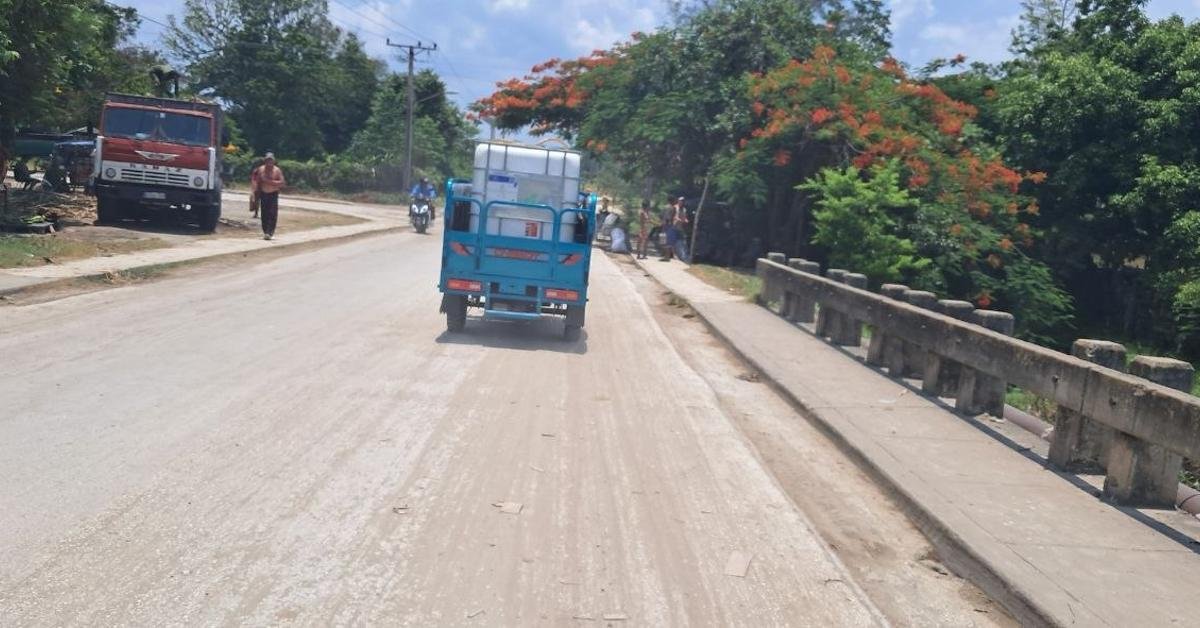
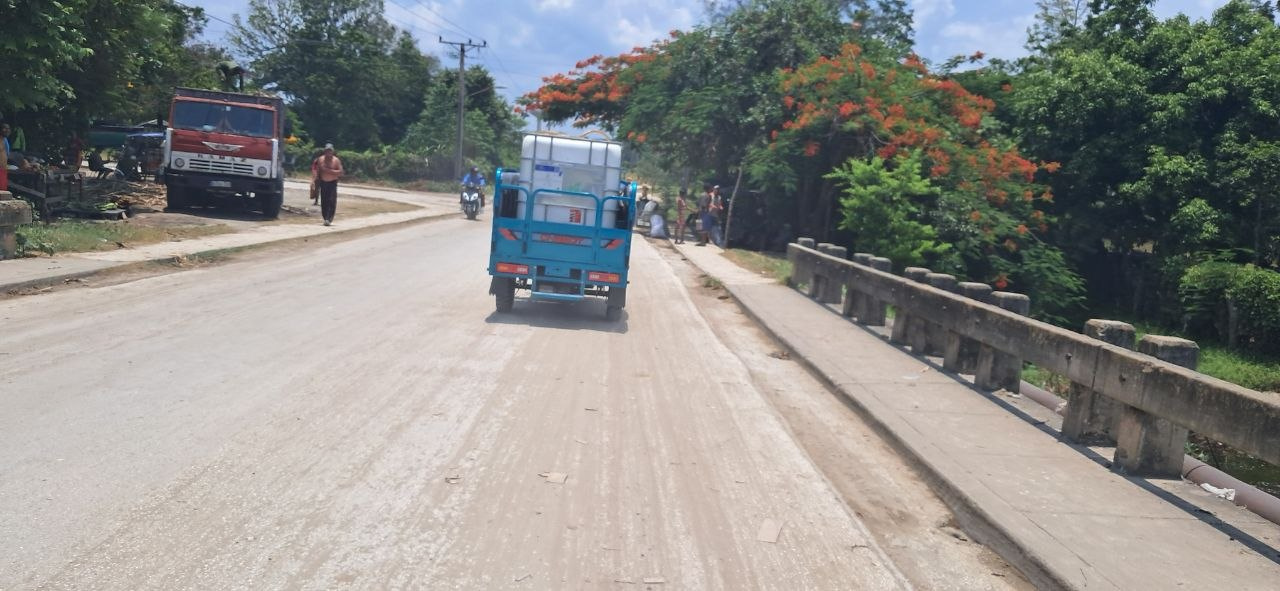
Holguin/A white tank rides on the platform of a blue electric tricycle. At first glance it looks like a water tank, but just look at the hose coiled on the load to understand that it transports another much more coveted commodity: fuel. The scene, captured on a highway in Holguín, summarizes one of the most visible changes that the city is experiencing. The sale of gasoline and diesel by micro and small private companies (MSMEs) is modifying the urban landscape and the way vehicles and goods circulate.
Until recently, a tank of that size would have raised immediate suspicions of resource diversion or a black market. Today, however, it is part of an activity that is gaining space under the umbrella of the private sector. Among the private businesses that sell fuel in Holguín, Calcol stands out, whose business purpose is gastronomic services, and Super Rápido, dedicated to making shipments, both located in the San Rafael Popular Council, where they go from private transporters to small businesses that depend on diesel or gasoline to maintain their operations.
Promotional images even circulate on social networks with offers that set the liter of special gasoline at around 3,000 pesos.
Competition has also come to a market historically dominated by scarcity. The advertisements of these companies promise immediate availability, payment in cash or by transfer and different types of fuels. Promotional images are even circulating on social networks with offers that set a liter of special gasoline at around 3,000 pesos, a price that many consider acceptable compared to the endless lines at state service centers or the uncertainty of having empty tanks.
However, the expansion of the business has also raised concerns among neighbors. Much of the fuel is stored in premises that were not originally designed for that purpose and that, according to area residents, lack the safety measures that would be required for the handling of highly flammable substances. “Tanks come and go here all the time, but no one knows if they have permits or how they store it,” says a neighbor near one of these MSMEs. The fear of a fire or an explosion has begun to creep into conversations where previously there was talk of blackouts or lack of water.
The tank that advances on the tricycle, swinging between the potholes of the Holguin road, is much more than a burden. It is the portrait of a country where fuel has ceased to be just a strategic resource of the State and has also become a private commodity, a reason for business and, at the same time, a source of new concerns for those who see how, along with the smell of gasoline, another uncertainty is installed at the door of their homes.