Democracies and electoral systems are not truly tested when the electoral results are clear and conclusive. Its most demanding examination occurs when elections are defined by minimal margins, in contexts of high political polarization and with deeply divided societies.
It is precisely in these moments that the strength—or fragility—of democratic institutions is revealed.
In cardiological terms, democracies must not only pass electoral electrocardiograms with good results, but also and above all, stress tests.
The recent presidential runoffs in Peru and Colombia constitute a particularly illustrative case study. Both countries reached the second round with polarized societies, campaigns full of confrontation and extremely close results.
In Peru, the final difference is only around 0.22 percentage points. In Colombia, 0.96 points. However, despite the initial similarities, the outcomes have been radically different.
Institutions matter
For decades, the debate on institutions was dominated by development economics.
Numerous studies have shown that countries with strong institutions tend to grow more, attract greater investments and generate better conditions for reducing poverty. All of this remains true.
But the recent Latin American experience shows that institutions fulfill an equally decisive function: guaranteeing the stability and quality of democracy.
Elections are essential, but not sufficient. What distinguishes a robust democracy from a vulnerable one is the capacity of its institutions to legitimately process political conflicts and channel disputes within rules accepted by all actors.
Peru offers a worrying example of what happens when that mechanism is weakened. After the June 7 runoff, the country entered into prolonged political uncertainty. Weeks after the election, the National Election Jury has not yet been able to officially proclaim the next president. The candidate who came in second place against Keiko Fujimori, Roberto Sánchez, refuses to recognize the results and chose to challenge the entire vote abroad. The controversy moved from the polls to the courts and public debate, fueling tensions that ended up further eroding citizen confidence in the political system in general and the electoral system in particular.
Colombia followed a very different path. The June 21 runoff took place normally and with high standards of electoral integrity despite the serious challenges and threats of the context within which it took place.
The National Registry and the National Electoral Council demonstrated notable technical and operational capacity. Just two hours after the polls closed, around 99% of the pre-count results were already available. The speed, transparency and consistency of the information transmitted reaffirmed the professionalism and independence of both institutions and strengthened confidence in the electoral process and its results.
The quality of leadership also matters
But the fundamental difference was not only in the quality of the electoral administration. It was also in the conduct of political actors.
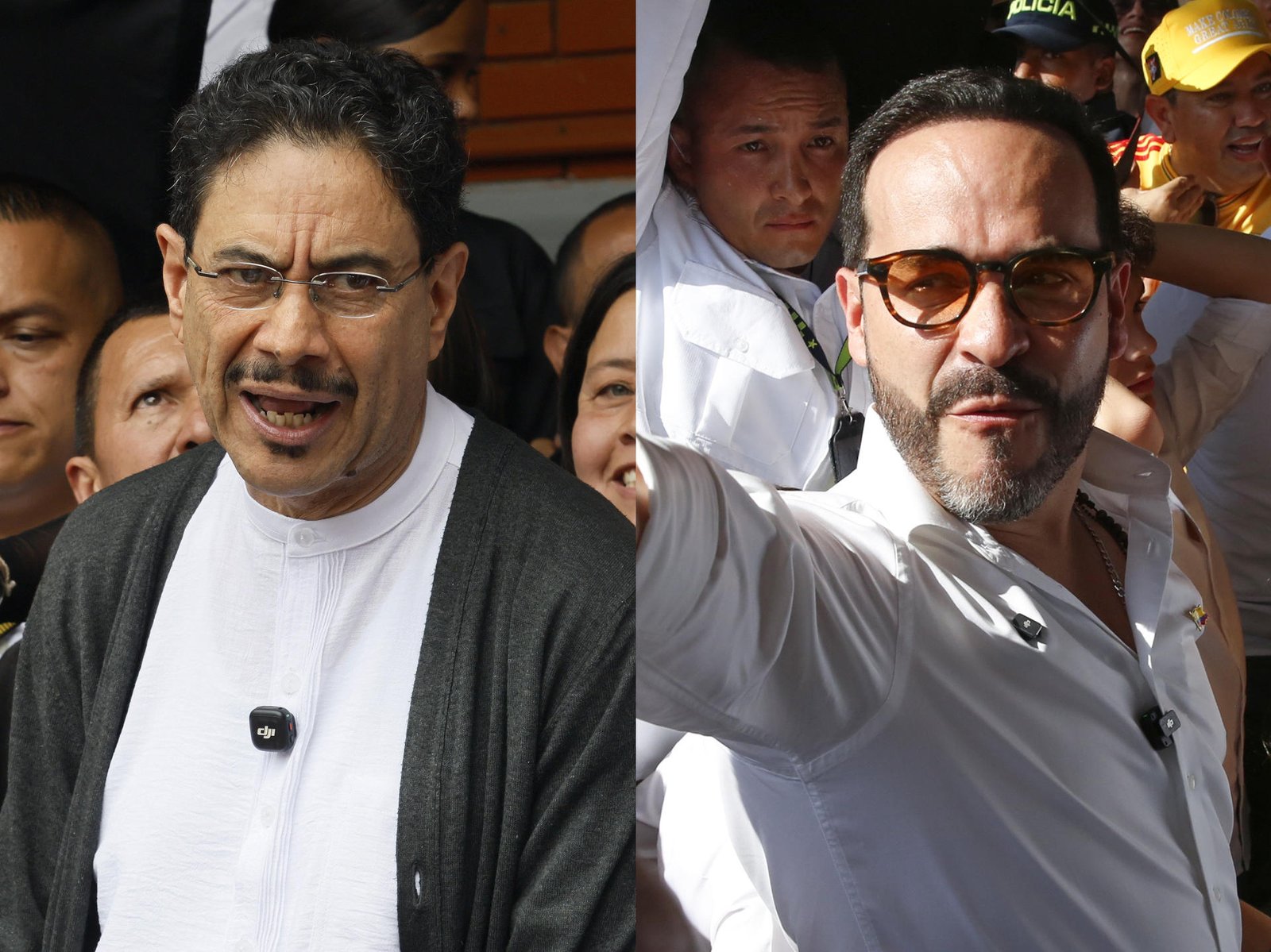
Despite a difference of just 251,000 votes, Iván Cepeda publicly recognized, this Wednesday, the victory of Abelardo De la Espriella. Shortly after, the Historical Pact withdrew the claims it had presented. This gesture prevented the country from entering into a dynamic of institutional confrontation that could have aggravated existing political tensions.
It is worth highlighting an aspect that usually goes unnoticed. In a democracy, the one who must accept defeat is not the outgoing president or the incumbent government. The one who has the responsibility of recognizing the results is the defeated candidate. And in Colombia, Cepeda assumed that responsibility with institutional sense.
Another different issue – and in my opinion regrettable – is President Petro’s undue interference in the campaign and his frequent complaints – without supporting them with solid evidence – of fraud or serious irregularities and even requesting the annulment of the election based on the Romanian precedent.
Three decisive questions
The comparison between both countries—Peru and Colombia—makes it possible to identify three decisive factors.
The first is the quality of the electoral organizations. Public trust is not built overnight. It is the result of years of technical work, institutional independence and transparency. When citizens trust the electoral referee, even the closest results can be accepted without jeopardizing political stability. When that trust is weak, any adjusted difference can become a crisis, as has happened in Peru in the last two processes.
The second factor is the quality of political leadership. Institutions are essential, but they do not operate in a vacuum. Its effectiveness also depends on the leaders’ willingness to respect the rules of the democratic game. The acceptance of an electoral defeat constitutes one of the most important tests of democratic commitment. Governing requires leadership, but so does knowing how to lose.
The third factor is political culture. Behind the laws, procedures and organizations there are shared values. Democracy only works when its actors understand that alternation in power is normal, that no political force has a permanent right to govern and that electoral defeat does not represent a definitive exclusion from the political system. In a mature democracy, losing an election does not mean losing democracy.
Lessons of democracy
The main lesson left by the recent electoral processes in Peru and Colombia transcends national situations. This is not a discussion about candidates, ideologies or government programs. It is a reflection on the democratic architecture of the region.
Democracies do not survive solely thanks to the vote. They survive thanks to credible institutions, competent electoral authorities, responsible leadership and a political culture that values respect for the rules over circumstantial conveniences.
When any of these elements fail, even a legitimate victory can transform into a major political crisis. When all are functioning properly, even a painful defeat can be absorbed by the system without jeopardizing its stability.
In times of growing polarization, misinformation and distrust of institutions, Latin America would do well to remember this lesson. Institutions are not the decoration of democracy. They are your backbone.
And sometimes the decision to accept an electoral defeat can do more for democracy than the victory itself.