Vienna. Just last week, the turquoise-red-pink government declared again that in the last two decades not as much progress has been made in the pension sector as in this coalition. The reason for the self-praise was the package for working in old age, including a deduction for everyone of retirement age who is still working. Be it in addition to your old-age pension or without a pension. In addition, Turquoise-Red-Pink has so far introduced partial pensions, cuts to corridor pensions and a so-called sustainability mechanism. And of course cuts in the pension adjustment in 2026 and increases in health insurance contributions.
However, the biggest reform of this time is hardly ever talked about because it was passed three decades ago. Since 2024, the statutory retirement age for women has been gradually adjusted to that of men; to put it simply, by half a year every six months. The next step is a statutory starting age of 61.5 years from the second half of 2026, with equality achieved in 2033. A year ago, Christine Mayrhuber, economic researcher and head of the Old Age Security Commission, among others, analyzed in the “Press” that the increase was “not a sure-fire success”, but had consistently “positive effects”.
Now, a year later, the basics are much more clear: after all, women born in January 1965, for example, still have to work – without reform they could have been in pension for almost a year and a half without any reductions. So how does the increase affect these women? How does it affect the job market? And how about the state?
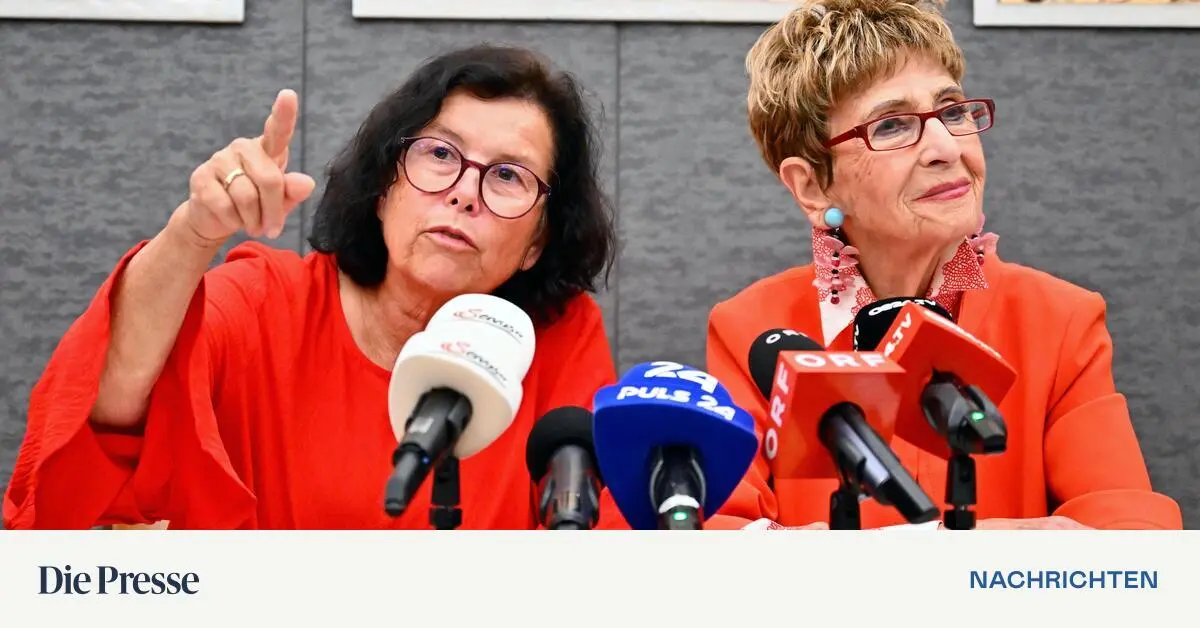
Mayrhuber analyzed this again on Monday, together with the head of the Seniors’ Council, Ingrid Korosec (ÖVP) and Birgit Gerstorfer (SPÖ). And first and foremost, the numbers show: the increase is per se a success, especially in terms of employment. In March, 44,280 women aged 60 were employed, compared to 20,870 of those aged 61. Compared to 2024, this is around double in both age groups. There is also an increase in the number of self-employed people, albeit to a lesser extent. The increase here is around a quarter compared to 2024. In response to a “press” query, the AMS said: The labor market can absorb the additional women, and most of them remain in employment. Which also means more added value.
The fear that those affected by the increase would end up unemployed has therefore not materialized. Statistically speaking, the majority of those affected ended up on the employee side. In addition to a lot of light, Mayrhuber also sees “shadows”, namely with unemployment also increasing. In March 2026, 4,670 women over the age of 60 were unemployed – more than three times as many as at the beginning of 2024. Among 61-year-old women, the number was 1,900, around ten times as high as in January 2024. According to the AMS, around 1,500 women over 60 were unemployed in 2023, and in March 2026 there were more than 7,000. However, there were In 2024, statistically speaking, there will be virtually no unemployed 61-year-old women. Anyone who has exceeded the standard retirement age and gives up their job – or loses it – does not appear in any unemployment statistics. Mayrhuber’s conclusion: “Women in jobs manage to retire later, they stay there and extend their working life.” However, statistically speaking, those who are already unemployed will very rarely find employment in the additional year until they retire.
In short: those who are unemployed usually stay that way. In absolute terms, however, this means that the number of employed people is increasing much faster than the number of unemployed people. Therefore, as it was said on Monday, we have to start earlier to get women into employment. Korosec therefore “urgently” calls for a “collaboration” between employers, employees and the state. Companies would have to rethink: “Qualification is important, not age.” If that doesn’t work, additional measures will be necessary. The ÖVP politician sees a lever in unemployment insurance: “Companies that act positively should get a bonus. Those that don’t do so should get a penalty.”
According to calculations by the economically liberal think tank Agenda Austria, the employment of people between the ages of 55 and 64 has increased significantly in recent years, but is still low in international comparison. In Sweden, three out of four people in this age group work; Austria, with an employment rate of around 60 percent, is below the EU average. Agenda researcher Dénes Kucsera sees the increase as “a success” because the reform keeps an enormous number of people in employment. The increase for women is generally a sign that increases in the retirement age would work – and should happen, Agenda Austria once again demands.
And the state? According to Mayrhuber, this will benefit “a lot in the medium term”, so the reform will significantly alleviate the deficit crisis. Because more employees mean more contributions – and fewer pension payments, which also means fewer subsidies for statutory pension insurance. The positive effect remains even after deducting the additional expenses for unemployment insurance. However, over the years it levels off; Because longer work also increases the amount of pensions.