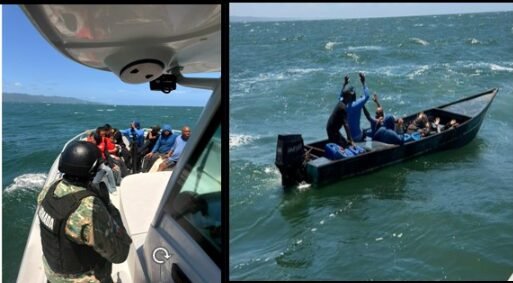

A month-long Caribbean security operation has dealt a major blow to transnational smuggling networks, with authorities disrupting an estimated US$54.5 million in illegal assets and contraband.
According to a CARICOM IMPACS press release, Operation Eclipse was carried out throughout May 2026, bringing together law enforcement agencies from 14 CARICOM Member States, seven Associate Members and international partners including Canada, Colombia, France, the United Kingdom, the United States and INTERPOL. The operation was supported by the US Bureau of International Narcotics and Law Enforcement Affairs (INL).
The four-week maritime operation was coordinated through a central fusion cell at the CARICOM IMPACS Joint Regional Communications Centre, allowing authorities to track threats in real time.
The release shared that the effort generated 82 active intelligence cases, identified 59 vessels of interest, produced 17 critical intelligence reports and resulted in 24 successful seizures.
Among the largest reported hauls were 5,222.59 kilograms of cocaine, valued at more than US$44 million, and 1,848 kilograms of marijuana worth more than US$6.84 million. Authorities also seized more than 6,100 cases of illegal alcohol, 191 cartons of cigarettes and 22 cylinders of banned refrigerant gas, together valued at more than US$1.58 million.

CARICOM IMPACS said teams additionally confiscated two firearms and 65 rounds of ammunition, along with 13 vessels and three vehicles allegedly used by smuggling networks. Fifty-nine irregular migrants were also intercepted along air and maritime transit routes.
Reportedly, contraband smuggling accounted for 32.9% of active maritime cases, followed by cocaine trafficking at 23.2%. Operations covered the Eastern Caribbean, Guyanese waters and transatlantic routes.
Authorities say they also detected clandestine aircraft dropping narcotics near borders for maritime collection and disrupted the activity using partner technology.
Biometric and document checks involving 99 people aboard intercepted vessels pointed to an international network, with many individuals originating from Canada, China, Cuba and Syria.
The operation also tested and strengthened maritime security arrangements, including the Treaty of San José and bilateral Shiprider agreements. CARICOM IMPACS said lessons from the operation are now informing border policies and efforts against persistent criminal networks.

Lt. Col. Michael Jones, Executive Director of CARICOM IMPACS, said regional cooperation was crucial.
“Operation Eclipse proves that when our countries and partners pool their intelligence and operational capabilities, we can effectively dismantle the financial engines driving transnational crime. This multimillion-dollar disruption sends a definitive message to illicit networks that the Caribbean Sea is not a safe haven for criminal enterprise. We are not just seizing contraband, we are actively securing our communities, protecting our youth and building a fortified, intelligence-led defence system across the entire Region”, he said.
A US State Department official added: “INL recognises that our shared security challenges mean that Caribbean security is American security. Collaborative regional efforts like Operation Eclipse demonstrate the effectiveness of strong information sharing, which leads to coordinated interdiction and enforcement actions, and ensures that transnational criminal organisations are not able to benefit from their illicit activities”.