
All views and claims in this article belong solely to the author and have not been independently verified.
Humanity faces a paradox. We have never had so much scientific and technological knowledge to produce food, yet the need to transform the way we produce it has never been more evident.
The Green Revolution was one of the great successes of the 20th century. Increased agricultural yields made it possible to feed billions of people and avert the famines that many considered inevitable. But that success came at a cost. The intensification of agriculture also contributed to soil degradation, increased use of water and inputs, and environmental impacts.
The challenge of the 21st century is different. We must produce more with less. More food with less land. Higher productivity through more efficient water use. Greater prosperity for farmers, but also more carbon stored in the soil, greater biodiversity, and healthier ecosystems.
This transformation must be at the heart of the next phase of the Food and Agriculture Organization of the United Nations (FAO). Latin America and the Caribbean have much to contribute. The region is one of the pillars of global food security and a vast laboratory for agricultural innovation.
Argentina, Brazil, and other countries have developed production systems that incorporate science, technology, precision agriculture, no-till farming, genetic improvement, and new natural resource management practices.
The biome known as the “Brazilian Cerrado” is an extraordinary example. Scientific research and decades of innovation made it possible to transform a region once considered to have limited agricultural potential into one of the world’s major food-producing centers.
The lesson is not to mechanically transplant that model to other regions. The lesson is that science can transform natural constraints into opportunities for development.
Africa today needs its own agricultural revolution. There is no universal recipe. But there is a universal principle: science must guide decisions.
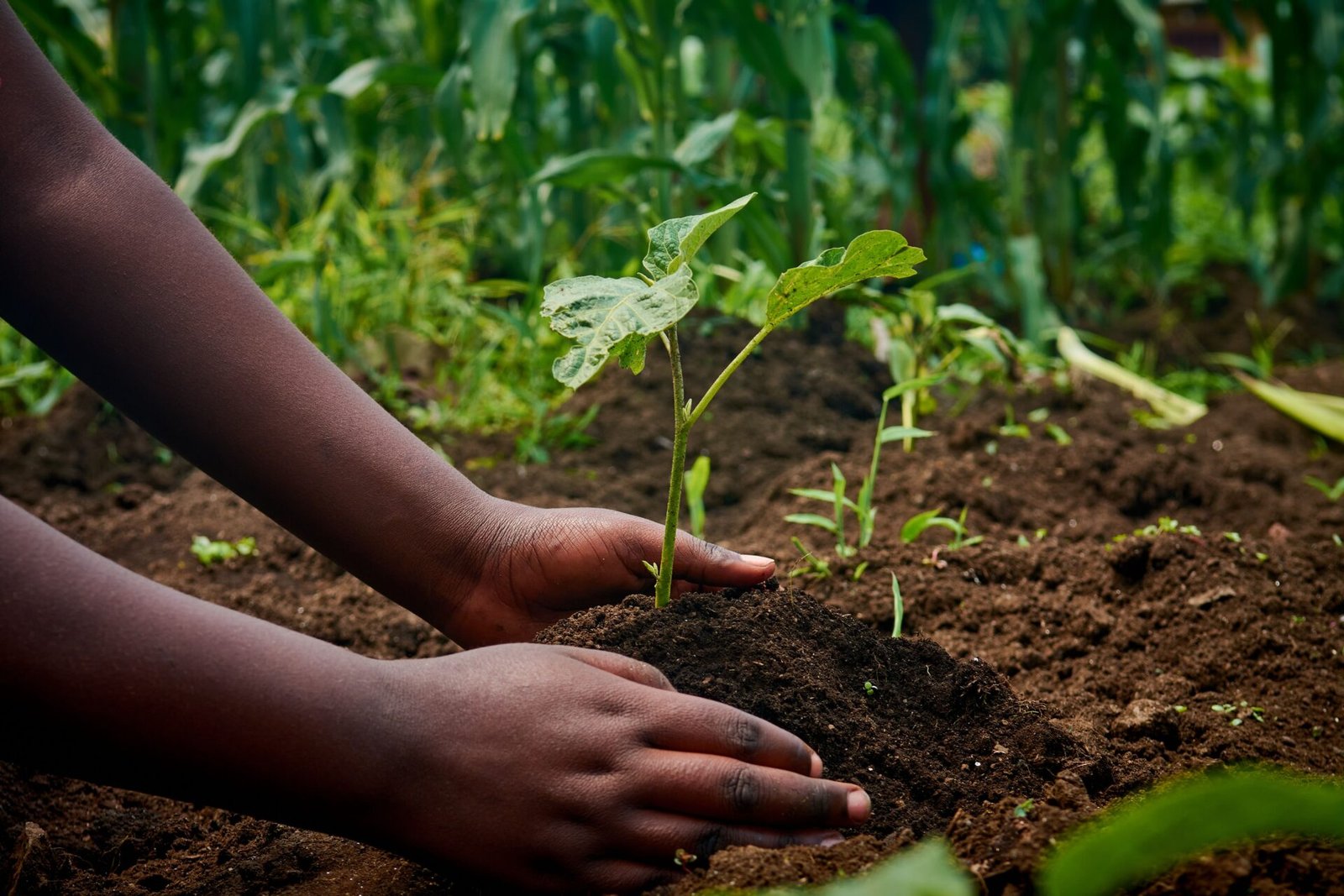
I have dedicated much of my scientific life to demonstrating that soil health is inextricably linked to the health of plants, animals, people, ecosystems, and, ultimately, the planet. There can be no lasting food security with degraded soils.
That is why I consider the experience of “Living Soils of the Americas” to be particularly important—an initiative we developed together with the Inter-American Institute for Cooperation on Agriculture (IICA) during the tenure of Argentine Manuel Otero.
The initiative brought together science, governments, farmers, businesses, and civil society organizations around a fundamental idea: increasing production and protecting the environment are not conflicting goals. Healthy soils can store carbon, conserve water, strengthen biodiversity, improve resilience, and, at the same time, sustain agricultural productivity.
The experience gained in the Americas then began to extend to Africa. Innovations developed over decades in places like Brazil’s Cerrado can offer valuable insights for the African savannas. This exchange epitomizes what modern international cooperation should be: not imposing models, but sharing knowledge and building solutions.
The FAO possesses an extraordinary combination of knowledge, international presence, and the ability to bring people together. But international institutions only fully justify their existence when that capital is transformed into concrete benefits for their member countries and for the people they are meant to serve. In agriculture, that means reaching the producer.
The FAO of the future must be closer to farmers, scientists, businesses, universities, and decision-makers. It must identify solutions that work, connect them with those who need them, and help adapt and scale them up. We need to bridge the gap between knowledge and the field.
During my years of collaboration with IICA, I had the opportunity to work closely with Manuel Otero and observe his approach to agricultural cooperation.
Otero promoted partnerships among scientists, producers, governments, and the private sector and advocated for international cooperation focused on concrete results. Our joint experience showed that an international organization can act as a bridge between science and public policy and transfer knowledge from one region to another.
This kind of experience takes on particular relevance in light of the challenges facing the FAO.
The organization needs to deepen its ties with its member countries, place farmers at the center of its actions, strengthen partnerships with the scientific community and the private sector, and more effectively share best practices.
Otero’s track record offers a concrete perspective on how to approach this transformation. His potential candidacy for Director-General of the FAO would provide a comprehensive set of solutions to the challenges the organization faces.
But the challenge goes beyond any single individual. What is at stake is what kind of FAO the world needs.
We need an organization capable of leading a new agricultural revolution: one grounded in science, that enables us to produce more with less; that restores soils rather than degrading them; and that generates prosperity.
The knowledge already exists. So do the examples. We need the ability to turn them into action.
 Rattan Lal is Director of the Lal Center for Carbon Management and Sequestration (C-MASC) at Ohio State University. World Food Prize laureate.