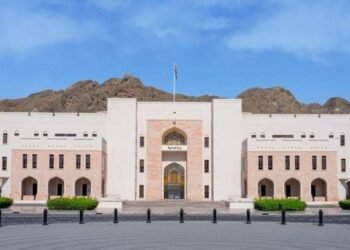
The Sultanate of Oman has expressed its condemnation and denunciation of the attacks targeting the Kingdom of Bahrain and the State of Kuwait. Oman affirmed its categorical rejection of all military actions that undermine the security and stability of the region, particularly the targeting of civilian and vital facilities, which constitutes a violation of international law and threatens the safety of civilians.
In a statement issued by the Foreign Ministry on Wednesday, the Sultanate of Oman expressed its full solidarity with the Kingdom of Bahrain and the State of Kuwait and its support for the measures they take to preserve their security, stability, sovereignty, and territorial integrity.
The Sultanate of Oman reiterated its call for restraint, the avoidance of escalation, and recourse to dialogue and diplomatic means to address crises and disputes, thereby contributing to the consolidation of regional security and stability and sparing the region further tension and negative repercussions.
A drone strike on a passenger terminal at Kuwait’s international airport killed an Indian national and wounded 63 people on Wednesday, as conflict escalated between Tehran and US forces in the Gulf.
Attacks on Kuwait damaged its airport and injured dozens while the US military carried out strikes near the Strait of Hormuz, with diplomacy to halt the war showing little sign of progress. The attacks are the latest to test a shaky ceasefire, sending oil prices up more than 2 per cent, as the strait remains largely closed more than three months after the US and Israel launched strikes on Iran.
Flights at Kuwait International Airport were suspended after an Iranian drone and missile attack damaged airport facilities and diplomatic missions, killing one person and injuring more than 60 others, according to Kuwaiti authorities and state media.
Earlier, Iranian media reported that Iran’s elite Revolutionary Guards had attacked the headquarters of the US Fifth Fleet in Bahrain and a US airbase, as well as a vessel identified as Panaya. US Central Command denied its bases had been hit and said Iranian ballistic missiles failed to strike their targets in the region.
CEASEFIRE STRAINED
Since the conflict began on February 28, Iran has repeatedly attacked targets in the Gulf region home to US military bases, hitting civilian and military targets. Hostilities have occasionally flared up in recent weeks despite a ceasefire agreed in early April, as the US has pushed to reopen the Strait of Hormuz, a route that handled roughly a fifth of global oil and liquefied natural gas shipments before the war.
Last week, Iran and the US signalled progress towards a tentative initial agreement to halt the war and reopen the strait, but the two sides have yet to sign off on the deal, which would leave more complex negotiations for later.
Mohsen Rezaei, military adviser to Iran’s Supreme Leader Ayatollah Mojtaba Khamenei, said Iran would not allow the US to “overreach” either in negotiations or ceasefire arrangements. In a post on X, he warned that any aggression would be met with a barrage of missiles and drones.
Since mid-March, US President Donald Trump has repeatedly said he is close to a deal to end the fighting and pave the way for negotiations on thorny issues including the future of Iran’s nuclear programme.
Trump, who is under pressure to bring down US fuel prices while not making concessions to Iran, has said his top priority is to stop Iran from acquiring nuclear weapons. Iran says its atomic programme is for peaceful purposes.
Trump has said negotiations are continuing, though Iran’s semi-official Tasnim news agency said on Wednesday that Iran had not responded to the US in recent days and that exchanges of texts through intermediaries were suspended until Iran’s conditions on Lebanon are met. – Agencies