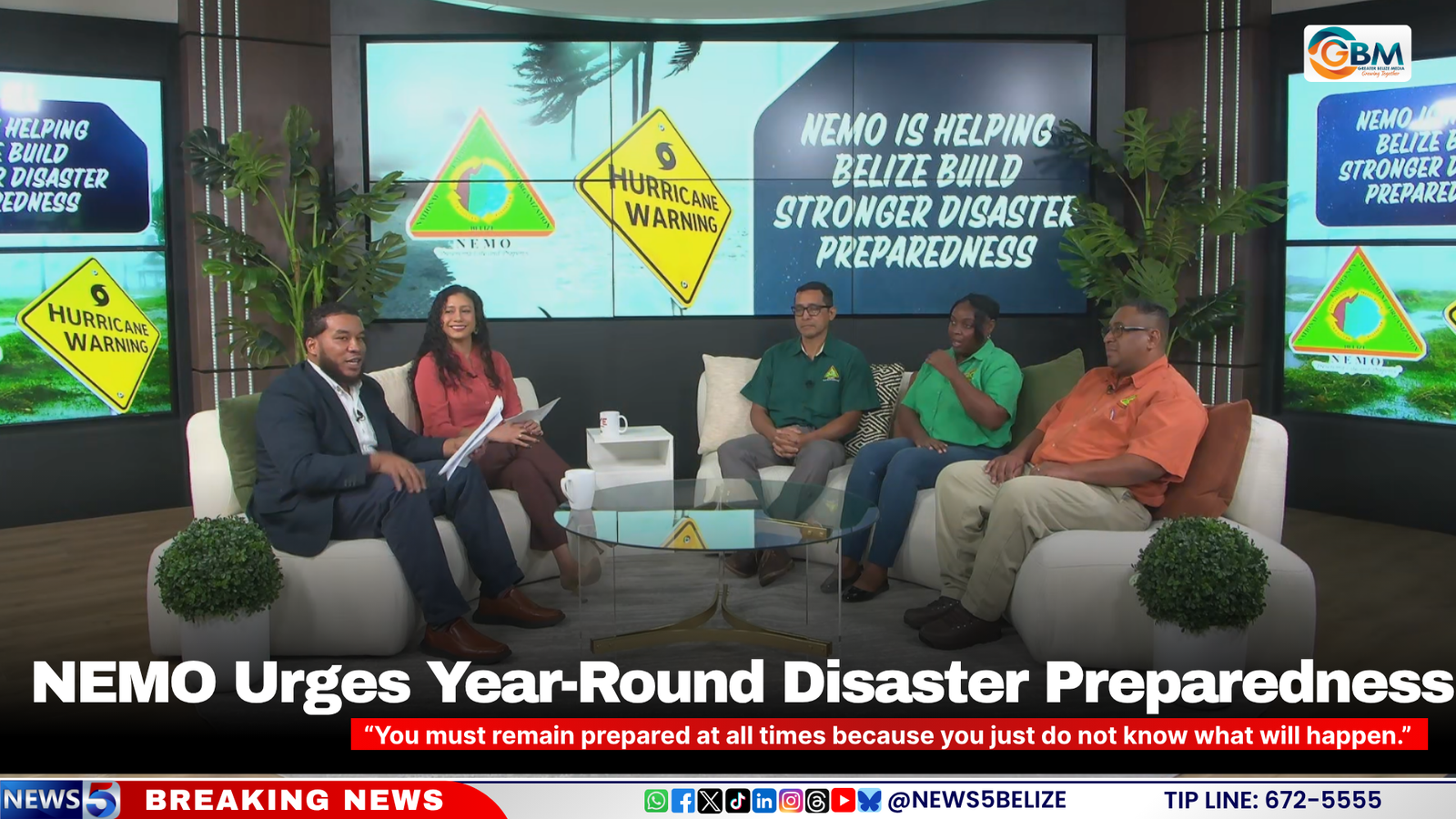
The National Emergency Management Organization (NEMO) is reminding Belizeans to remain prepared for disasters throughout the year, warning that the risks extend beyond hurricanes.
National Emergency Coordinator Daniel Mendez explained that disaster preparedness must continue even as the traditional hurricane season approaches its end on November 30.
“You must remain prepared at all times because you just do not know what will happen,” Mendez said. “You don’t wait until a hurricane appears or the storm appears on the horizon to start to make your plans.”
Mendez said NEMO is monitoring the ongoing El Niño phenomenon in collaboration with the National Meteorological Service and the Hydrology Service. “We anticipated that it would be a less active season, but when it rains, it would be more intense,” he said, adding that El Niño’s effects could continue into next year.
Belize City Coordinator Cassandra Jones said NEMO has been working to strengthen disaster preparedness at the community level through shelter inspections, school outreach and visits to communities to educate residents about the risks they face and how to prepare.
Jones said the organization has also been developing a Community Emergency Response Team programme for Belize City’s Albert, Mesopotamia, Lake Independence and Port Loyola constituencies. The programme is expected to begin in April 2027.
Jones said volunteers would help identify residents who may need assistance during an evacuation. “We need those people to assist us because they know who’s the elderly, who’s disabled, who needs to be evacuated first. And they also assist us with distribution of relief and supplies and do this damage assessment as well after an emergency.” Jones said.
Mendez said household preparedness remains a key part of the country’s overall disaster response. “There’s no way that we have the capacity to go to every home and help every individual home, which is why the importance of ensuring preparedness is transmitted, ensuring that people know how to do it.”
He urged residents to assess the hazards in their communities, prepare their families and remain alert to the different risks that can arise throughout the year.