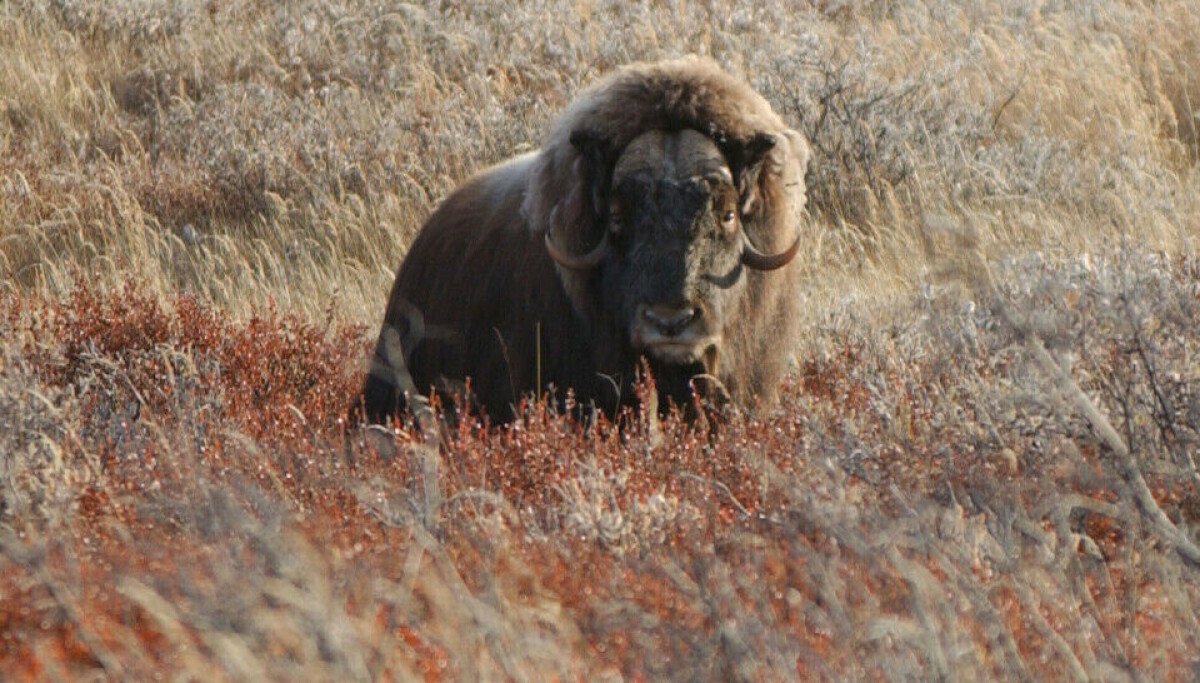
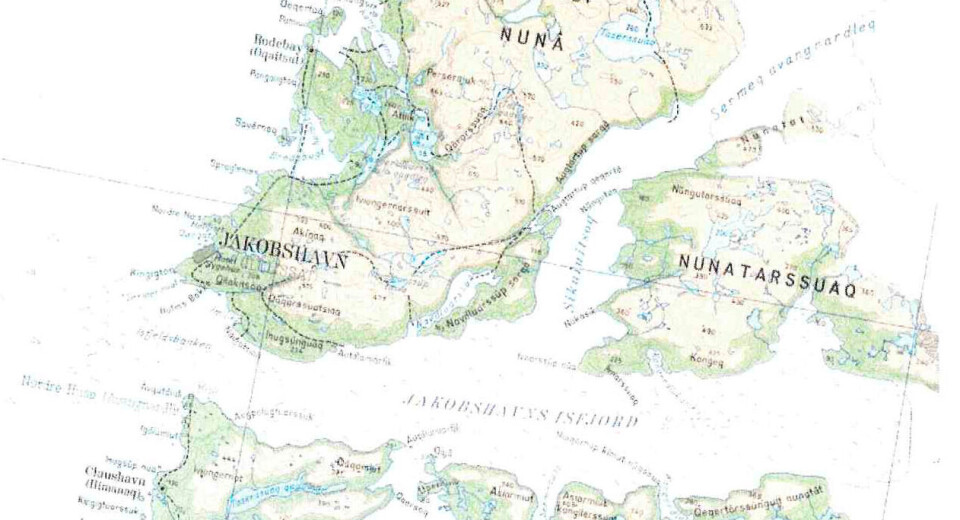
Mayor of Avannaata Kommunia, Lars Erik Gabrielsen (Siumut), proposes to convert an area in Nunatarsuaq, which is connected to the Inland ice sheet east of Ilulissat, into an area for musk oxen.
He believes that, in the long term, the project can become a financial support for the prisoners.
Mayor of Avannaata Kommunia, Lars Erik Gabrielsen (Siumut), proposes to convert an area in Nunatarsuaq, which is connected to the Inland ice sheet east of Ilulissat, into an area for musk oxen.
He believes that, in the long term, the project can become a financial support for the prisoners.
The proposal has already received positive reactions from the fishermen’s and trappers’ association IAPP in Ilulissat.
A work started
If a musk ox population is established in Nunatarsuaq, which is connected to the Inland ice sheet east of Ilulissat, the mayor of Avannaata Kommunia, Lars Erik Gabrielsen, believes that the trapping industry can benefit from it for many years to come.
When the municipal council in Avannaata Kommunia held a meeting in mid-February, the proposal to establish a musk ox population was therefore on the agenda.
A majority of the municipal council supported the proposal, which, among other things, requires investigations into how it will affect various businesses – including fishermen who sail to Ilulissat Icefjord.
Nikolaj Jensen, acting director of the department for fishing and catching in Avannaata Kommunia, states that the Self-Government has already been contacted with a view to getting the work started.
Thorough investigations
According to the Self-Government, extensive and thorough investigations are required before permission can be given to establish musk oxen in the area.
Moving or releasing musk oxen requires approval from Naalakkersuisut. In addition, the Nature Institute must make an assessment of whether the area is suitable for musk oxen. Among other things, the investigation must include an assessment of the grazing conditions and the environmental consequences.
A veterinarian must also be involved to ensure that the animals are handled and treated correctly.
Once these studies have been completed and a decision has been made about where and how many musk oxen are to be moved, the final plan for the move must be approved by Naalakkersuisut.
The municipality that wants to release musk oxen is also obliged to draw up a management plan for the stock.
Such a plan may include, among other things, hunting musk oxen, collecting musk wool and other opportunities to exploit the animals – for example in connection with tourism.
The municipality must also pay for counting musk oxen and cover the costs of monitoring and managing the population.
A series of experiments
Over the years, there have been several attempts to establish populations of musk oxen.
In 2017, the former member of Inatsisartut, Jess Svane (Siumut), questioned Naalakkersuisut about the possibilities of establishing a musk ox population in Qeqertarsuaq. According to a response from the then Naalakkersuisut, in 1993 the former municipality of Qeqertarsuaq co-financed a study of the vegetation in the area to assess the possibilities of releasing musk oxen.
However, the studies showed that Qeqertarsuaq was not suitable for musk oxen. One of the reasons was, among other things, that the grass species kobresia – which is used as food by musk oxen and reindeer – is not found in the area.
A project that has received support
In winter, Nunatarsuaq can be reached from Ilulissat by dog sled in about three hours. If musk oxen are released in the area, it can strengthen the economy of the prisoners in Ilulissat and the surrounding settlements, believes Peter Frederik Olsen, chairman of the fishermen’s and trappers’ association IAPP in Ilulissat.
– IAPP has repeatedly asked to increase the quota for prisoners in Ilulissat, but it has not been successful.
– In addition, we do not have permission to hunt muskox in Nassuttooq. Therefore, it is positive to support the efforts to release musk oxen in Nunatarsuaq, he says.
Of the total of 120 quotas allocated to Naternaq this winter season, only 21 have been allocated to catchers in Ilulissat – and this is not sufficient, the IAPP chairman believes.