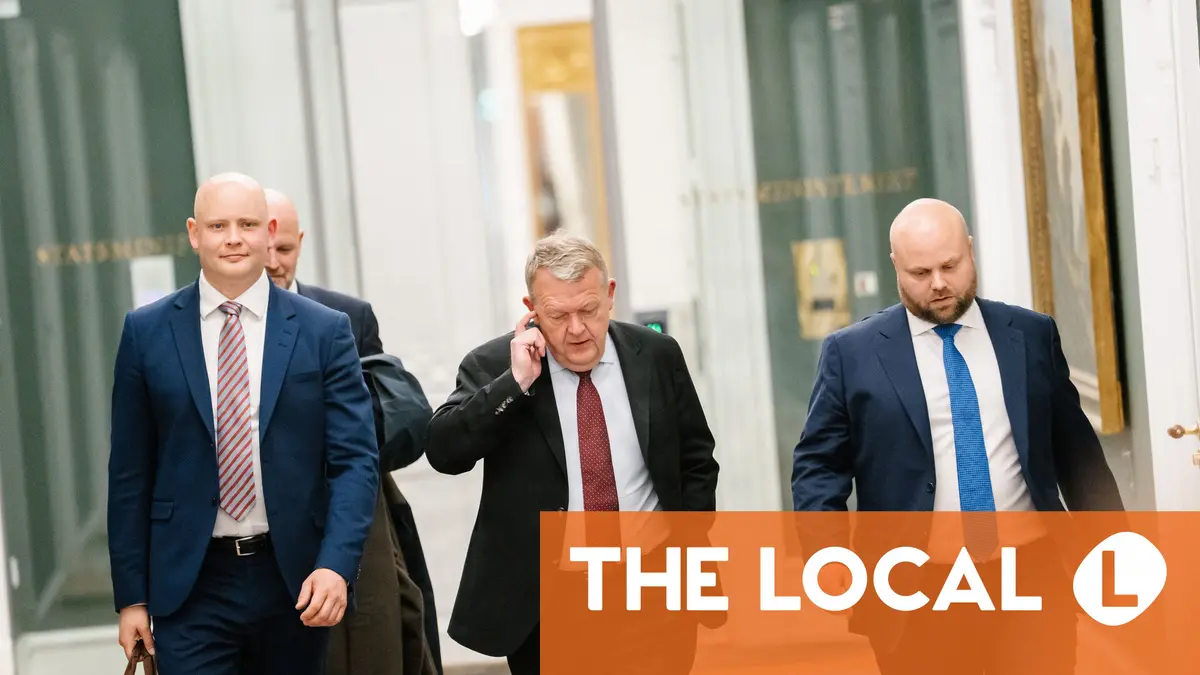
After more than ten days of refusing to attend negotiations to find Denmark’s new government, Moderate leader Lars Løkke Rasmussen has broken his silence, telling chief negotiator Mette Frederiksen that she “has to make a choice”.
Rasmussen’s Moderate party holds 14 of the seats after the election in March, giving him an important kingmaker role in government negotiations. Negotiations so far among the left-wing parties appear to be going well, aside from the fact that Rasmussen has not taken part for 11 days in an attempt to push the centre-right parties into negotiating.
The leaders of left-wing parties Social Liberals and Green Left have told Rasmussen either directly or indirectly to return to the negotiation table, but according to public broadcaster DR’s political commentator Jens Ringberg, Rasmussen appears to be trying a new strategy which Ringberg has dubbed “influence by absence”.
Yesterday, Social Liberal leader Martin Lidegaard said he had “no idea” when Rasmussen would rejoin negotiations, and it didn’t sound like interim prime minister Mette Frederiksen, who is attempting to form a government with the left-wing ‘red’ bloc and the support of the Moderates, did either.
Advertising
Now, Rasmussen has broken his silence, speaking to journalists outside an EU foreign minister meeting in Luxembourg.
“If Mette Frederiksen wants to be prime minister ‒ it isn’t a given that she will be ‒ then she needs to make a decision,” Rasmussen said. “And the moment when she needs to make that decision is getting closer. Because I totally agree that we need a breakthrough in negotiations soon.”
According to Rasmussen, Frederiksen needs to choose if she wants to form a government with the left-wing parties or the right-wing parties, which Rasmussen describes as having a more “offensive economic policy”.
If she chooses to head left when it comes to economic policy, Rasmussen announced that his party will not lend its support, effectively meaning that a government will not be possible.
Advertising
He also hinted that he may be open to choosing a different party leader to lead negotiations if Frederiksen is not successful.
“I understand there have been exciting meetings about drinking water, well-being and childcare, and that’s all well and good,” he said of the ongoing discussions between Frederiksen’s Social Democrats and the Social Liberals, Green Left and Red-Green Alliance. “But this is fundamentally about whether a responsible financial framework can be established.”
“That is the responsibility of the royal investigator. If she doesn’t want to lean into that, then a time will come when we have to say that this project cannot succeed. Then we will have to change track and someone else will have to try and solve the task,” he said.