Seoul, Washington apparently at odds over source of Kusong claim; alliance coordination under scrutiny
Concerns are mounting over a potential rift in intelligence cooperation between South Korea and the United States following controversial remarks by Unification Minister Chung Dong-young on North Korea’s nuclear facilities, with conflicting accounts from both sides fueling uncertainty over the state of bilateral coordination.
The issue stems from Chung’s March 6 remarks at a National Assembly Foreign Affairs and Unification Committee session, where he identified Kusong, North Pyongan Province, as a suspected uranium enrichment site, alongside known facilities in Yongbyon and Kangson. Chung was the first South Korean official to cite a possible third uranium enrichment facility beyond the previously identified site in Yongbyon.
US officials have reportedly raised concerns that sensitive information may have been disclosed without consultation, with some local media reporting in recent days that Washington has since curtailed parts of its intelligence sharing with Seoul for more than a week.
Some reports suggested the volume of affected intelligence could reach 50 to 100 pages per day, raising concerns about potential gaps in South Korea’s monitoring posture toward North Korea.
South Korean authorities, including Chung himself, on Monday, maintained that the remarks were based solely on publicly available information. Chung, speaking in the afternoon, did not confirm any current restrictions, but said such curbs had occurred intermittently in the past, suggesting possible fluctuations in intelligence sharing.
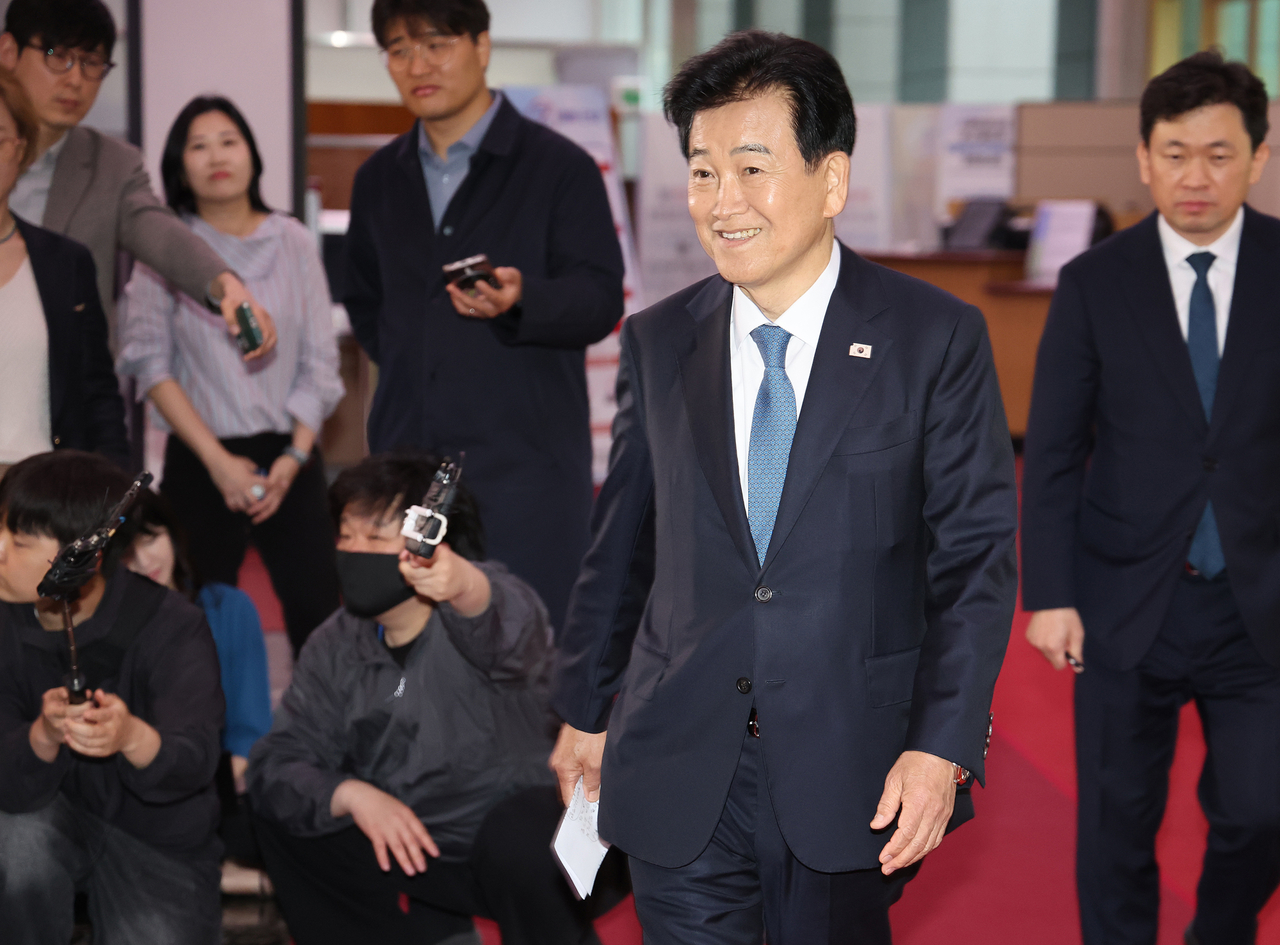
Speaking to reporters at the Government Complex Seoul, Chung said it was “deeply regrettable” to characterize his remarks on a suspected third North Korean nuclear facility as a leak of sensitive information. He said his comments were intended to underscore the seriousness of the North Korean nuclear issue.
“I was explaining policy to highlight the gravity of the North Korean nuclear problem, and it is highly regrettable that this is being framed as an information leak,” he said.
Chung reiterated that references to Kusong were based on open-source information, including a report by the US think tank Institute for Science and International Security and domestic media coverage.
“This is publicly available information,” he stressed.
He also noted that he had mentioned Kusong during his confirmation hearing on July 14 last year, adding that he found it “perplexing” that the issue was being raised nine months later without prior objection.
“I question the intent behind suddenly raising this issue after all this time,” he said, adding that he was “taken aback.”
Chung urged that the matter be viewed through the lens of national interest, expressing concern over what he described as growing speculation about a crisis in the South Korea-US alliance despite no substantive problems.
“Amid a grave security environment shaped by the war in the Middle East, I am concerned about attempts to spread narratives of a crisis in the alliance when there is in fact no issue,” he said.
He declined to specify who he believed was driving the claims of an “information leak,” saying he was unsure whether they originated from the US side or within South Korea.
On the reported US curbs on intelligence sharing, he said such measures had occurred “intermittently” in the past and expressed hope that the issue would be resolved through smooth communication between the allies.
The Unification Ministry’s explanation, released earlier in the day, was aligned with Chung’s remarks, reiterating that his reference to Kusong was based on open-source material and had been raised previously, including during his confirmation hearing last year.
“The minister referred to uranium enrichment facilities based on open-source materials, including reports by overseas research institutions and domestic and international media,” Unification Ministry spokesperson Yoon Min-ho said in a regular briefing Monday. “No information related to the matter was provided by any other agency.”
Still, questions persist over Chung’s reference to a March 2 report by International Atomic Energy Agency Director General Rafael Grossi. While Chung suggested the report mentioned Kusong, no such reference appears in Grossi’s publicly available briefing to the agency’s Board of Governors, though the possibility of undisclosed material has not been ruled out.
The Unification Ministry also said it had provided “sufficient explanation” to the US Embassy in Seoul following inquiries, and insisted there is no confirmed link between Chung’s remarks and reports of intelligence-sharing restrictions.
“We are not aware of whether the US is restricting information sharing, and there is nothing we can confirm,” Yoon said Monday. “We do not intend to link the two issues,” he said, referring to the reported intelligence-sharing restrictions and the minister’s remarks.
The Defense Ministry also sought to minimize concerns, emphasizing that the alliance remains intact.
“The South Korean military is maintaining a firm combined defense posture with the United States, and a close intelligence-sharing system remains in place,” spokesperson Chung Binna said Monday during a regular briefing, declining to confirm specific details about intelligence exchanges.
A Defense Ministry official, speaking on condition of anonymity, said that while the US may have curtailed some intelligence sharing on North Korea, satellite-based information continues to be shared separately. The US collects intelligence on North Korea through a range of assets, including satellites, signals interception and reconnaissance, and shares part of that information with South Korea.
Opposition lawmakers, however, have strongly criticized the situation, framing it as a major security failure.
The main opposition People Power Party described the reported intelligence curbs as an “unprecedented diplomatic and security disaster,” calling for Chung’s immediate dismissal.
People Power Party Chair Rep. Jang Dong-hyuk said at a Monday leadership meeting that many US officials he met during his recent 10-day visit to Washington, which ended April 11, expressed concerns over what they see as ambiguity in the Lee Jae Myung administration’s North Korea policy and its stance on the alliance.
He added that the reported limitation of US intelligence sharing — a “core asset” for South Korea’s security — was a serious concern.
He blamed both Chung’s “irresponsible remarks” and what he described as President Lee’s tacit approval through silence.
“I made considerable efforts to explain the Korean public’s support for the alliance and to help restore trust,” he said.
He added that he held in-depth discussions on North Korea denuclearization strategies with senior officials from the White House National Security Council and met with State Department officials to explore ways to strengthen economic cooperation.
People Power Party Floor Leader Rep. Song Eon-seog also criticized the situation, citing reports that 50 to 100 pages of intelligence had been shared daily before the alleged suspension.
Some observers say Washington’s reported response may reflect broader frustrations over Seoul’s recent policy direction, including efforts to expand South Korea’s authority over activities in the Demilitarized Zone without consultation with the United Nations Command, as well as a perceived shift toward placing North Korea policy under the Unification Ministry rather than the Foreign Ministry.
Ruling Democratic Party of Korea Chair Rep. Jung Chung-rae shot back, calling Jang’s recent US visit a “diplomatic fiasco” and questioning the substance of the opposition’s outreach in Washington.
Speaking at a party leadership meeting Monday, Jung said parliamentary diplomacy should go beyond symbolic gestures, stressing that lawmakers must engage key figures such as chairs or ranking members of congressional committees. He added it remained unclear whom Jang had substantively engaged, and argued that opposition diplomacy should align with the government’s overall policy direction while serving as a constructive lever in foreign affairs.
The latest episode comes amid growing worries in Seoul over the fragility of intelligence coordination within the alliance at a time of heightened security challenges on the Korean Peninsula, as North Korea continues its weapons development and missile activities.
mkjung@heraldcorp.com