New escalation is being recorded in the Middle East, while diplomatic efforts for de-escalation are underway, following US strikes on Iranian positions and Tehran’s response with a ballistic missile against US positions.
Oi USA they advanced over the weekend to bombing of Iranian positionsincluding radar installations.
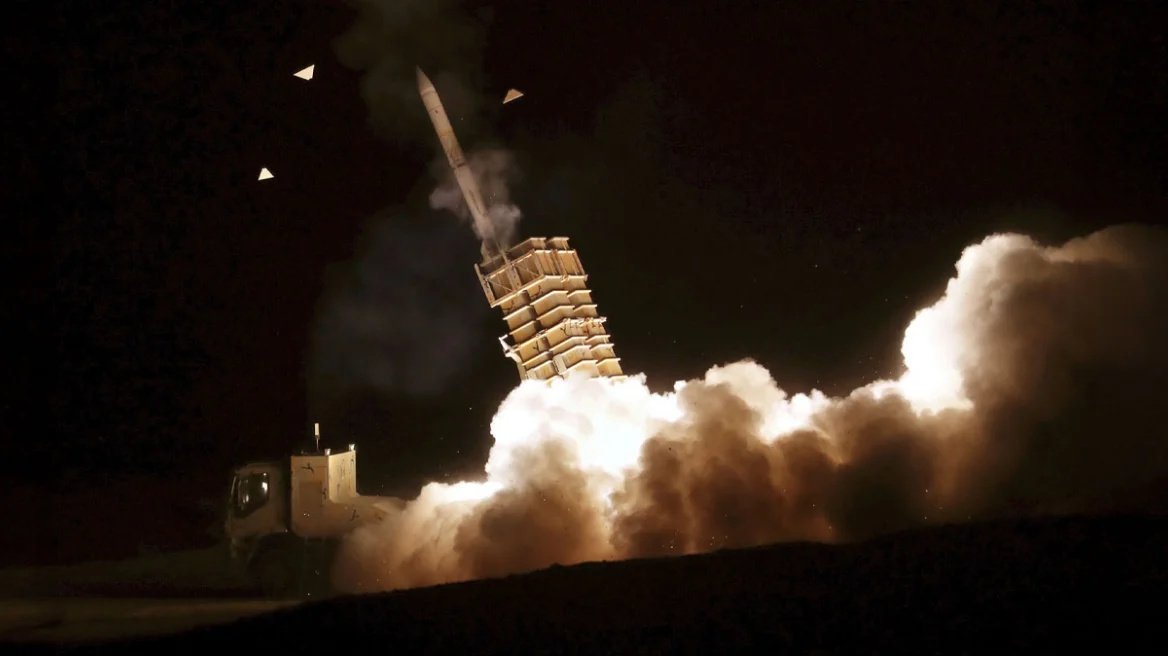
Tehran responded by unleashing ballistic missile against American positions, causing new concern about the course of tension in the region.
At the same time, the state of alert was placed early on Monday its air defense Kuwait.
The US, as reported by Centcom, launched attacks on Iranian radars and drone command and control points in Goruk and Keshm Island on the weekend.
The blows, which he characterizes as “measured and deliberate”, were made in response “aggressive actions by Iran which included the downing of a US MQ-1 drone operating over international waters,” Centcom said in a post on X.
Around the same time the US was announcing the attacks, the Guards of the Revolution announced for their part that in retaliation for the American attacks, they targeted the American base from which the attacks were launched with a ballistic missile.
They did not say what this base is, nor in which country in the region it is located.
Tehran even warned that if the attacks from the American side continue, “the answer will be completely different».
Early on Monday it became known that the air defense of Kuwait intercepted missile and drone attacks on Monday, while air defense sirens sounded across the country. State media in Kuwait did not provide further details on the origin of the attacks or whether all the threats were intercepted.
Trump sees a good deal for the US
At the same time, US media reports that spoke of additional demands from Washington to Tehran seem to remove the possibility of an immediate agreement. This information came to overturn the climate of optimism that had been created in the previous days after the statements of the American President Donald Trump.
However, in a post, US President Donald Trump said that Iran really wants to reach an agreement with the US and that this would be a good deal for Washington and its allies.
“Iran really wants to make a deal, and that will be a good deal for the US and those with us.” Trump wrote on Truth Social.
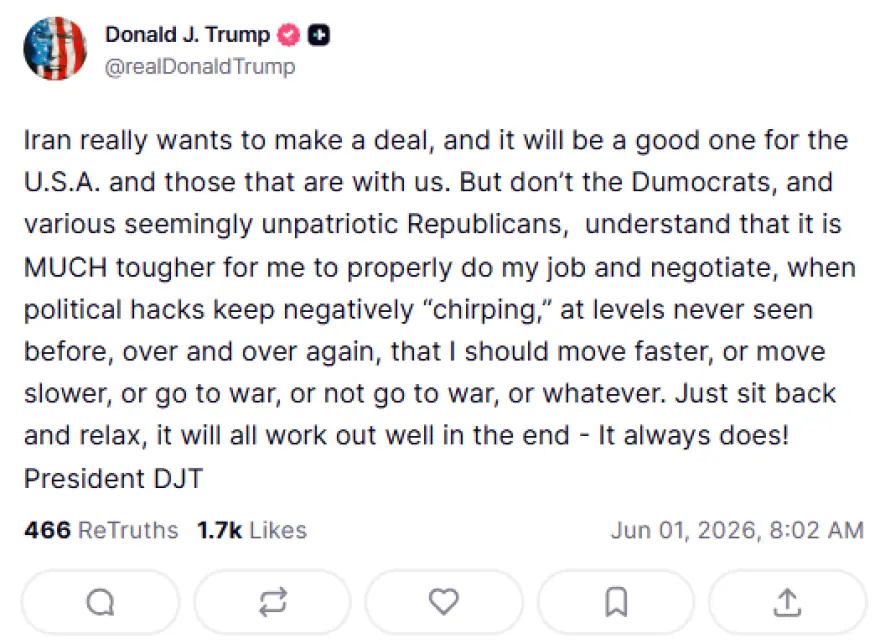
While the US and Iran appeared in recent days to be nearing an agreement, the New York Times reported over the weekend that Trump had toughened the terms of his proposal and sent a new version of the text to Tehran. According to the website Axios, Trump is seeking a tougher position on Washington, especially on the issue of Tehran’s nuclear program.
CBS News reported last night that the new U.S. proposal includes a 60-day extension of the ceasefire with clauses providing for the opening of the Straits of Hormuz and a framework for resuming nuclear negotiations.
“We will not approve any agreement until we are sure that the rights of the Iranian people are fully guaranteed,” Tehran’s chief negotiator Mohammad Mager Ghalibaf warned yesterday.
Iran, which asserts its right to maintain a nuclear program for non-nuclear purposes, has repeatedly denied it is seeking nuclear weapons, despite suspicions from the US and many other countries. He intends to address this issue at a later stage, should an agreement be reached with Washington, and considers the lifting of US sanctions and the release of Iran’s frozen assets fundamental rights that must be guaranteed in any deal with the US.
Trump insisted in a post on Truth Social yesterday that the draft deal “states very clearly that Iran will not have nuclear weapons” and that “on very strict terms.”
Tehran also insists that any deal includes an end to hostilities in Lebanon, where Israel continues with the stated goal of “eliminating” the pro-Iranian Shiite militant group Hezbollah.
On this war front, the Israeli army continues to advance into southern Lebanon, where it launches daily new military attacks, and Hezbollah continues its attacks, particularly in northern Israel, despite a ceasefire that has been in effect since April 17.
The Israeli army announced yesterday the capture of the medieval Beaufort Castle, a strategic citadel that offers control over southern Lebanon and northern Israel. It is the first time Israeli forces have secured control of the castle, built in the 12th century by the Crusaders, since they withdrew from southern Lebanon in May 2000 after an 18-year occupation.
At the same time, US Secretary of State Marco Rubio has contacted Lebanese President Joseph Aoun and Israeli Prime Minister Benjamin Netanyahu in the past 48 hours in an effort to advance a new truce plan, according to a reporter for the Axios website citing a top US official. As a first step, the US has proposed that Hezbollah stop its attacks on Israeli territory and that Israel suspend strikes in the Beirut area.
The US official said President Aoun appeared willing to push the proposal forward, but Lebanese Parliament Speaker Nabih Berri made it clear that Israel must first stop its attacks.
In the context of these developments, the UN Security Council will meet late today on Monday afternoon to discuss the situation in Lebanon at the request of France, diplomatic sources told AFP.