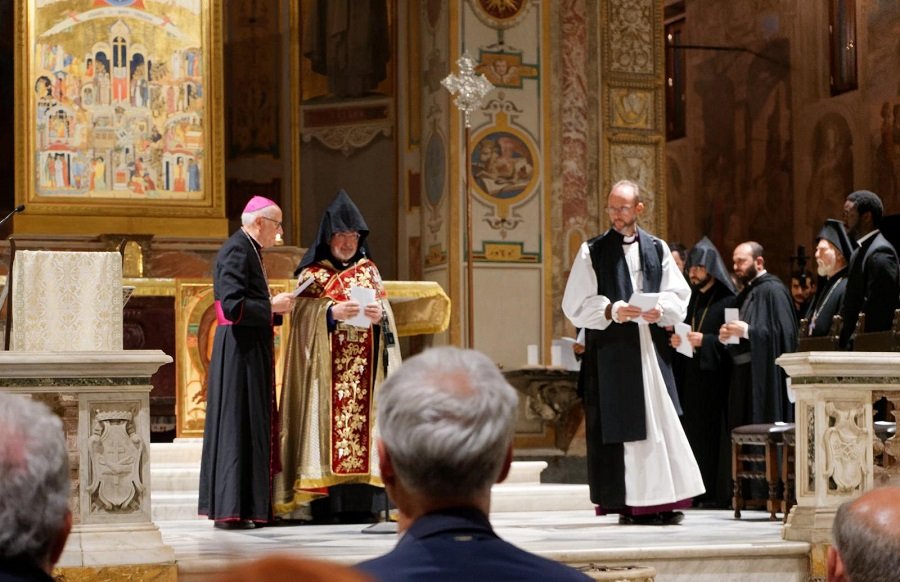
On the occasion of the 111th anniversary of the Armenian Genocide, an inter-church ceremony for peace was held in Rome yesterday evening.
The ceremony took place in the Church of St. Bartholomew, which in 2000 was entrusted by Pope St. John Paul II to the international humanitarian organization Comunità di Sant’Egidio as a memorial shrine for Christian martyrs of the 20th and 21st centuries.
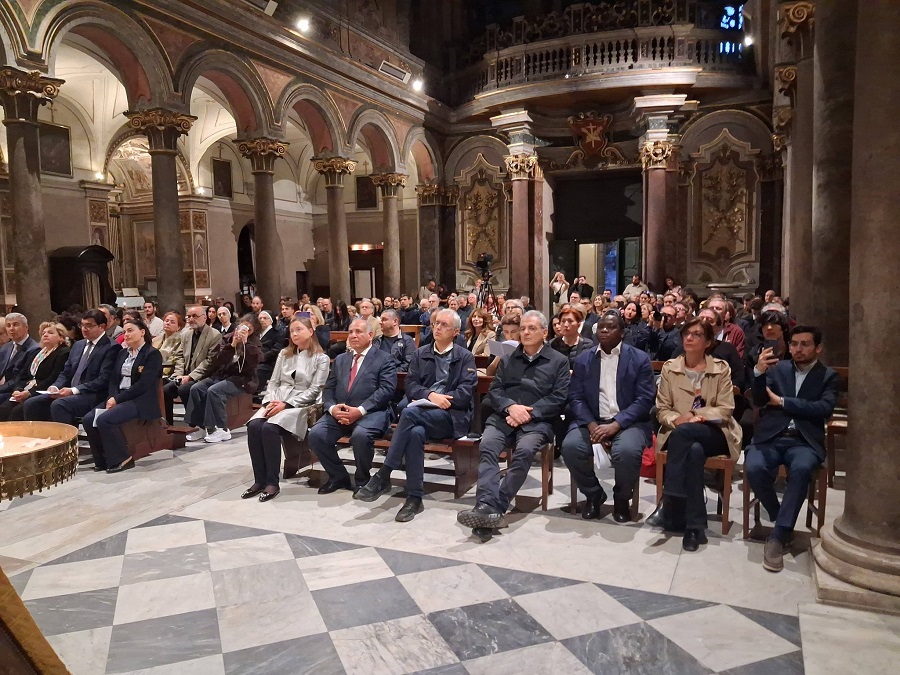
The event was organized by the representation of the Catholicos of All Armenians at the Holy See and Comunità di Sant’Egidio, with the participation of the Levonian Catholic Armenian College and the Mkhitaryan Congregation.
Clergymen of the Armenian Apostolic and Armenian Catholic Churches, as well as Catholic, Anglican, Evangelical, Methodist, Coptic and Malankar Orthodox sister churches, Ecumenical Patriarchate of Constantinople and Romanian Orthodox Church participated in the ceremony.
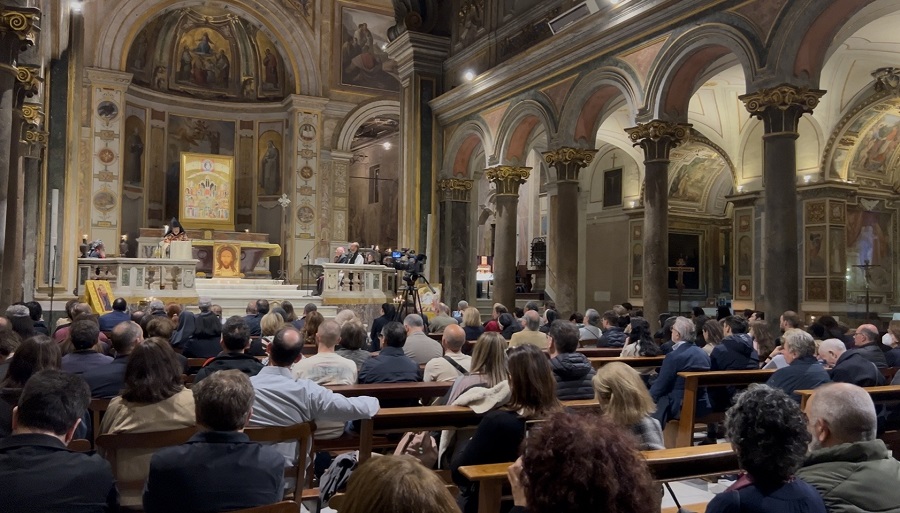
Screenshot:
The ambassadors of the Republic of Armenia to the Holy See and Italy, Boris Sahakyan and Vladimir Karapetyan, staff of the embassies, members of non-governmental organizations, guests and representatives of the Armenian community were present.
The president of the Comunità di Sant’Egidio international humanitarian organization, Marco Impalazzo, gave an opening speech.
Then a message was read by Cardinal Kurt Koch, president of the promotion department of the Christian Union, in which it was noted that those present gathered for prayer to commemorate the “Great Genocide”, the martyrdom of Armenian Christians at the beginning of the 20th century. It was emphasized that the Armenian martyrs are part of the “common martyrology” that unites all Christians, the “ecumenism of blood”, it was reminded of the ongoing persecution of Christians, and the hope appeared that their testimony would become the seed of the unity of the church, leading to full communion in Christ.
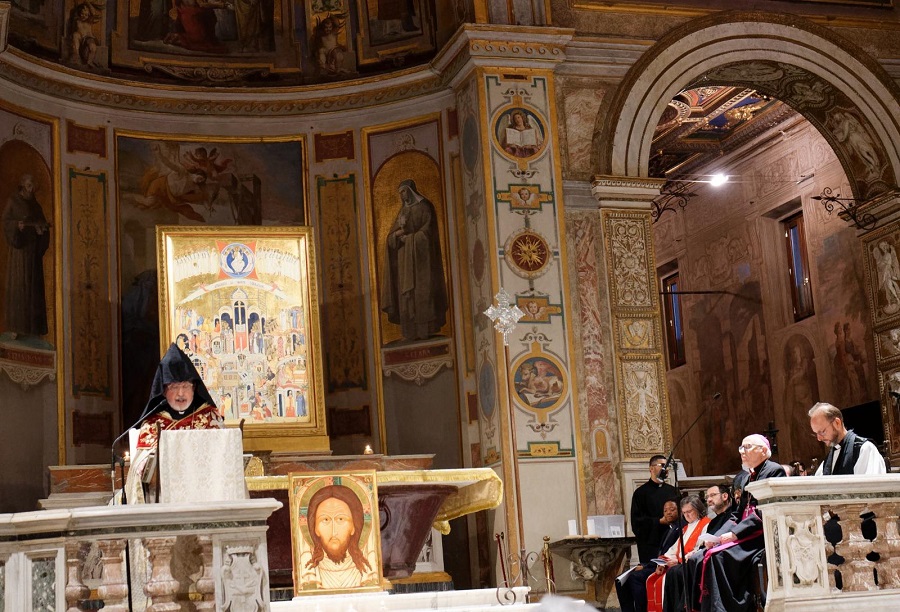
The ceremony was presided over by the representative of the Catholicosate of All Armenians, Gersh. T. Khajak Arch. Parsamyan.
In his sermon, the Bishop recalled the 2015 statement of Pope Francis, by which the Armenian Genocide was defined as “the first genocide of the 20th century”. He emphasized that the term “genocide” is not used for the purpose of revenge or accusation, but to serve the truth, recalling the words of the Pope that “denying or hiding evil is like letting a wound continue to bleed.”
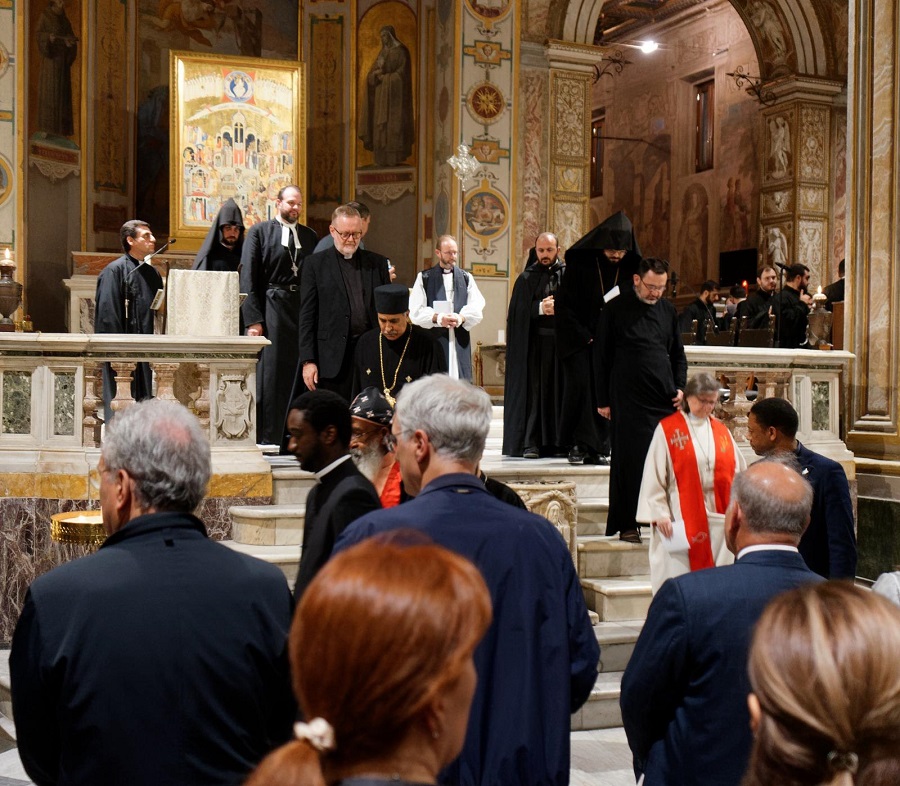
The bishop called to remember the martyrs of the Armenian Genocide, as well as the new Christian martyrs of our time, emphasizing that their testimony in the Council of the Cross becomes a seed of reconciliation, justice and hope.
Khajak Arch. In his sermon, Parsamyan compared the readings of the Holy Book during the ceremony with the historical trials of the Armenian people, emphasizing that the worst sufferings did not break the people’s faith, and that only Christ remained at the moment of being deprived of everything.
He quoted the words of Jesus. “Let not your heart be troubled… I go to prepare a place for you,” emphasizing that violence cannot destroy the reality of eternal life prepared by God.
The bishop noted that the memory of the Armenian Genocide is not only a historical memory, but also a warning for the present, stressing that denial, distortion of history and the growth of hatred can lead to new tragedies.
He emphasized three main guidelines: a memory kept in truth and love, solidarity with the suffering and the silenced, as well as the renewal of faith and hope, with the confidence that God does not abandon His people.
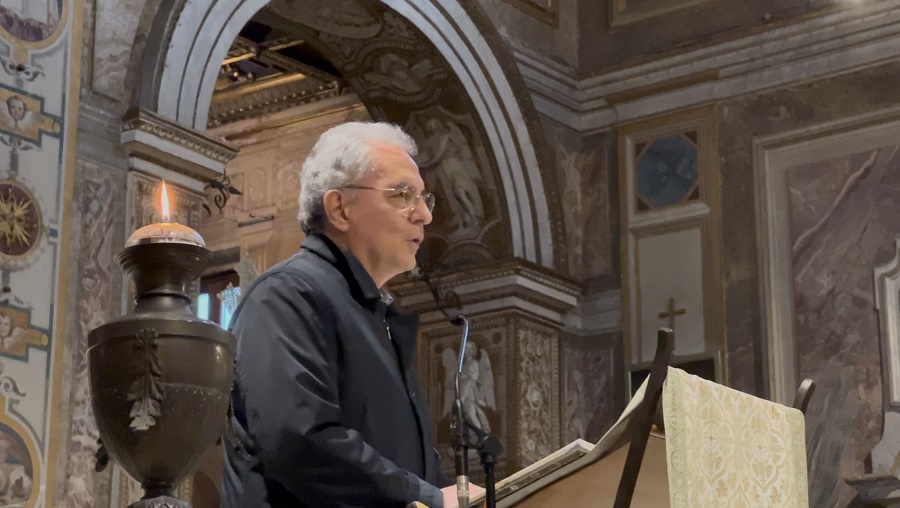
Screenshot:
At the end of the sermon, the Bishop called on the faithful to become creators of peace, starting with the choice of forgiveness and love and spreading it in society through dialogue and reconciliation.
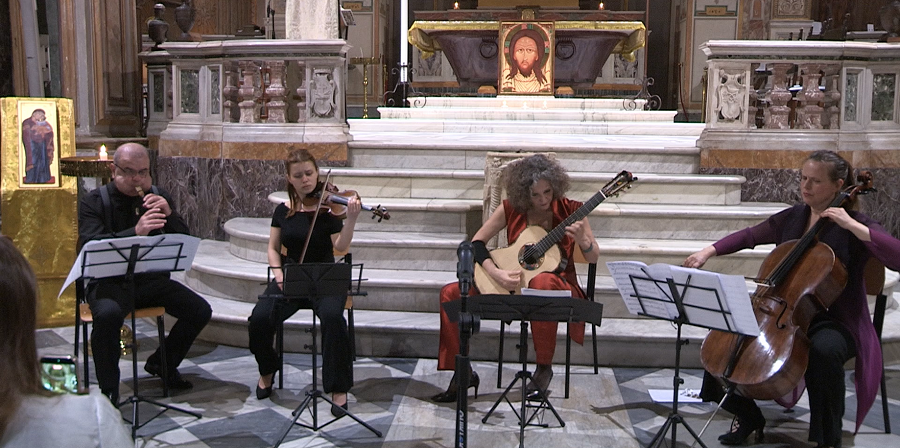
At the end of the ceremony, there was a short concert of classical music organized by the Armenian Cultural Society of Asoarmen in Rome, with the participation of musicians from different countries, including the famous duduka player Gevorg Dabaghyan and Greek classical guitarist Antigoni Goni, as well as Belgian cellist Yemi Norrington and violinist Polina Sharafyan. Vache Sharafyan’s “Orpheus” concert for guitar, duduk, violin and cello was performed for the first time, as well as S. The work written on the basis of Nerses Shnoralu’s hymn “Bacea! Dazdurn” and Serbian composer Dusan Bogdanovic’s S. The suite inspired by Grigor Narekatsi’s poem “Havun, havun”.
THE MOST ARMENIAN CATHOLIC REPRESENTATION AT THE HOLY SEE
According to the “Copyright and Related Rights” Law, the reproduction of extracts from news materials should not reveal the essential part of the news material. When reproducing excerpts from news materials on the website, it is mandatory to indicate the name of the media outlet in the title of the excerpt, and it is also mandatory to insert an active link to the website.