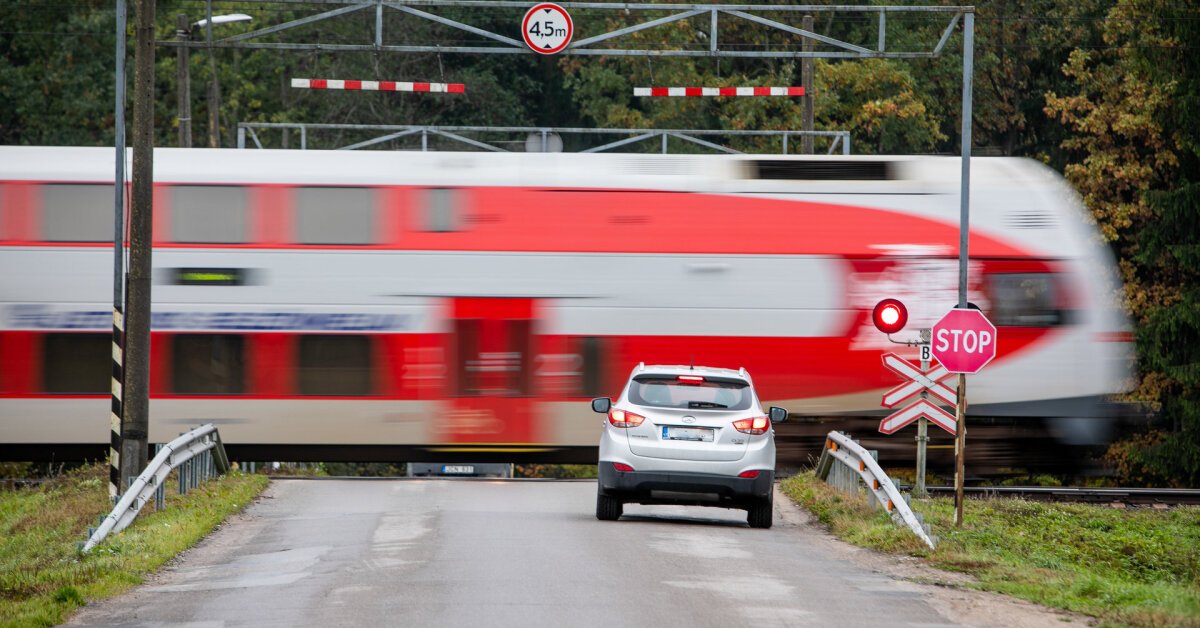
“It’s good that I was sitting today when I ordered tickets for the Vilnius-Kaunas-Vilnius train. I would probably have collapsed when I saw the ticket prices,” political scientist A. Lašas wrote on Facebook on Thursday.
The man said that he usually paid about 18-19 euros for a round trip. In May, the Government together with “Lietuvos Geležinkeliais”, taking into account the increase in fuel prices due to the war in Iran, temporarily reduced ticket prices by 50%.

Lukas Balandios / 15min photo / Ainius Lašas
“Less than a week ago, the same trip didn’t even cost 10 euros. It’s obscenely cheap, but apparently they wanted to show that they care. It’s not that the previous price was returned, but it was additionally increased by 50%!”, A. Lašas wondered.
After trying to order a train ticket online from Vilnius to Kaunas and back, A. Lašas saw that it would cost more than 27 euros.
It’s a good thing that I was sitting today when I ordered Vilnius-Kaunas-Vilnius train tickets. I would have probably collapsed when I saw the ticket prices.
“Everything is very understandable – the wars are already over, everyone has forgotten about the Strait of Hormuz, fuel prices are at the bottom, and therefore now you can withdraw money for all the discounts given. It’s just an amazingly sensitive decision to raise the price of tickets three times in a week! Dear LTG, who manages the pricing there for you – a drunk Gariūnai market trader from the 1990s?”, A. Lašas quipped.
“Lietuvos geležinkeliai”: buying in advance is cheaper
Julija Leimonė, communication partner of LTG Link, the passenger transportation company of Lietuvos Geležinkėlių (LTG) Group 15 minutes commented that at the end of the temporary 50% for the discount that was applied to train tickets for two months – April and May – the prices were returned to the normal level valid before the introduction of the discount.
“The situation you mention reflects the principles of dynamic pricing – when planning a trip in advance, a travel ticket can be purchased much cheaper,” said J. Leimonė.
According to her, up to 50 percent. When the discount came into force, LTG Link applied dynamic pricing – a pricing model where the price of tickets changes depending on demand, filling of a specific flight and seasonality.
“By planning trips in advance, passengers can buy tickets up to 40% cheaper than the regular price, and it gradually increases as the time of departure approaches. In some cases, for example, when buying at the last minute or choosing express flights, the ticket price can be up to 10% higher than the regular price,” explained the representative of LTG Link.
She gave an example that even before the entry into force of 50% for the discount, in March the prices of the trip on the Vilnius-Kaunas route ranged from 5 to 10 euros. During the discount period, it was also possible to travel on this route for 2.5 euros, and dynamic pricing did not apply at that time. After the discount expired, the prices returned to their previous level, and dynamic pricing was also re-introduced.
It’s not that the previous price was returned, but it was increased by an additional 50%!
“Currently, a ticket on the same route can be purchased for 5-10 euros when planning the trip in advance. Currently, dynamic pricing is applied on 7 domestic and 4 international routes. It is important to emphasize that it does not affect the valid discounts and benefits – passengers can continue to use, for example, student or disabled discounts,” said J. Leimonė.
In April and May, passengers could purchase 50 percent. cheaper train tickets on local transport routes.