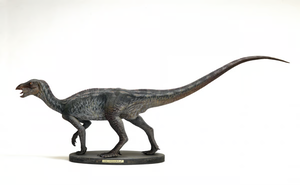
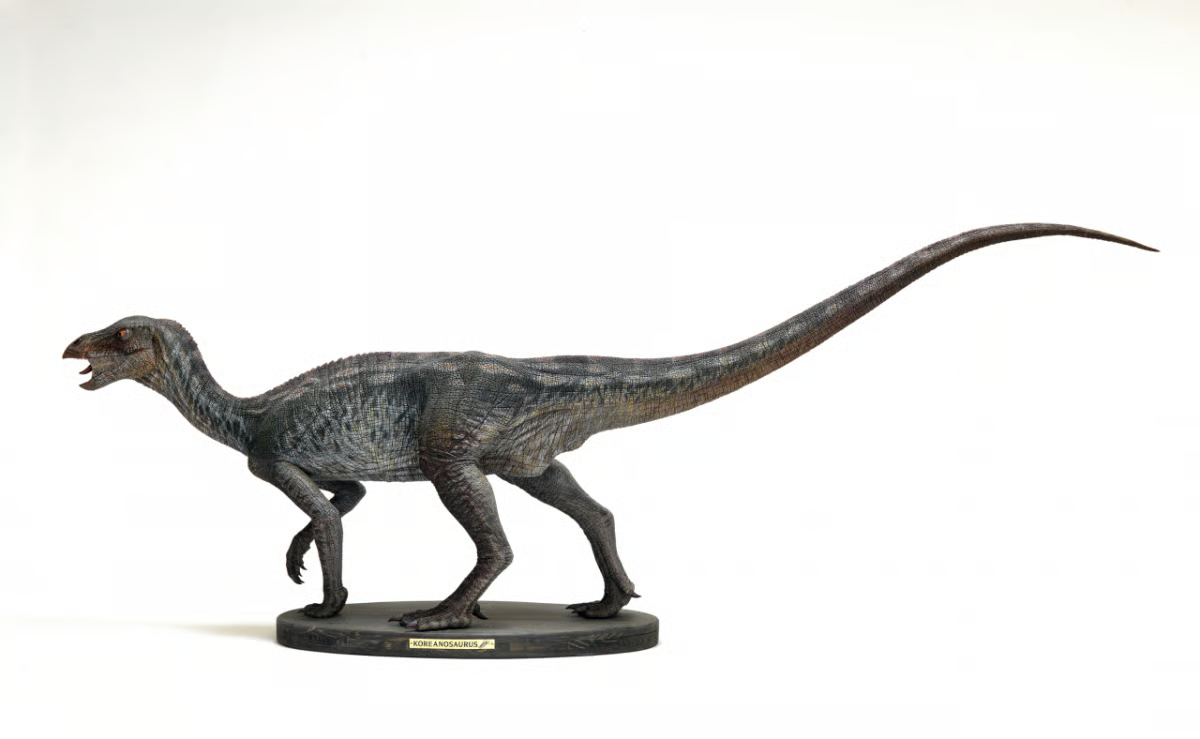
Korea’s first indigenous dinosaur fossil to bear the country’s name in its scientific classification is set to be designated a natural monument, the Korea Heritage Service said Monday.
The agency said it plans to designate the Koreanosaurus boseongensis skeletal fossil discovered in Boseong, South Jeolla Province, as a natural monument, along with the pig-nosed turtle skeleton fossil from Yeosu and the Tafoni weathering pits of Suudo Island in Tongyeong.
Natural monument designation grants the fossils legal protection as nationally significant natural heritage, restricting damage or alteration while supporting its preservation and research.
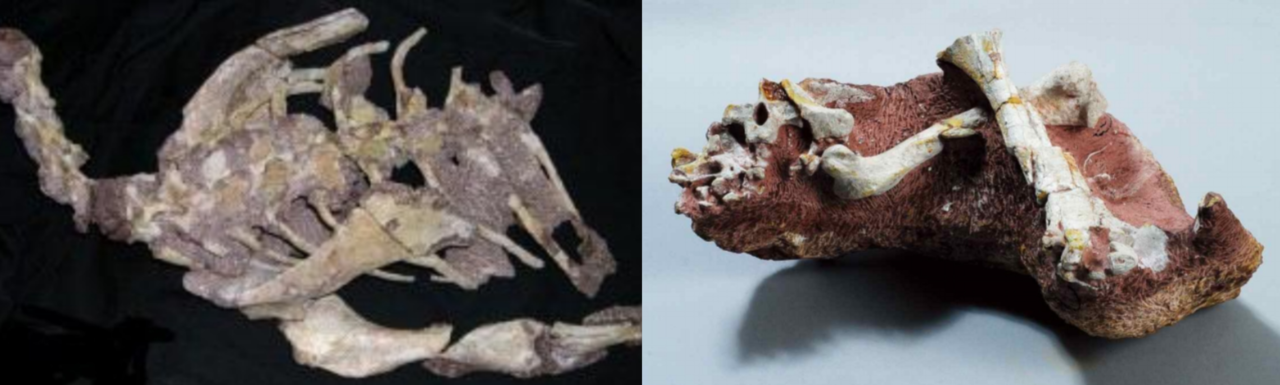
The Koreanosaurus fossil, discovered between 2000 and 2004 at the Fossil Site of Dinosaur Eggs in Bibong-ri near Seonso Village in Boseong, marked the first identification of an ornithopod dinosaur found in Korea.
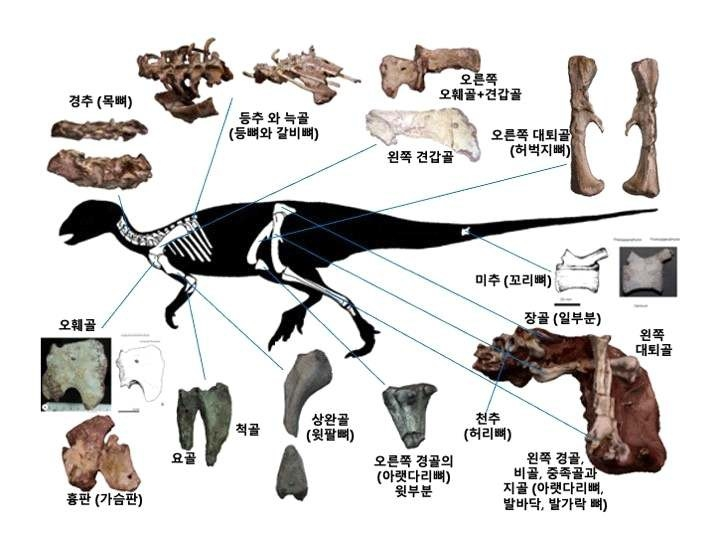
Koreanosaurus was a small herbivorous dinosaur that lived during the Late Cretaceous period. It measured an estimated 1.9 to 2 meters (6.2 to 6.6 feet) long and stood 60 to 80 centimeters (24 to 31 inches) tall. It had birdlike limbs and three-toed feet and left broad, blunt footprints.
According to the Korea Heritage Service, Koreanosaurus belonged to the Orodrominae, a dinosaur subfamily rarely identified in Asia. Its discovery provides important evidence of dinosaur migration between North America and Asia during that period.
One of its most distinctive features was its unusually robust forelimbs, which were much thicker and broader than those of other members of the subfamily. Researchers believe the limbs supported powerful muscles and ligaments, suggesting the dinosaur adapted to dig burrows.
According to the Korea Dinosaur Research Center at Chonnam National University, there are currently three fossils registered as the Koreanosaurus. Based on the similar shape and size of each fossil, researchers believe that they come from one dinosaur.
“Most dinosaur fossils discovered in Korea are fragmentary and incomplete,” Kim Min-guk, a researcher at the Korea Dinosaur Research Center at Chonnam National University, told The Korea Herald.
“By contrast, the Koreanosaurus fossil was found largely intact, preserving most of the upper and lower body and limb bones, with only the skull missing. This makes it an exceptional discovery.”
Koreanosaurus was formally described in the German Journal of Geology and Palaeontology in Germany in 2010.
mjcha@heraldcorp.com