In the short story “In the Penal Colony”, by Franz Kafkapublished for the first time in 1919, a torture machine engraves on the condemned man’s body, with hundreds of needles, the sentence he needs to serve. That was the image that came to mind when they started applying anesthesia to my hair transplant.
There were dozens of bites on my scalp, one after the other, injecting small volumes of the anesthetic liquid each time — and, in my case, they hurt a lot. But very much so.
For the first few injections, I just squeezed my toes. Then I started moving my legs due to the pain. At some moments, already at my limit, I even complained out loud — and uttered some swear words.
With this, I do not want to instill fear or discourage anyone who is thinking about having such a transplant. Even because it was half an hour of suffering to spend the rest of my life with hair. And I was unlucky, it seems.
A colleague of mine Sheetwho had a transplant at the end of last year, said he didn’t feel anything during the anesthesia. But I think it’s important to highlight that anesthesia can hurt a lot, as I hadn’t read anything like that in my research and I wasn’t psychologically prepared for that pain.
Speaking of my colleague, everywhere you look there are examples of this procedure. The BBB presenter, Tadeu Schmidtcarried out a at the end of 2024. The samba player Diogo Nogueira has just done the second, because the result of the first was less than desired. And the presidential candidate Ronaldo Caiado (PSD) made one that preserves existing hair without the need to shave your head.
My surgery, however, was shaved and lasted six to seven hours. It started around 9:30 am and ended around 4 pm. After anesthesia, the entire back of the head — the back of the head and around it — became a donation area. From there came the follicles that would later be implanted in the region with less hair.
At the age of 55, my hairline had already advanced considerably towards the middle of my head, and the crown — the region at the top — was completely bald. There were, therefore, two main areas to be covered: the frontal part and the crown.
Based on the assessment carried out on the morning of the procedure, the doctor said that I could remove around 4,800 follicles. That’s not what happened. According to the doctor, my hair was thinner and more brittle than expected and, in the end, 3,964 follicles were extracted.
I lay on a kind of massage chair, with a gap to fit my face. Naturally, the position, maintained for hours, becomes uncomfortable. In some places on the back of the neck, removing the follicles can hurt.
During the implantation of the removed follicles, I didn’t feel anything. The anesthesia was probably already acting. In the end, when I lay down on my back for the final step —correcting the entries—, I fell asleep.
After the procedure was finished, the nurses brought a meal — I couldn’t leave without eating. I only left after my companion arrived, another requirement of the clinic.
If the bald spot was bothering me, I decided to have a hair transplant after noticing a significant drop in prices in recent years. “It was almost a luxury item”, says dermatologist Anna Cecília Andriolo, president of the Brazilian Association of Hair Restoration Surgery (ABCRC).
“It was from Covid that demand has exploded”, she says. Andriolo points out two main factors for this jump. The first was social isolation, which allowed many patients to carry out the procedure away from other people’s eyes. “Most men who do it don’t like to talk, nor do they recommend the professional out of shame.”
The second was the effect of video calls. “People started to see themselves more. No one looks at themselves in the mirror that much, but suddenly you start participating in video conference meetings, where your camera also appears, and you start looking at yourself more”, he says.
With the increase in demand, more professionals began to work in the area. In my case, choosing a clinic began with a search on Instagram, where I found advertisements for procedures starting at R$10,000. After the first views on this subject, the social network flooded me with posts from clinics, doctors and hair transplant patients.
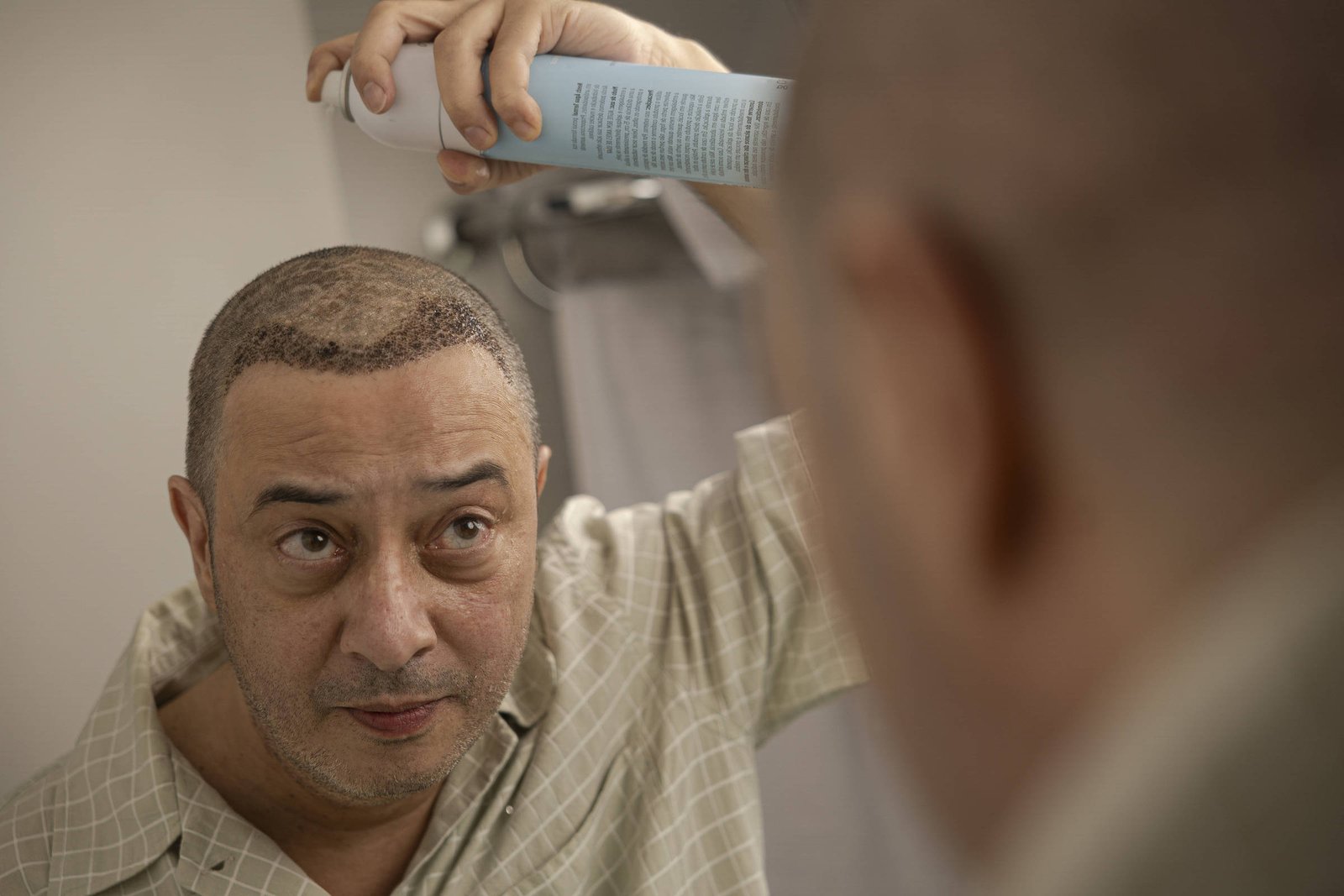
Compare the before and after


Head of journalist Ivan Finotti – Luiz Cornagliotti/Folhapress
The choice of the clinic had three main reasons. The first were photos of the surgical area of the clinic, which looked very professional to me. The second factor was online reputation. The clinic had a five-star rating on Google, with 97 votes, and only one entry on the Reclame Aqui website, registered years ago — it was a confusing report and it was not possible to fully understand the problem mentioned.
The third reason was the price. The prices I heard about for such a transplant, before the pandemic, were at least double or even three times as much. Paying R$14,800, and even divided into 12 installments on the card, seemed incredible to me.
Finally, it is worth saying that I did not introduce myself as a journalist, nor did I say that I would write about the subject. If this were revealed, I could receive special treatment and this report would lose some of its usefulness for the reader interested in having the surgery.
Despite the existence of ABCRC, there is no way to discover the size of this market currently in the country. “Today, any doctor can perform the procedure in Brazil. We only have control over our members. What happens outside of that is very difficult to measure”, says the president of the association.
A 2023 ABCRC survey interviewed 68 of its associated doctors, accounting for an average of 96 surgeries per year for each of them. This means around 6,500 transplants in the country in 2022. Of course, the real number is much higher.
Out there, the measurement problem is the same. The International Society of Hair Restoration Surgery currently adopts the same methodology as the Brazilian association and brings information sent by members — just over a thousand worldwide.
Andriolo states that Brazil already occupies a relevant position on the international scene and is beginning to attract foreigners. “There are already many patients who come from abroad to undergo surgery here.”
At the same time, it issues a warning about the medical tourism popularized by destinations such as Türkiyewhich include two or three nights’ accommodation and limousines to and from the airport in the surgery prices. Prices range from 2,500 euros (around R$14,700) to 5,000 euros (R$29,400).
“Medicine has nothing to do with tourism. Many times, those who buy a package like this don’t know who will operate on it or have follow-up care afterwards.”
The Brazilian entity is preparing a new census, with expanded participation, scheduled for release in May.