Japan’s reliance on the Middle East for aluminum is forcing companies to cut back on production and scramble for alternative supply sources after key shipping routes were severed due to the Iran conflict.
Among the most exposed are auto and parts makers such as Toyota Motor Corp and Denso Corp.
Domestic automakers get about 70 percent of their aluminum imports from the Middle East, the nation’s top auto lobby said.
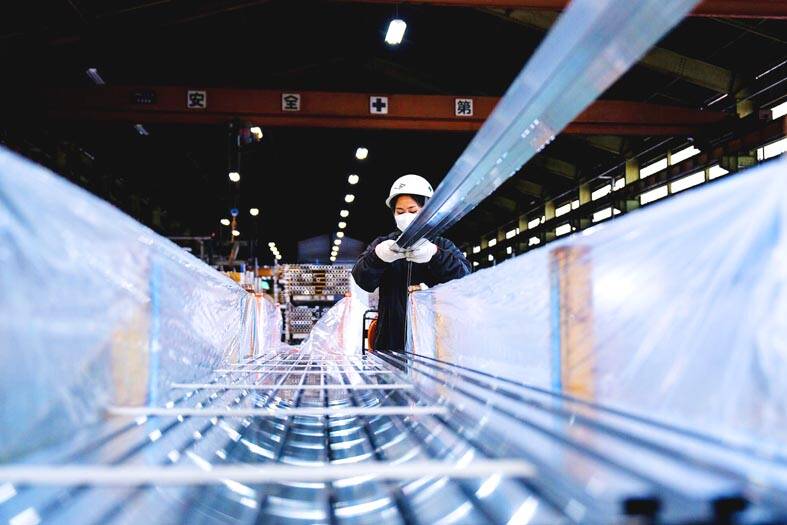
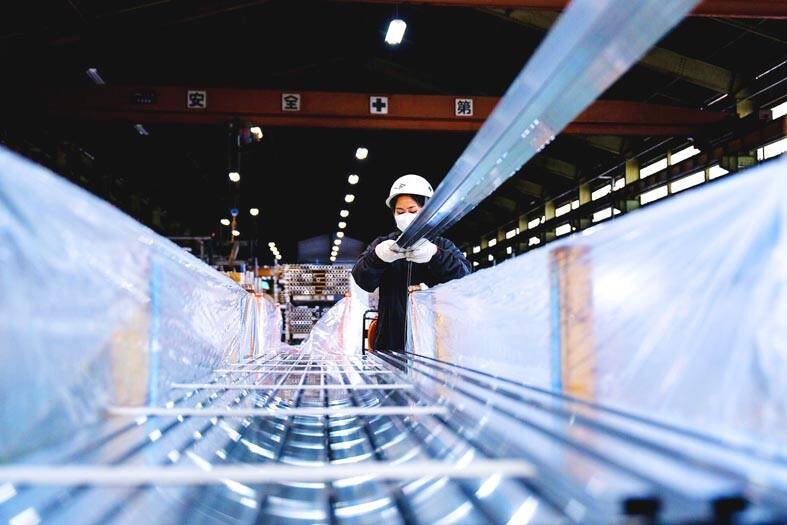
Photo: Bloomberg
The price of the lightweight alloy — used in everything from engine parts to wheels — has jumped about 13 percent since hostilities started in late February.
“It’s only been a month, but it’s almost certain that we’ll soon have trouble making automobile parts,” Kato Light Metal Industry Co chief executive officer Daiki Kato said in an interview late last month. “We’re going to spend more selectively and conserve our energy.”
Elsewhere, Toyota supplier Denso and its affiliates have had to reduce monthly output by about 20,000 units, the company said last month, resulting in sizeable losses.
Aluminum is the most commonly used metal after steel. Lighter and better at dissipating heat, it is a key component in engine parts such as pistons and cylinder heads, along with body panels and alloy wheels. It is also used for everything from electronics and building materials to beer cans and potato chip bags.
With the Middle East’s top aluminum producer predicting it would take at least a year to restore full production, Japan is at the forefront of what might spiral into a prolonged global shortage of the metal.
JPMorgan Chase & Co analysts last week said that the industry had entered a “black hole” it would not easily come back from.
Even if a peace deal is reached and the Strait of Hormuz reopens, it could still take months for shipping to resume normal levels.
Japan last year imported about 590,000 tonnes of aluminum, or about 30 percent of its total, supply from the Middle East, the Japan Aluminum Association said.
The US imports more aluminum than Japan, but US companies are not in danger of running out of aluminum, because they get most of their supply at home and Canada, Bloomberg Intelligence said.
Japan is the most vulnerable country to aluminum shortages, S&P Global Inc analyst Masatoshi Nishimoto said.
Southeast Asia, China and South Korea are also among nations that face “the greatest risk,” he said.
Not only has the war reduced shipping through the Strait of Hormuz, but key aluminum refineries in Abu Dhabi and Bahrain were damaged in the early stages of the conflict, as Iran attacked its regional neighbors in response to the US and Israeli assault, with supply constraints from the region likely to persist for months even if the war finishes.
The disruption to supplies could lead companies to run out of certain specialized products, forcing factories into temporary shutdowns. The longer the war drags on, the longer supply chains would take to recover, increasing the risk production grinds to a complete halt.
“Manufacturers are starting to seek out alternatives as their inventories begin to run dry,” Japan Aluminum Association spokesman Koji Iida said. “It’s an extremely difficult situation and concerns are high among small and medium-sized companies.”