In our weekly column, Nordic Editor Richard Orange explains why he wrongly thought that Mette Frederiksen would end up failing to negotiate a government, before running through the rest of the week’s stories.
I have to admit, I’d thought Mette Frederiksen was finished.
Even after the left-wing red bloc won eight seats more than the right-wing blue bloc, my hunch was that Moderate Party leader Lars Løkke Rasmussen would end up parking his decisive 14 seats on the right. After all, from 2015 to 2019 he led a government entirely dependent on the far-right Danish People’s Party.
In the event that Frederiksen’s two terms as PM, Denmark’s political parties would engineer a change in leader, even if voters hadn’t given a clear signal.
Both The Local Denmark’s outgoing editor Mike Barrett and the incoming editor Becky Waterton knew better. In our talks the day after the election, they were convinced that the red lines the far-right Denmark Democrats and Danish People’s Party had against a government including Rasmussen would hold, forcing him ultimately to back Frederiksen.
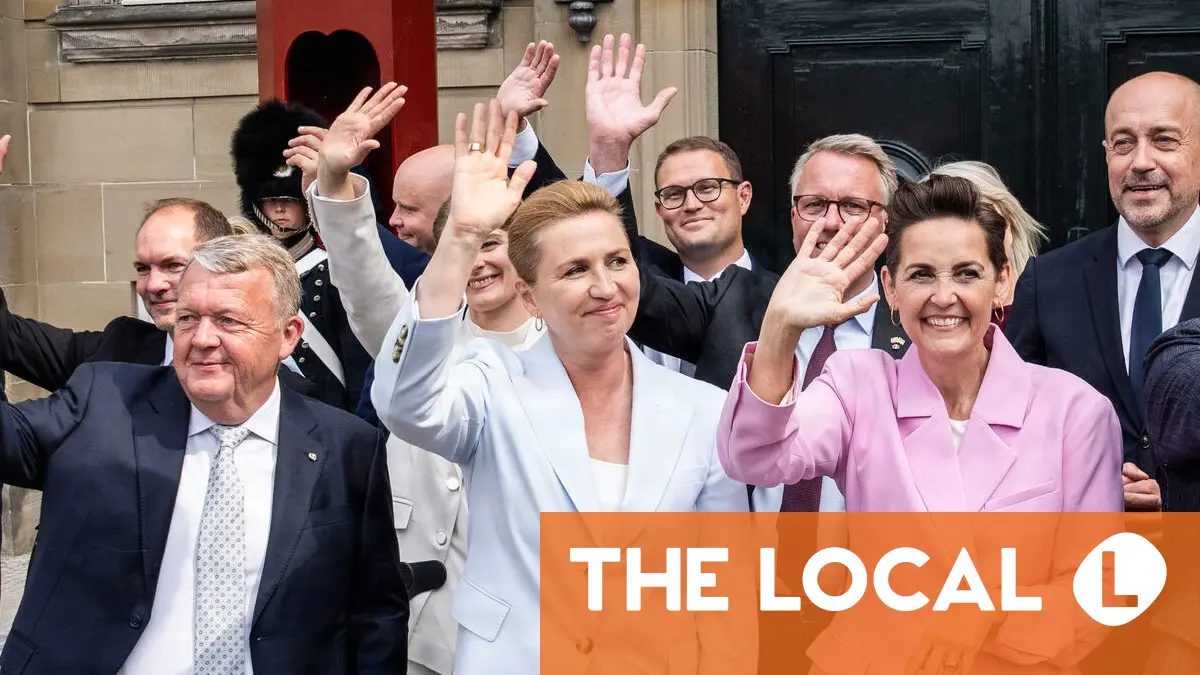
On Monday night, they were proven right. Mette Frederiksen announced new “four-leaf clover” government with the Green Left Party, Moderates, and Social Liberal Party, with the support of both the Red-Green Alliance and the Alternative parties. Because the Danish for a four-leaf clover is four leaf clover (literally “four clover”, the government’s name – the four-leaf clover government – works better in Danish than in its English translation.
Frederiksen has now led a Social Democrat minority government, an arguably centre-right grand coalition of left and right wing parties, and now a government that leans more centre-left. It took a record 69 days, but as AFP’s Camille Bas Wohlert wrote in a profile of Frederiksen we publishedFrederiksen is nothing if not tenacious.
The agreed policies drip fed out on Tuesday morning suggested a swing to left-wing populismas the two far-left support parties announced agreements to halve VAT on food, bring in free dental care, and make public transport free for young people.
But when the full policy program was announced in the evening it was clear Rasmussen and his centre-right Moderates had been well rewarded, with an agreement to scrap the top rate of tax, and lift the maximum amount that can be kept in a Share Savings Account, among other economic reforms.
We went through the program to dig out all the new policies that will affect foreigners in Denmark.
When the ministers in the government were announced, it turned out to be Denmark’s first government with a majority of female ministers (a milestone already passed by Sweden, Norway and Finland).
One thing many foreigners have been impatiently waiting for is a restart to the processing of citizenship applications, which the immigration ministry put on hold when the new government was announced. A spokesperson for the ministry told us on Thursday that a new government and a new immigration minister is not enough to allow this to happen. The new government also needs to make a new parliamentary agreement with opposition parties.
We’d love to hear from readers about how they are affected by the continuing delay to citizenship processing. Please fill in our survey here.
There’s been so much going on this week in politics, that we haven’t had time for much else. On Wednesday, more than 6,000 people turned up at language centers around the country to take this spring’s citizenship test, with the questions and corrected answers published later that day.
It was an easy test this year, I’m told. See if you can pass it in our interactive version, with one version in the original Danish and one in English.
Have a wonderful weekend (despite the thunderstorms forecast!)
Richard