
The Inter-American Institute for Cooperation on Agriculture (IICA) and the Pan American Liquid Biofuels Coalition (CPBIO) are supporting efforts to expand biofuels and sustainable mobility as Argentina advances its energy transition.
The organizations participated in the II Bioethanol Summit in Tucumán and held the First Working Meeting of the Mobility Energy Transition Movement in Argentina in San Miguel de Tucumán. The meeting, hosted by the Institute for the Promotion of Sugar and Alcohol of Tucumán (IPAAT), brought together public and private-sector representatives to discuss biofuels, renewable energy and sustainable transportation.
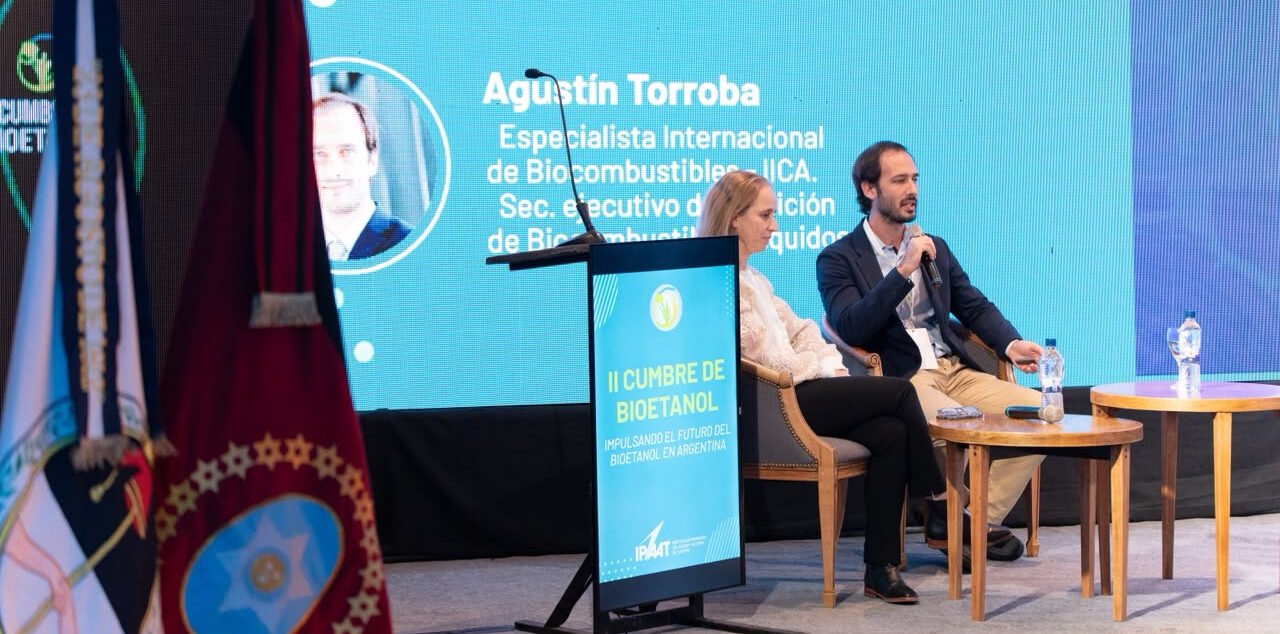
Participants included IICA biofuels specialist and CPBIO Executive Secretary Agustín Torroba, IICA Representative in Argentina Fernando Schwanke, representatives of IPAAT, the Estación Experimental Agroindustrial Obispo Colombres (EEAOC), INTA and INTI, as well as other industry and institutional stakeholders.
Torroba also spoke on a panel examining global biofuel trends. He highlighted Argentina’s growing supplies of sugarcane, corn and soybeans and the need to develop additional uses for biomass.
He noted that more than 80% of ethanol consumed globally is used in countries or regions with sustainability requirements, creating potential economic opportunities for producers able to meet environmental certification standards.

Torroba also identified northern Argentina’s corn surpluses as an opportunity for ethanol production and pointed to Brazil’s flexible plants, which process sugarcane and corn during different harvest periods, as a potential model.
Another emerging opportunity is sustainable aviation fuel (SAF), with ethanol able to serve as a feedstock through the Alcohol-to-Jet process.
Brazilian Ministry of Mines and Energy representative Marcia Valeria Sousa Alves highlighted Brazil’s experience, noting that the country has developed a major biofuel industry producing ethanol from sugarcane and corn, as well as biodiesel, biogas and biomethane.
She said Brazil has used high ethanol blends for more than four decades, with a mandatory 32% ethanol blend in gasoline taking effect in August 2026. She also highlighted RenovaBio, established in 2017, as a key tool for decarbonizing road transport.