Wednesday, August 26, 2026
    The GeoStrategic Consensus
    No Result
    View All Result
    • Login
    • HOME
    • AMERICAS
      • Argentina
      • Brazil
      • Canada
      • Chile
      • Colombia
      • Costa Rica
      • Cuba
      • Dominican Republic
      • Ecuador
      • El Salvador
      • Greenland
      • Guatemala
      • Honduras
      • Mexico
      • Nicaragua
      • Panama
      • Paraguay
      • Peru
      • United States
      • Uruguay
      • Venezuela
    • ASIA-PACIFIC
      • Australia
      • Brunei Darussalam
      • Cambodia
      • China
      • Federated States of Micronesia
      • Fiji
      • Indonesia
      • Japan
      • Kiribati
      • Laos
      • Malaysia
      • Marshall Islands
      • Mongolia
      • Myanmar
      • Nauru
      • New Zealand
      • North Korea
      • Palau
      • Papua New Guinea
      • Philippines
      • Samoa
      • Singapore
      • Solomon Islands
      • South Korea
      • Taiwan
      • Thailand
      • Timor-Leste
      • Tonga
      • Tuvalu
      • Vanuatu
      • Vietnam
    • CARICOM
      • CARICOM – Non-English
        • Haiti
        • Suriname
      • CARICOM Associates
        • Anguilla
        • Bermuda
        • British-Virgin-Islands
        • Cayman-Islands
        • Curacao
        • Turks-and-Caicos
      • CARICOM English
        • Antigua and Barbuda
        • Barbados
        • Belize
        • Dominica
        • Grenada
        • Guyana
        • Jamaica
        • Montserrat
        • Saint Kitts and Nevis
        • Saint Lucia
        • Saint Vincent and the Grenadines
        • The Bahamas
        • Trinidad and Tobago
    • EURASIA
      • Armenia
      • Azerbaijan
      • Balarus
      • Georgia
      • Kazakhstan
      • Kyrgyzstan
      • Moldova
      • Russia
      • Tajikistan
      • Turkmenistan
      • Ukraine
      • Uzbekistan
    • EUROPE
      • Albania
      • Andorra
      • Austria
      • Bosnia and Herzegovina
      • Bulgaria
      • Croatia
      • Cyprus
      • Czech Republic
      • Denmark
      • Estonia
      • Finland
      • France
      • Germany
      • Greece
      • Holy See
      • Hungary
      • Iceland
      • Ireland
      • Italy
      • Kosovo
      • Latvia
      • Liechtenstein
      • Lithuania
      • Luxembourg
      • Malta
      • Monaco
      • Montenegro
      • Netherlands
      • North Macedonia
      • Norway
      • Poland
      • Portugal
      • Romania
      • San Marino
      • Serbia
      • Slovakia
      • Slovenia
      • Spain
      • Sweden
      • Switzerland
      • United Kingdom
    • MIDDLE EAST AND NORTH AFRICA
      • Algeria
      • Bahrain
      • Egypt
      • Iran
      • Iraq
      • Israel
      • Jordan
      • Kuwait
      • Lebanon
      • Lybia
      • Morocco
      • Oman
      • Palestinian Territories
      • Qatar
      • Saudi Arabia
      • Syria
      • Tunisia
      • Turkey
      • United Arab Emirates
      • Western Sahara
      • Yemen
    • SOUTH ASIA
      • Afghanistan
      • Bangladesh
      • Bhutan
      • India
      • Maldives
      • Nepal
      • Pakistan
      • Sri Lanka
    • SUB-SAHARAN AFRICA
      • Angola
      • Benin
      • Botswana
      • Burkina Faso
      • Burundi
      • Cabo Verde
      • Cameroon
      • Central African Republic
      • Chad
      • Comoros
      • Cote d’Ivoire
      • Democratic Republic of the Congo
      • Djibouti
      • Equatorial Guinea
      • Eritrea
      • Eswatini
      • Ethiopia
      • Gabon
      • Gambia
      • Ghana
      • Guinea
      • Guinea Bissau
      • Kenya
      • Lesotho
      • Liberia
      • Madagascar
      • Malawi
      • Mali
      • Mauritania
      • Mauritius
      • Mozambique
      • Namibia
      • Niger
      • Nigeria
      • Republic of the Congo
      • Rwanda
      • Sao Tome and Principe
      • Senegal
      • Seychelles
      • Sierra Leone
      • Somalia
      • South Africa
      • South Sudan
      • Sudan
      • Tanzania
      • Togo
      • Uganda
      • Zambia
      • Zimbabwe
    • HOME
    • AMERICAS
      • Argentina
      • Brazil
      • Canada
      • Chile
      • Colombia
      • Costa Rica
      • Cuba
      • Dominican Republic
      • Ecuador
      • El Salvador
      • Greenland
      • Guatemala
      • Honduras
      • Mexico
      • Nicaragua
      • Panama
      • Paraguay
      • Peru
      • United States
      • Uruguay
      • Venezuela
    • ASIA-PACIFIC
      • Australia
      • Brunei Darussalam
      • Cambodia
      • China
      • Federated States of Micronesia
      • Fiji
      • Indonesia
      • Japan
      • Kiribati
      • Laos
      • Malaysia
      • Marshall Islands
      • Mongolia
      • Myanmar
      • Nauru
      • New Zealand
      • North Korea
      • Palau
      • Papua New Guinea
      • Philippines
      • Samoa
      • Singapore
      • Solomon Islands
      • South Korea
      • Taiwan
      • Thailand
      • Timor-Leste
      • Tonga
      • Tuvalu
      • Vanuatu
      • Vietnam
    • CARICOM
      • CARICOM – Non-English
        • Haiti
        • Suriname
      • CARICOM Associates
        • Anguilla
        • Bermuda
        • British-Virgin-Islands
        • Cayman-Islands
        • Curacao
        • Turks-and-Caicos
      • CARICOM English
        • Antigua and Barbuda
        • Barbados
        • Belize
        • Dominica
        • Grenada
        • Guyana
        • Jamaica
        • Montserrat
        • Saint Kitts and Nevis
        • Saint Lucia
        • Saint Vincent and the Grenadines
        • The Bahamas
        • Trinidad and Tobago
    • EURASIA
      • Armenia
      • Azerbaijan
      • Balarus
      • Georgia
      • Kazakhstan
      • Kyrgyzstan
      • Moldova
      • Russia
      • Tajikistan
      • Turkmenistan
      • Ukraine
      • Uzbekistan
    • EUROPE
      • Albania
      • Andorra
      • Austria
      • Bosnia and Herzegovina
      • Bulgaria
      • Croatia
      • Cyprus
      • Czech Republic
      • Denmark
      • Estonia
      • Finland
      • France
      • Germany
      • Greece
      • Holy See
      • Hungary
      • Iceland
      • Ireland
      • Italy
      • Kosovo
      • Latvia
      • Liechtenstein
      • Lithuania
      • Luxembourg
      • Malta
      • Monaco
      • Montenegro
      • Netherlands
      • North Macedonia
      • Norway
      • Poland
      • Portugal
      • Romania
      • San Marino
      • Serbia
      • Slovakia
      • Slovenia
      • Spain
      • Sweden
      • Switzerland
      • United Kingdom
    • MIDDLE EAST AND NORTH AFRICA
      • Algeria
      • Bahrain
      • Egypt
      • Iran
      • Iraq
      • Israel
      • Jordan
      • Kuwait
      • Lebanon
      • Lybia
      • Morocco
      • Oman
      • Palestinian Territories
      • Qatar
      • Saudi Arabia
      • Syria
      • Tunisia
      • Turkey
      • United Arab Emirates
      • Western Sahara
      • Yemen
    • SOUTH ASIA
      • Afghanistan
      • Bangladesh
      • Bhutan
      • India
      • Maldives
      • Nepal
      • Pakistan
      • Sri Lanka
    • SUB-SAHARAN AFRICA
      • Angola
      • Benin
      • Botswana
      • Burkina Faso
      • Burundi
      • Cabo Verde
      • Cameroon
      • Central African Republic
      • Chad
      • Comoros
      • Cote d’Ivoire
      • Democratic Republic of the Congo
      • Djibouti
      • Equatorial Guinea
      • Eritrea
      • Eswatini
      • Ethiopia
      • Gabon
      • Gambia
      • Ghana
      • Guinea
      • Guinea Bissau
      • Kenya
      • Lesotho
      • Liberia
      • Madagascar
      • Malawi
      • Mali
      • Mauritania
      • Mauritius
      • Mozambique
      • Namibia
      • Niger
      • Nigeria
      • Republic of the Congo
      • Rwanda
      • Sao Tome and Principe
      • Senegal
      • Seychelles
      • Sierra Leone
      • Somalia
      • South Africa
      • South Sudan
      • Sudan
      • Tanzania
      • Togo
      • Uganda
      • Zambia
      • Zimbabwe
    No Result
    View All Result
    Agentially
    No Result
    View All Result
    Home ASIA-PACIFIC Nauru

    How ‘stop the boats’ changed the world

    The Analyst by The Analyst
    August 26, 2026
    in Nauru
    How ‘stop the boats’ changed the world


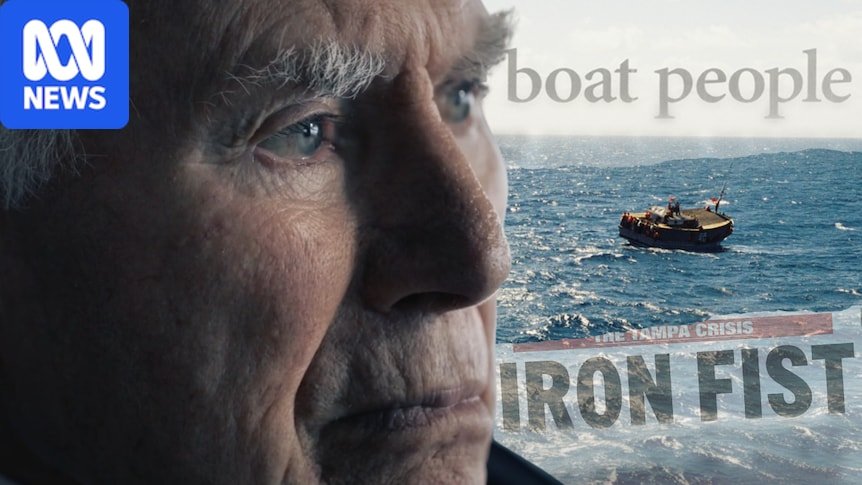
    In 2001, Australia was criticised on the world stage for its unprecedented hardline policy on asylum seekers. Twenty-five years later, governments around the world are following suit.

    READ ALSO

    Fiji exports pilot consignment of fresh produce to Naoero

    Chief justice puts focus on judicial well-being – News

    August 24, 2001. The Palapa, a small Indonesian fishing boat, is stranded in the ocean.

    The vessel is barely seaworthy. It’s crammed with 433 asylum seekers, mostly Hazara Afghans, fleeing persecution in their home country and travelling via Indonesia to seek refuge in Australia.

    A small wooden boat bobs in the open ocean.
    The Palapa, an Indonesian fishing boat, is stuck at sea.(Supplied: Knut M. Holth)

    The wooden boat has weathered a bad storm and now floats 140 kilometres from the Australian territory of Christmas Island.

    Its occupants are exhausted, dehydrated and fearing for their lives.

    They could not have imagined the next eight days would reshape Australia’s politics and send shock waves around the world for decades.

    After two days adrift, they were rescued when Norwegian freighter, the MV Tampa, diverted course to answer the boat’s distress call.

    But where to head next became an increasingly difficult question.

    Upon first rescuing the asylum seekers, the freighter’s captain, Arne Rinnan, set course for the Indonesian port of Merak, the closest able to dock such a large vessel. 

    But soon after, the Tampa’s crew reported their new passengers became increasingly distressed, with some threatening suicide if they were returned to Indonesia and demanding instead that the ship take them to Christmas Island.

    A large red freight ship at sea, with red shipping containers loaded on board.
    Norwegian freighter the MV Tampa heeds the Palapa’s distress call.(Newspix: News Limited)
    A small wooden boat pulls up to the side of a large freight ship.
    The Palapa approaches the Tampa to offload hundreds of asylum seekers.(Supplied: Knut M. Holth)
    People in red life jackets climb from a small wooden boat up some stairs to the side of a freighter.
    Relieved asylum seekers board the Tampa.(Supplied: Knut M. Holth)
    An overhead shot of a crowd of people sitting and standing on the deck of a large freight ship.
    More than 400 people wait aboard the freighter.(Supplied: Knut M. Holth)

    If you or anyone you know needs help:

    • Suicide Call Back Service on 1300 659 467
    • Lifeline on 13 11 14
    • Headspace on 1800 650 890

    When Rinnan requested permission from Australian authorities to dock at the island, however, he received a firm response. 

    Prime minister John Howard would allow no such thing.

    It was the start of a tense, days-long stand-off in the open ocean.

    Frantic missives flew between Australian, Indonesian and Norwegian authorities, arguing over which nation should claim responsibility for the Tampa’s human cargo.

    On August 29, as conditions on the freighter worsened, the captain sent out an SOS and made the decision to enter Australian waters without authorisation.

    On the mainland, Australia’s leadership was plunged into political and legal turmoil. The government sent SAS troops to board the Tampa and prevent its ingress.

    Meanwhile, the prime minister attempted to rush through emergency legislation to turn back the asylum seekers, but it was rejected by the Senate.

    The international press lambasted Australia, especially as the ship’s crew reported cases of dysentery and ailing pregnant women on board the languishing freighter.

    An inflatable military vessel draws close to the side of a large freighter.
    An SAS boat approaches the Tampa.(Supplied: Knut M. Holth)
    A crowd of people, including young children, stand and sit on the floor beneath a tarp.
    Families rescued from the Palapa wait on the freighter.(Supplied: Knut M. Holth)
    A young boy holds a plate of food, surrounded by adults.
    Among the group are children and pregnant women.(Supplied: Knut M. Holth)
    An aerial shot of people sitting on tarpaulins in the concrete deck of a ship.
    After days at sea, supplies on the Tampa run low.(Supplied: Knut M. Holth)

    By September 2, Howard and his minister for foreign affairs, Alexander Downer, had arranged a hasty agreement with New Zealand to accept 150 of the asylum seekers. Others, it was determined, would be sent to the small island nation of Nauru, around 4,500 kilometres from Australia.

    The following day, the Tampa’s passengers were transferred to the better-resourced HMAS Manoora, which set sail across the Pacific.

    At the same time, a legal battle was unfolding in the Federal Court. On the morning of September 11, Justice Tony North ruled that the government was unlawfully detaining the asylum seekers en route to Nauru, and decreed that they should be brought to Australia.

    Hours later, the world changed.

    A huge ball of fire and smoke coming from one of the Twin Towers
    The World Trade Center south tower is engulfed in flames after being struck by hijacked United Airlines Flight 175.(Reuters: Sean Adair)

    The shock of the September 11 terrorist attacks reverberated far beyond the United States.

    In Australia, public sentiment swung in favour of Howard’s tough border stance. In the minds of a nation awed by the horrors of extremist violence, those rescued by the Tampa — along with the possibility of a more porous Australian border — now represented an unacceptable risk.

    Six days after the attacks, on September 17, the Full Court of the Federal Court overturned Justice North’s judgment on appeal, ruling that the government was legally able to turn asylum seekers away from its shores before processing their claims.

    On September 26, while the world looked to New York, parliament passed a law excising several islands from Australia’s migration zone, meaning asylum seekers who landed there would not be able to settle on the mainland.

    What began as an emergency response had evolved into a steadfast policy. The Pacific Solution was here to stay.

    Go to glossary of key terms

    ‘The mood of the country’

    In the first half of 2001, as a federal election loomed, Howard’s political future was in peril.

    After two embattled terms, his government was trailing Labor in approval ratings and tipped to lose seats across the nation. It was widely believed Howard would not last another election.

    He saw a reversal of fortune after the Tampa affair and 9/11.

    Questions of border control and national security dominated the lead-up to the November 10 federal election. The Pacific Solution positioned the prime minister as a strong and decisive leader, and sent his approval rate soaring.

    It was during this campaign that Howard uttered the now-famous words:

    “We will decide who comes to this country and the circumstances in which they come.“

    Just weeks before the election, government officials said asylum seekers trying to reach Australia by a different boat had thrown their children overboard. By the time this was proven to be untrue, the election was decided.

    “We were not willing to allow a large number of asylum seekers to make the rules, because once we did that, we were saying we no longer controlled our borders,” Howard tells the ABC’s Tampa: The Turning Point.

    “If the view became entrenched around the world that it was easy to get into this country, we would have an enormous problem.

    “I think if there’d been no Tampa, no 9/11, we still would have won, but our majority would have been smaller. That’s how I felt. That was the mood of the country.”

    A close-up shot of an old man with thick white eyebrows looking thoughtfully off-camera.
    The Tampa Affair marked a pivotal moment in John Howard’s prime ministership.(ABC: Tampa: The Turning Point)

    ‘Fortress Australia’ and the Tampa legacy

    That mood went on to define a generation of policy.

    “Tampa changed the way that Australia understood and spoke about mass migration and irregular migration,” explains Guardian journalist Ben Doherty, who has covered asylum seeker policy extensively.

    “People arriving by boat were no longer ‘asylum seekers’, but ‘illegals’. We had ministers talking about floods and waves of people; it was framed in terms of an invasion.”

    The idea of the “queue jumper” — which was first popularised by the Whitlam government during the influx of Vietnamese refugees in the 70s — reared its head again in the wake of Tampa.

    “The concept of the queue jumper was actually created by the Australian government,” says Madeline Gleeson, deputy director of the Kaldor Centre for International Refugee Law at UNSW Sydney.

    “This was an incredibly powerful political concept because it created this artificial distinction between the so-called good refugee, who waited patiently far away in a refugee camp until we invited them to come to Australia, and the so-called bad refugee, who was cheating the system.

    “That distinction does not reflect reality … There is no queue; there is no system where you get a number by the order in which you registered for asylum, and then you come in that order.”

    A composite image of newspaper headlines from 2001, including
    Newspaper headlines from around the Tampa affair reflected changing ideas about asylum seekers.(ABC)

    It wasn’t only the language that hardened. The law did, too.

    Australia is one of 149 countries that are part of the UN Refugee Convention, which means it’s required by international law to protect asylum seekers and refugees, including not returning them to a country where they face persecution.

    “Until that moment, the norm, both in Australia and internationally, was that when an asylum seeker arrived at a state party to the [UN] Refugee Convention, their asylum claim was processed in the territory of that state,” Dr Gleeson says.

    “What changed with Tampa in Australia is that we looked to exclude people from our territory and find ways to push them elsewhere.“

    Offshore processing — sending migrants to countries outside Australia for their asylum claims to be assessed — has since become a core feature of Australia’s refugee policy. It has long received bipartisan support, despite critics citing exorbitant cost, human rights abuses and breaches of international law.

    Nibok refugee settlement on Nauru. It is a row of rectangular accommodation units.
    At its peak in 2014, the Nauru processing centre held 1,233 detainees.(AP: Jason Oxenham)
    Asylum-seekers look through a fence at the Manus Island detention centre in Papua New Guinea, 12 May. 2016.
    Asylum-seekers look through a fence at the Manus Island detention centre in Papua New Guinea.(Reuters)
    Pro-refugees protesters
    Australia’s offshore detention system has been the subject of many protests over the years.(AAP: Dan Peled )

    The Pacific Solution, which saw asylum seekers processed at Nauru and Manus Island in Papua New Guinea, lasted until 2008. After growing public pressure, Kevin Rudd’s Labor government ended what it called a “dehumanising and punishing” arrangement.

    In the years that followed, however, boat arrivals climbed, and the issue grew only more contentious. According to parliamentary records, unauthorised arrivals by sea jumped from five boats in 2007 to 278 in 2012.

    In August 2012, the Gillard government announced the reopening of detention centres for offshore processing, claiming “too many lives had been lost” at sea.

    The tough approach to asylum policy continued under subsequent governments, most visibly through Tony Abbott’s Operation Sovereign Borders. Launched in 2013, it upheld the same principles as the Pacific Solution, but with a focus on stopping boats reaching Australian shores. 

    More than a decade later, the policy remains in force.

    A photo of a small boat at sea with text that reads 'NO WAY: YOU WILL NOT MAKE AUSTRALIA HOME'.
    Operation Sovereign Borders’ 2015 campaign was famous for its hardline message.(Supplied: Australian Customs)

    Since then, proponents from both sides of the political aisle have repeated familiar talking points: breaking the business model of people-smugglers, preventing deaths at sea, and encouraging asylum seekers to seek refuge elsewhere.

    Shortly after Labor’s most recent election victory, home affairs Minister Clare O’Neil reiterated:

    “If you try to come to Australia by boat you will not make it … Operation Sovereign Borders, the policy that underpins this, is being enforced fiercely, if not more fiercely, than it was before.”

    As for the success of these policies, opinion is divided.

    Supporters argue they have reduced the number of unauthorised arrivals and, therefore, the number of deaths at sea. Critics say they have failed to establish a safe and sustainable way to manage asylum claims, and fall foul of Australia’s international obligations.

    On one point, however, most agree: the “Australian model” has become a prized export.

    “We’ve seen Australian politicians explicitly going overseas, saying, ‘We’ve worked it out, this is what you need to do’,” Doherty says.

    “This idea of keeping people away, the ‘Fortress Australia’ mentality — we’re seeing that play out all over the world, through the Mediterranean, the UK, in America.

    “This is the world that Tampa created.”

    UK follows Australia’s lead

    Those paying attention to the UK’s border policies in recent years might have felt a sense of deja vu.

    From the early 2000s, as conflict flared in Afghanistan, Iraq, Syria and Yemen, tens of thousands of people seeking asylum attempted to reach British shores.

    Amid an ongoing humanitarian crisis and fraught political landscape, UK leaders turned to Australia to inform their approach.

    “Countries don’t create their refugee, asylum and border control policies in isolation,” explains Daniel Ghezelbash, law professor and director of the Kaldor Law Centre.

    “They keep a very careful eye and monitor developments in other countries, and when one country adopts more restrictive policies … we see them spread quickly around the world.”

    Since 2012, when then-home secretary Theresa May promised a “hostile environment” for illegal migrants, other Conservative politicians have echoed some familiar sentiments.

    In 2016, prime minister David Cameron vowed to “bust the business model of people-smugglers”, while Boris Johnson later declared: “We’ve got to be able to control who comes into this country and the terms on which they remain”.

    “We really saw the ‘stop the boats’ messaging take off in the UK, particularly under Rishi Sunak’s prime ministership,” Professor Ghezelbash says.

    “We saw exactly the same language, the same messaging, even the same graphics being used.

    A man in a suit stands behind a podium emblazoned with 'STOP THE BOATS', between two UK flags.
    Conservative UK prime minister Rishi Sunak embraced Australia’s ‘stop the boats’ mantra.(Reuters: James Manning)

    “By far the most high-profile example [of the UK emulating Australia] was the UK-Rwanda deal, which was very closely and explicitly modelled on Australia’s policies, and there were actually a lot of Australians involved in making that happen.”

    The contentious plan, announced by Boris Johnson’s government in 2022, aimed to send some asylum seekers arriving by sea to be processed in Rwanda, where, if they were recognised as refugees, they would remain.

    After a protracted legal battle, the deal was stymied by European and UK courts, and was eventually cancelled by Labour prime minister Keir Starmer in 2024. Only four migrants were relocated through the program.

    Advising the scheme was none other than Alexander Downer, former Australian foreign affairs minister and a key architect of the Pacific Solution, who was appointed by the UK government in 2022 to lead an independent review of the UK’s Border Force.

    “People coming across the channel were gaming the system,” he tells the ABC.

    “I was always telling them when I was the High Commissioner in London [from 2014 to 2018], ‘You need to come up with an offshore processing scheme’.”

    A medium close-up shot of an older man with grey hair, glasses and a wry expression.
    Alexander Downer helped orchestrate the Pacific Solution.(ABC: Tampa: The Turning Point)

    But the realities of enacting “the Australian model” have proven difficult in the UK, where human rights law is more stringent.

    “Australia is one of the only liberal democracies in the world that doesn’t have a national-level Bill of Rights. Our Constitution is notoriously famous for being very light in terms of individual rights protections,” Professor Ghezelbash explains.

    “There are human rights mechanisms … that provide additional protections in the UK and in Europe that don’t apply in Australia.”

    EU echoes: ‘We will decide’

    At the height of the migrant crisis in 2015, retired Army general and former Liberal senator Jim Molan — a key architect of Operation Sovereign Borders — told media, “when [Europe is] ready to control [its] borders, come and talk to the Australian government”.

    A year later, then-prime minister Malcolm Turnbull and immigration minister Peter Dutton took to the stage at a United Nations summit to champion Australia’s border policy as “creating order out of … chaos”.

    Soon enough, European nations followed suit with their own raft of hardline policies.

    Over the past five years, Poland, Hungary, Greece, Croatia, Bulgaria and Italy have strengthened border-control measures and expanded powers of detention and expulsion. Human rights bodies have cited evidence of pushbacks in 13 European countries, and have reported concerns over human rights abuses at borders.

    Meanwhile, several countries have explored or pursued forms of offshore or third-country asylum processing, such as Italy’s arrangement with Albania, the Netherlands’ interest in Uganda, and Denmark’s discussions with Rwanda.

    Politicians have also spoken explicitly about the need for an “Australian-style” asylum policy.

    A blonde white woman in a pink blazer stands at a podium, with the EU flag behind her.
    Ursula von der Leyen, President of the European Commission, in 2024(ABC/Reuters: Johanna Geron)
    A white man with grey hair wears a black suit and light blue tie, with two large Hungarian flags behind.
    Viktor Orbán, Hungarian prime minister, in 2021(ABC/Reuters: Bernadett Szabo)
    A young white man with brown hair wears a black suit and blue tie.
    Sebastian Kurz, former Chancellor of Austria, in 2016(ABC/Reuters: Leonhard Foeger)
    A white middle-aged woman with blonde hair wears a teal dress and stands at a podium.
    Mette Frederiksen, Danish prime minister, in 2021(ABC/Reuters: Michele Tantussi)
    A white man with black and grey hair ears a dark suit and red tie.
    Alberto Núñez Feijóo, leader of the Spanish Opposition, in 2026(ABC/Reuters: Juan Medina)
    A white middle-aged woman with blonde hair wears a cream blazer and stands at a podium.
    Giorgia Meloni, Italian prime minister, in 2025(ABC/Reuters: Vincenzo Livieri)

    Alberto-Horst Neidhardt, senior analyst at the European Policy Centre, says this momentum has been building since the Tampa affair.

    “[In the early 2000s], European leaders were looking at policy initiatives elsewhere, and there were echoes of what Australia decided,” he says.

    “Around the same time, we started hearing the first European politicians talking about models of outsourcing responsibility to third countries, and since then, we’ve seen again and again attempts to make this policy more concrete.”

    In June 2026, the EU implemented new standardised border controls, which included mandatory security screenings, expanded powers to deny asylum, and processing centres known as “return hubs”.

    Critics argue these will create “human rights black holes”, undermine safeguards during processing, and lengthen detention stays. 

    “A lot of these policies have to do with political signalling. We know that migration is a very salient political issue in most countries,” Dr Neidhardt says.

    “We have elections soon enough in many European countries, including in France, where migration is also a very important political issue.

    “If the public does not see an effect in their day-to-day reality, then the risk is that they will choose parties that seem to offer the most effective solutions that are oftentimes simplistic.”

    Trump’s ICE borrows from Australia

    Although Donald Trump’s characterisation of migrants as “animals” and “terrorists” has made headlines, hardline refugee policies in the United States long predate his presidency.

    A longstanding American practice in fact inspired the Howard government policies that came out of Tampa.

    “The US had been carrying out a version of offshore processing on Guantanamo Bay since the 90s,” Professor Ghezelbash says.

    “It also had been carrying out … pushbacks since the 80s in the Caribbean.

    “I spoke to a senior US policymaker who was one of the architects of the US model, and he was providing advice around how Australia could respond [during the Tampa crisis].”

    But increasingly, the student has become the teacher.

    During Trump’s first-ever conversation with then-prime minister Turnbull in 2017, he complimented Australia’s use of detention centres for asylum seekers.

    “That is a good idea. We should do that too,” the President said, according to a leaked phone call.

    Since then, Trump’s government has implemented increasingly strict refugee policies, including offshore detention and agreements with dozens of governments to deport migrants to countries where they have no ties.

    These schemes have attracted many of the same criticisms as Australia’s regime, including the denial of due process and the risk of human rights violations.

    Donald Trump wears a black suit and red tie and stands by the thick bars of a border wall, about to sign a plaque.
    US President Donald Trump tours a section of the US-Mexico border wall in 2020.(Reuters: Carlos Barria)
    A group of men in heavy military uniforms walk along a busy street.
    Border Patrol agents walk the streets of New Orleans, after President Trump’s immigration crackdown.(Reuters: Seth Herald)
    A cluster of tents sit in an abandoned petrol station, with people sprawled on the floor.
    Haitian asylum seekers set up camp in an abandoned petrol station in Mexico.(Reuters: Daniel Becerril)
    A silhouetted person stands behind loops of barbed wire on the banks of a river.
    Asylum seekers wait behind razor wire after crossing the Rio Grande as they attempt to enter the US.(Reuters: Brian Snyder)

    Julia Morris, an associate professor of international studies at the University of North Carolina Wilmington, has seen these policies align “very much with the right-wing populist party line”.

    “There have been huge changes with this administration, with near-total freezes on asylum decisions and country-based bans that are very much driven by this America-first nationalism,” she says.

    “The Trump administration is very much focused on this ‘Make America Great’ mantra, … pandering to the idea that the reason why [people] are economically suffering is because of [migrants].

    “This isn’t necessarily new, but what is new is the pure hostility of the language.“

    The US and Australia are also sharing detention contractors.

    “The private prison contractor who’s tied to Australia’s Nauru operations is now also involved in US ICE detention,” Dr Morris says.

    The same US company, Management & Training Corporation (MTC), also manages Australia’s seven onshore detention centres through a subsidiary, Secure Journeys.

    Investigations by The Guardian Australia have found allegations of serious misconduct against the company, both within Australia and abroad.

    Its facilities have been the subject of damning reports by both Australia’s federal safety regulator, Comcare, and the Commonwealth’s National Preventive Mechanism, an independent network of bodies that monitors places of detention.

    MTC has also been fined by the Australian government for performance failures, including multiple escapes of detainees.

    In May, when asked about allegations regarding MTC’s Australian facilities, Australian Border Force told Guardian Australia that immigration detention was “a complex operating environment”, and that the “welfare, safety and dignity of people in immigration detention, as well as the safety of staff” were its highest priorities.

    The future of asylum

    Commentators across the political spectrum agree on one thing: the question of how to handle asylum seekers is unlikely to disappear anytime soon.

    There are 117.8 million forcibly displaced people worldwide, according to UNHCR statistics.

    “The reality that we see being played out is that once you start demonising and attacking certain cohorts of people like refugees and asylum seekers, inevitably it bleeds out to other cohorts,” Professor Ghezelbash says.

    “The risk is this race to the bottom that we’ve already seen play out in wealthy democracies around the world.“

    It seems the seed that was planted with Tampa has put down deep roots.

    “The mass migration of people around the globe will be one of the defining characteristics of this century,” Ben Doherty says.

    “The way that wealthy countries like Australia respond to that is going to determine the shape of the world we live in.” 

    Watch Tampa: The Turning Point on ABC iview

    Glossary

    Refugee: Someone who is outside their home country and is unable to return due to a “well-founded fear” of persecution

    Asylum seeker: Someone who is seeking international protection but hasn’t yet been legally recognised as a refugee

    Internally displaced person: Someone who has fled their home but remains in their own country

    Migrant: An umbrella term to describe people who live in a country other than their home country

    Offshore processing: When a government sends people seeking asylum to another country to process their refugee claims

    Pushbacks: When state authorities forcibly return migrants or asylum seekers across a border without assessing their protection claims

    People smugglers: A person or criminal network that facilitates illegal entry into a country for a financial or other material benefit

    Go back to the story

    Credits:

    Reporter: Anna Levy

    Digital production: Anna Levy

    Editor: Felicity Sheppard


    Source link

    Related Posts

    Fiji exports pilot consignment of fresh produce to Naoero
    Nauru

    Fiji exports pilot consignment of fresh produce to Naoero

    August 25, 2026
    Chief justice puts focus on judicial well-being – News
    Nauru

    Chief justice puts focus on judicial well-being – News

    August 25, 2026
    Naoero | United Nations in Micronesia
    Nauru

    Naoero | United Nations in Micronesia

    August 25, 2026
    Four Candidates Registered to Run in Tskhinvali’s Early ‘Presidential Vote’ – Civil Georgia
    Nauru

    Four Candidates Registered to Run in Tskhinvali’s Early ‘Presidential Vote’ – Civil Georgia

    August 25, 2026
    Buada, Buada, Nauru MinuteCast(R) Weather
    Nauru

    Buada, Buada, Nauru MinuteCast(R) Weather

    August 25, 2026
    Micronesia's One Pacific Airways targets YE26 launch – ch-aviation
    Nauru

    Micronesia's One Pacific Airways targets YE26 launch – ch-aviation

    August 24, 2026
    Next Post

    Cultural activist, Pan-Africanist William “Tom” Dalgety diesAugust 24, 2026

    POPULAR NEWS

    2026 Regional and International Conventions of Jehovah’s Witnesses

    2026 Regional and International Conventions of Jehovah’s Witnesses

    July 7, 2026
    Thaksin, Yingluck and Paetongtarn meet Indonesian President Prabowo for investment talks

    Thaksin, Yingluck and Paetongtarn meet Indonesian President Prabowo for investment talks

    July 13, 2026
    Løkke is personally disappointed with the United States, which is celebrating its 250th birthday

    Løkke is personally disappointed with the United States, which is celebrating its 250th birthday

    July 9, 2026
    This is how Nicolás Maduro and Cilia Flores reappeared in their hearing

    This is how Nicolás Maduro and Cilia Flores reappeared in their hearing

    July 24, 2026
    India’s imports from China soar to $80 billion in first half of 2026, exports up 37%

    India’s imports from China soar to $80 billion in first half of 2026, exports up 37%

    July 16, 2026

    EDITOR'S PICK

    Corentyne man to stand trial for 2022 murder of farmer

    Corentyne man to stand trial for 2022 murder of farmer

    July 31, 2026
    Mountain Road (towards Bausher) closed until July 25

    Mountain Road (towards Bausher) closed until July 25

    July 23, 2026
    Trump increasingly lashing out at allies as victory in Iran war proves elusive

    Trump increasingly lashing out at allies as victory in Iran war proves elusive

    August 20, 2026
    How much would you spend to extend your dying pet’s life?

    How much would you spend to extend your dying pet’s life?

    August 8, 2026

    Recent Posts

    • Oman Club build youth ranks ahead of new season
    • New LPG connections still on hold due to latest flare-ups in West Asia
    • OPED – CTEC and the question of standards: setting the record straightAugust 24, 2026
    • Netball launches grassroots programme in Fancy

      © 2026 Agentially - Navigating shifting sovereignties and global risk .

      Welcome Back!

      Login to your account below

      Forgotten Password?

      Retrieve your password

      Please enter your username or email address to reset your password.

      Log In
      No Result
      View All Result
      • HOME
      • AMERICAS
        • Argentina
        • Brazil
        • Canada
        • Chile
        • Colombia
        • Costa Rica
        • Cuba
        • Dominican Republic
        • Ecuador
        • El Salvador
        • Greenland
        • Guatemala
        • Honduras
        • Mexico
        • Nicaragua
        • Panama
        • Paraguay
        • Peru
        • United States
        • Uruguay
        • Venezuela
      • ASIA-PACIFIC
        • Australia
        • Brunei Darussalam
        • Cambodia
        • China
        • Federated States of Micronesia
        • Fiji
        • Indonesia
        • Japan
        • Kiribati
        • Laos
        • Malaysia
        • Marshall Islands
        • Mongolia
        • Myanmar
        • Nauru
        • New Zealand
        • North Korea
        • Palau
        • Papua New Guinea
        • Philippines
        • Samoa
        • Singapore
        • Solomon Islands
        • South Korea
        • Taiwan
        • Thailand
        • Timor-Leste
        • Tonga
        • Tuvalu
        • Vanuatu
        • Vietnam
      • CARICOM
        • CARICOM – Non-English
          • Haiti
          • Suriname
        • CARICOM Associates
          • Anguilla
          • Bermuda
          • British-Virgin-Islands
          • Cayman-Islands
          • Curacao
          • Turks-and-Caicos
        • CARICOM English
          • Antigua and Barbuda
          • Barbados
          • Belize
          • Dominica
          • Grenada
          • Guyana
          • Jamaica
          • Montserrat
          • Saint Kitts and Nevis
          • Saint Lucia
          • Saint Vincent and the Grenadines
          • The Bahamas
          • Trinidad and Tobago
      • EURASIA
        • Armenia
        • Azerbaijan
        • Balarus
        • Georgia
        • Kazakhstan
        • Kyrgyzstan
        • Moldova
        • Russia
        • Tajikistan
        • Turkmenistan
        • Ukraine
        • Uzbekistan
      • EUROPE
        • Albania
        • Andorra
        • Austria
        • Bosnia and Herzegovina
        • Bulgaria
        • Croatia
        • Cyprus
        • Czech Republic
        • Denmark
        • Estonia
        • Finland
        • France
        • Germany
        • Greece
        • Holy See
        • Hungary
        • Iceland
        • Ireland
        • Italy
        • Kosovo
        • Latvia
        • Liechtenstein
        • Lithuania
        • Luxembourg
        • Malta
        • Monaco
        • Montenegro
        • Netherlands
        • North Macedonia
        • Norway
        • Poland
        • Portugal
        • Romania
        • San Marino
        • Serbia
        • Slovakia
        • Slovenia
        • Spain
        • Sweden
        • Switzerland
        • United Kingdom
      • MIDDLE EAST AND NORTH AFRICA
        • Algeria
        • Bahrain
        • Egypt
        • Iran
        • Iraq
        • Israel
        • Jordan
        • Kuwait
        • Lebanon
        • Lybia
        • Morocco
        • Oman
        • Palestinian Territories
        • Qatar
        • Saudi Arabia
        • Syria
        • Tunisia
        • Turkey
        • United Arab Emirates
        • Western Sahara
        • Yemen
      • SOUTH ASIA
        • Afghanistan
        • Bangladesh
        • Bhutan
        • India
        • Maldives
        • Nepal
        • Pakistan
        • Sri Lanka
      • SUB-SAHARAN AFRICA
        • Angola
        • Benin
        • Botswana
        • Burkina Faso
        • Burundi
        • Cabo Verde
        • Cameroon
        • Central African Republic
        • Chad
        • Comoros
        • Cote d’Ivoire
        • Democratic Republic of the Congo
        • Djibouti
        • Equatorial Guinea
        • Eritrea
        • Eswatini
        • Ethiopia
        • Gabon
        • Gambia
        • Ghana
        • Guinea
        • Guinea Bissau
        • Kenya
        • Lesotho
        • Liberia
        • Madagascar
        • Malawi
        • Mali
        • Mauritania
        • Mauritius
        • Mozambique
        • Namibia
        • Niger
        • Nigeria
        • Republic of the Congo
        • Rwanda
        • Sao Tome and Principe
        • Senegal
        • Seychelles
        • Sierra Leone
        • Somalia
        • South Africa
        • South Sudan
        • Sudan
        • Tanzania
        • Togo
        • Uganda
        • Zambia
        • Zimbabwe

      © 2026 Agentially - Navigating shifting sovereignties and global risk .

      This website uses cookies. By continuing to use this website you are giving consent to cookies being used. Visit our Privacy and Cookie Policy.