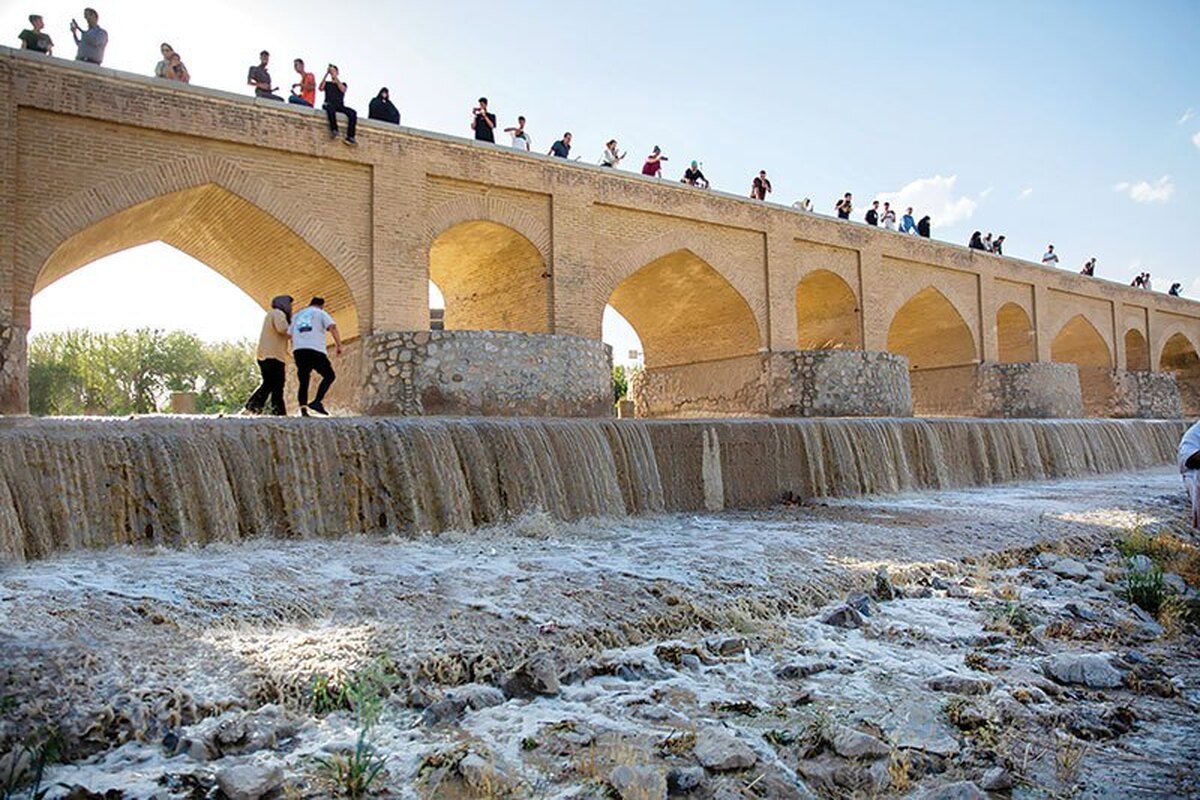
The reopening of Zayandeh Rood in Isfahan, although at first glance it seems to be an event related to the management of water resources and environmental issues, but in a deeper layer, it is a reminder of the ancient connection of this river with the history, culture and collective memory of the city. Over the centuries, Zayandeh Rood has not only been the vital artery of the economy and agriculture of the Isfahan plain, but also played a role in the formation of the spatial structure of the city, social rituals, livelihood traditions and even the legal and water management system. It has a foundation. This multi-layered link has caused Zayandehroud’s traces to have a strong and continuous presence in a wide range of written sources of Iran, from geographical and historical texts to travelogues of travelers and local documents. For the citizens of Isfahan, Zayandehrud is a mirror that reflects the identity, pride and historical vitality of this land, and watching the water flow in it, for the people of this land, means the return of a part of their forgotten peace and identity.
Water management, river life continuity strategy
When the water flows in the bed of Zayandeh River, it is as if the city of Isfahan smiles. This presence of water is the main driver in tourism and attracting domestic and foreign tourists, but what is doubly important is the discussion of the continuation of this flow. We can no longer be satisfied with partial reopenings. The government and related institutions should organize the management of water resources with a detailed, macro and sustainable planning in such a way that Zayandeh Rood always flows. Zayandehroud is the guarantor of food security, environmental sustainability and the city’s identity and should not suffer the repeated fate of drought. Planning for the permanent flow of this river is a test of management ability at the national and provincial levels, which requires firm determination and changes in water consumption patterns at the level of the central plateau.
In this regard, the governor of Isfahan, emphasizing that paying attention to people’s demands and trying to respond to public needs is one of the main approaches of the province’s management, says about the reopening of this river: “Zayandehrud is one of the most important identity elements and well-known symbols of the city of Isfahan, and many of the historical and cultural monuments of this city are located on its outskirts. The presence of water in this river can increase the visual effect and attractiveness of Isfahan’s tourism and provide grounds for the presence of more domestic and foreign tourists.”
Referring to the wider dimensions of this event, Mehdi Jamalinejad adds: “Water flowing in Zayandehrud can once again strengthen the spirit of life in Isfahan and play an important role in increasing the social hope and general vitality of the citizens.” “Any action that leads to increasing public satisfaction and strengthening social hope will ultimately help to consolidate social cohesion and sustainable development of the province.”
He states: “The return of water flow to Zayandehrud is not only an environmental issue, but a multidimensional event with extensive social, cultural, economic and tourism effects.”
The prosperity of the tourism economy in the shadow of Zayandehroud
With the water flowing, Isfahan will again become the main tourism showcase of Iran. The 30-year-old bridge and the Khajo bridge, when they are in the embrace of water, discover their true meaning. This flow of water, besides creating unique landscapes, also keeps the driving engine of crafts, hotels, restaurants and services related to tourism on.
The governor of Isfahan believes in this regard: “Tourism boom will naturally cause economic dynamism in related sectors such as services, handicrafts and cultural activities, and this will help improve the livelihood of a part of the society.”
This economic chain shows that the current Zayandehroud means fuller pockets for the business and more prosperity for the citizens of Isfahan.
According to experts, in addition to the fact that the return of water brings visual revitalization and tourism boom, and gives a breath of fresh air to the dry riverside ecosystem, it also moderates the air temperature in the central core of the city and by creating relative humidity, it greatly reduces the “urban heat island” effect that plagued Isfahan during the drought years. The old plants and trees along the river, which faced serious environmental stress in recent years, are now getting a chance to recover their vitality.
In addition to management measures, the irreplaceable role of citizens should not be neglected. Zayandehroud is now in the hands of the people of Isfahan as a valuable trust. Keeping the riverbed clean and taking care of its privacy is the least duty that citizens can do for this blessing. Cultivation for the optimal use of water in the domestic and industrial sectors should be promoted along with this reopening so that the demand for “permanent water flow” becomes a public lifestyle. It is only with the link between the macro decisions of water governance and the consumption culture of the society that it can be guaranteed that Zayandehroud will turn from a seasonal event into a stable and permanent fact, a fact that preserves the link between nature and civilization in half the world.
Synergy of devices to continue the passion of life
Managing such a big event, which is tied to the emotions of millions of people, requires careful coordination. The executive bodies of the province, understanding this sensitivity, have planned the necessary arrangements for the presence of citizens so that the riverside area is safe and fun. While pointing out this point, the governor of Isfahan emphasized the importance of synergy and said: “Cooperation and synergy between different executive bodies played an important role in realizing this issue and this coordination can continue in other development programs of the province.”
The return of water to Zayandehroud brings life and excitement back to Isfahan. Past experiences have shown that the presence of water draws families to the streets, revives the rituals of walking along the river, and strengthens the sense of belonging to the city. Now the ball is in the court of the planners and managers to maintain this “passion for life” forever by properly managing water and not let Zayandehroud sink into the dust of dryness and oblivion again. Zayandehrud is alive, Isfahan is alive and Isfahan is alive, the beating heart of Iran.