
DISCAIMER: All views and claims expressed in this article belong solely to the author.
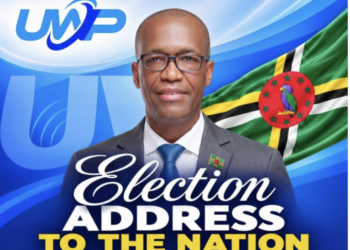
In cricket, few sights lift a crowd like a clean hit sent sailing over the boundary. On the evening of November 18, 2026, hours after the Prime Minister called a snap general election more than fifteen months early, United Workers’ Party Political Leader Dr. Thomson Fontaine stepped to the crease and, in the view of many who listened, hit it for six.
A Statesman at the Crease
What stood out first was the tone. Dr. Fontaine spoke with the calm, measured confidence of a man already thinking like a head of government. There was no shouting, no theatrics, and no reaching for cheap applause. His content was substantive and his delivery statesmanlike, setting out a clear case: that after more than 26 years of Dominica Labour Party rule, the country needs “a different model of governance” built on “strong institutions, competent leadership, collective responsibility, transparency and accountability.”
Criticism Without Rancour
Notably, the address carried no rancour or ill will. Dr. Fontaine criticised the system, not the people within it. His sharpest line, that “no country should become the personal enterprise of one leader,” was a point about principle and institutions, not a personal attack. In a political culture where election season too often brings bitterness and division, this restraint was refreshing, and it signalled maturity.
Naming Dominica’s Real Concerns
The speech also spoke plainly about the problems ordinary Dominicans face every day: young people unable to find meaningful work, families burdened by the rising cost of living, and productive sectors running “far below their potential.” Rather than leaving these as complaints, he tied them to the UWP’s ten economic pillars, from agriculture and agro-processing to eco-tourism, renewable energy, ICT, fisheries, and the creative and cultural industries. The goal, he said, is an economy “that produces, that creates, that exports and competes.”
A Government for All, Including Labourites
Perhaps the most significant promise was that a UWP government would be “a government for all Dominicans, not just a select few.” Success, he said, should never be “determined by political connections.” The message was unmistakable: a UWP administration would serve every citizen, including those who have long supported Labour. That is an invitation, not a threat, and it widens the party’s appeal well beyond its traditional base.
Nou Sé Yonn: We Are One
Running through the address was the Kwéyòl phrase “Nou sé Yonn,” or “We Are One.” It is more than a slogan. Rooted in the language of the people, it speaks to a shared identity that rises above party colours. “Dominica does not belong to any one political party, any one family or any one individual,” Dr. Fontaine declared. “It belongs to all of us,” at home and in the diaspora alike.
A Direct Appeal to the Youth
He closed with a poignant appeal to young people: “Your future matters. Your dreams matter. Your aspirations matter.” No young Dominican, he argued, should have to leave home to find a decent job, start a business, or raise a family. “Your vote is your voice,” he urged.
Final Observations
In my view, the address worked because it matched the moment. Faced with a surprise election, Dr. Fontaine chose composure over panic and vision over vitriol. The real test, of course, lies ahead: turning ten pillars into costed, credible plans, and turning a unifying message into votes on December 16. But as an opening innings, this was a confident stroke – one that sends a clear message across the boundary and into the stands of national debate.