THE Hezbollah proposed this Wednesday (15) a truce of one week to Israelwith whom the Lebanese fundamentalist group that supports Iran has been at war since the United States and the Jewish state attacked the theocracy more than six weeks ago.
The proposal, announced by Al-Mayadeen TV, linked to the group, was analyzed by the Binyamin Netanyahuaccording to members of the Israeli government told local media and Reuters. There was no definition: Hezbollah’s idea was to stop the fighting in the first minute of this Thursday (16).
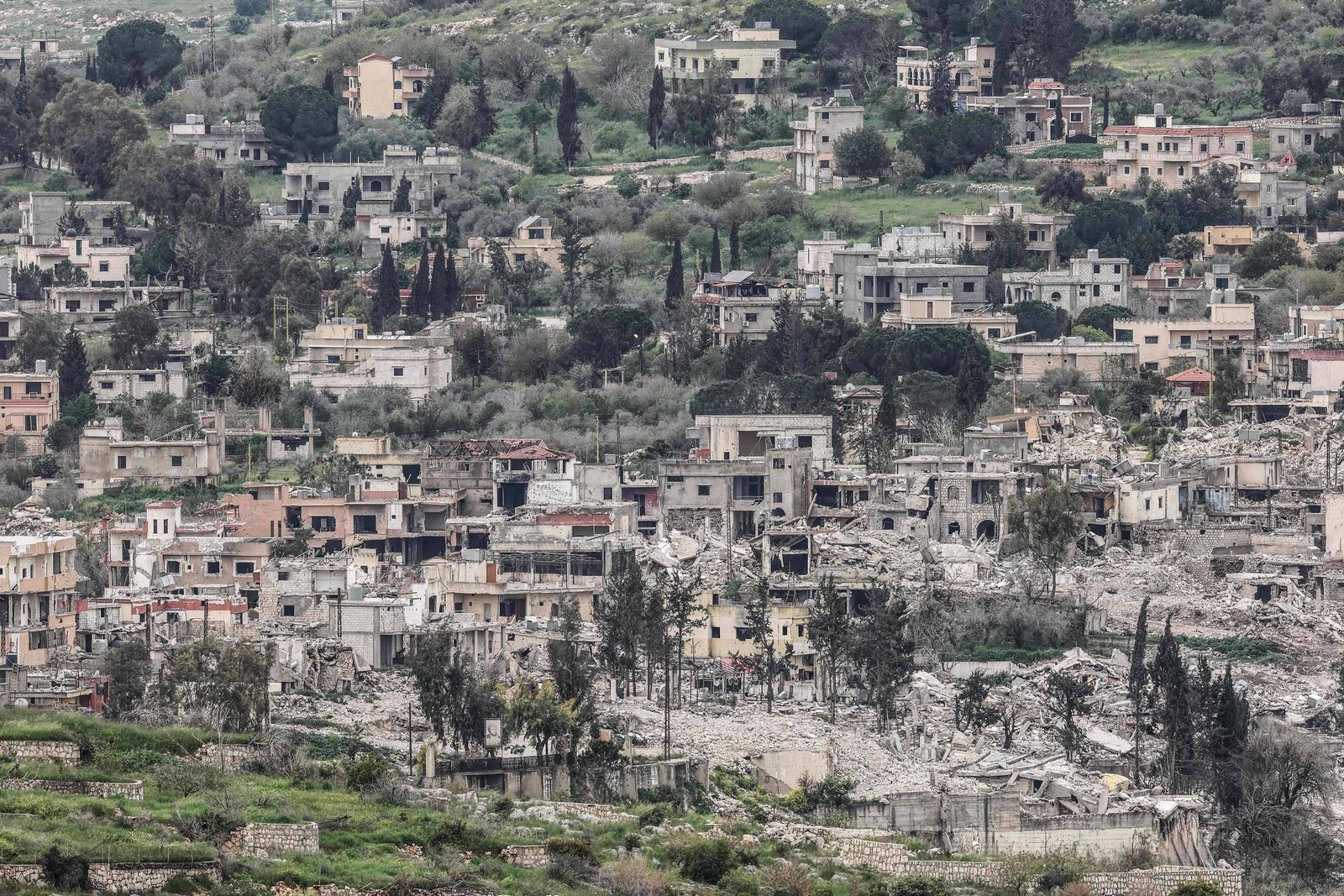
Maintaining the tradition of negotiating with pressure, the Israeli government said it will maintain its positions in the south of Lebanonwhich it has been vacating to create a buffer zone from its border to the Litani River, which is a maximum distance of 30 km from Israeli territory.
Netanyahu released a video during the meeting with his ministers in which he stated that he had ordered the expansion of that strip, which already has Israeli soldiers operating.
The region, Minister Israel Katz (Defense) said earlier, will be a “death zone” for Hezbollah, which historically attacks the Israeli north from cities and mountainous positions there. The group was once the most powerful agent in the Iran node Middle Eastbut it is weakened.
According to Al-Mayadeen, the truce was informed by Tehran, which seeks to extend the term of its own ceasefire with the United States —who launched a war alongside Israel against Iran on February 28. Hezbollah did not release a statement.
The fighting stopped last week, but the deadline given by donald trump for an agreement ends next Tuesday (21). Iran received a delegation led by Asim Munir, Pakistan’s military chief, country that hosted the first and inconclusive round of negotiations with the USA, to send a new proposal for conversations with the Americans.
According to the Bloomberg agency, Tehran wants to postpone the end of the truce by at least two weeks, something the White House later denied.
On the table are thorny items, such as maintaining its ability to produce enriched uranium, which the US wants to see suspended to avoid the risk of an atomic bomb, and free navigation in the Strait of Hormuz, now obstructed by a double blockage Iranian-American.
Netanyahu did not include Hezbollah, a group founded in 1982 in the wake of Israel’s occupation of Lebanon that lasted until 2000, in the ceasefire. Fundamentalists attacked the Jewish state shortly after the start of the current war.
Tel Aviv promoted a double action. First, it launched the harshest attacks against its neighbor shortly after the truce with Iran, killing more than 300 of the approximately 2,000 people killed in the conflict so far in a single day.
Second, it opened direct negotiations with Lebanon for the first time since 1993, but excluding Hezbollah. On Tuesday (14) there was the first round talks, mediated by the USA, in Washington.
Netanyahu stated that the main objective of the conversation is to ensure “the dismantling of Hezbollah” and, “secondly, a sustainable peace achieved through force.”
It’s a bumpy road. The fundamentalists opposed the conversations between governments, aware that they aim to disarmament. However, Hezbollah is still the most effective military force in Lebanon, in addition to participating in institutional politics as a party in Parliament.
Earlier on Wednesday, Hassan Fadlallah, a Hezbollah deputy, stated that negotiations without the group would be doomed to failure, and Lebanon to another civil war like the one that tore the country apart from 1975 to 1990. The truce proposal announced in the afternoon shows that perhaps he was just talking thick.
On the other hand, nothing indicates the militants’ willingness to lay down their weapons. They were already weakened from their war in 2024 with Israela result of the support they gave to Hamas after the attack on the Jewish State on October 7, 2023.
This Wednesday, the fighting continued, with at least nine dead in Lebanon and at least 30 rockets and drones launched against Israel.
One possible reading of an eventual truce is that, in addition to Iranian pressure, Hezbollah is trying to save its military capabilities. This does not appear to be on the list of acceptable terms for Netanyahu, who sees the opportunity to end the threat on its northern border an even greater war prize than the conflict with Iran.
With this, the contested prime minister could have an asset for the parliamentary elections in October. If he loses at the polls, Netanyahu risks going to jail due to the process in which he is being investigated on suspicion of corruption. Trump, your ally, has so far failed to obtain a pardon presidential in Israel for the politician.
For Lebanon, it is a unique opportunity, even in the midst of the tragedy of having seen the largest loss of residents in proportion to population in this conflict — there have been 3,500 attacks on Hezbollah by Israel so far, while the group has remained the main retaliatory force against its rival.
Both the country’s president and prime minister want to see Hezbollah subjugated, but they do not have the military muscle to do so.
The occupation already announced of southern Lebanon for Israel, in this scenario, would be a symbolic bargaining chip for Netanyahu: he would leave the region when there is some certainty that Hezbollah will no longer use it to attack the Jewish State.
The problem is evident: fundamentalists can resist the process and the country falls into a domestic conflict, or even formally accept disarmament, but seek a way to retool itself for the future.