Robotic surgery for prostate and gynaecological cancers is expected to be introduced in the public healthcare system by 2027, Health Minister Senator Lisa Cummins has announced, as the government moves to expand cancer screening and access to specialised treatment.
The announcement was made on Thursday night at the annual general meeting of the Barbados Cancer Society at the Island Inn Hotel, Aquatic Gap, Bay Street, St Michael, where a new executive was elected.
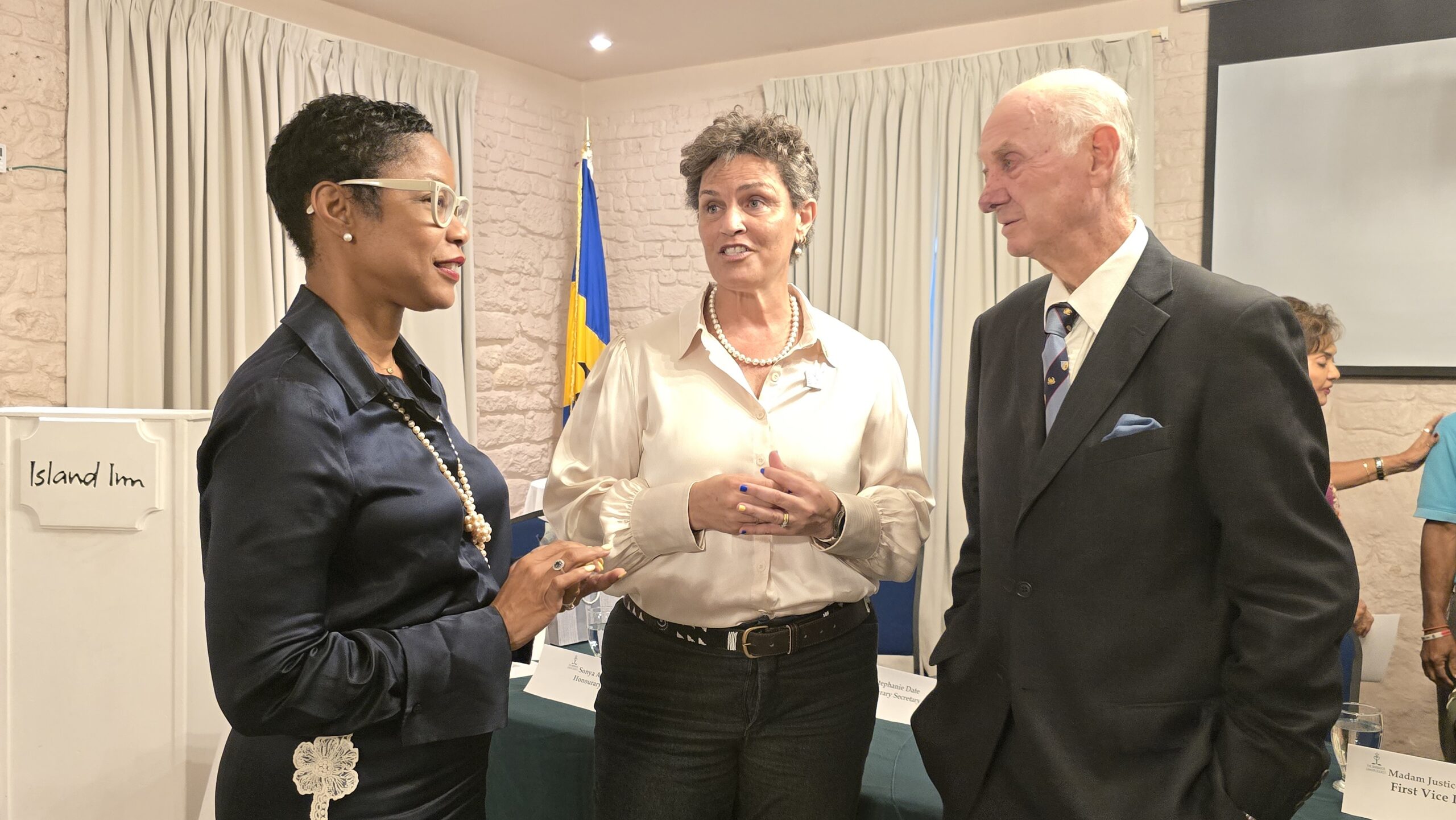
Minister of Health and Wellness Senator Lisa Cummins chats with newly elected president of the Barbados Cancer Society Sonya Alleyne and immediate Past President Professor David Rosin. (Photo by: Lourianne Graham)
The aim was to close the gap between the treatment available to patients with private insurance and what the public system offers, Cummins said. Robotic surgery for prostate and some gynaecological cancers is currently available only through private healthcare.
She said: “We have begun to have an engagement with the same Northwell hospital, and we will be putting it into our estimates this year for the treatment of certain cancers, in particular prostate and gynaecological cancers, that we want to introduce in the public system robotic treatment.”
Northwell Health, a nonprofit integrated healthcare network, is New York state’s largest healthcare provider and private employer, with more than 105 000 employees. The health system spans the states of New York and Connecticut.
The health ministry is compiling a list of the robotic equipment required for inclusion in this year’s Estimates of Expenditure, she said. Doctors, nurses and other healthcare personnel are expected to travel to Northwell for training in 10-day rotations, with specialists from the hospital group also expected to visit Barbados.
“But for 2027, the intention is to begin to treat cancers with robotic surgeries here in Barbados in the public sector,” the minister said.
Cummins also announced plans to introduce genomic testing, hopefully during the next financial year, to identify people’s predisposition to certain diseases.
Ministers had approved a paper earlier this year to develop a national screening programme for non-communicable diseases, with screening at different ages, including 20, 30 and 40.
But paediatricians had raised the need to begin screening much younger, including introducing genomic testing at birth to identify diseases children might be predisposed to, she said.
“And so it is the intention of the Ministry of Health to introduce, hopefully, over the next financial year, genomic testing in partnership with our individual collaborators so that we are able to support a healthy Barbados.”
The national screening programme would also give the ministry an opportunity to work with the Cancer Society on cancer screening, building on its existing prostate and breast screening services, she said.
On access to medication, Cummins said an agreement had been reached with the Pan American Health Organisation to merge its Strategic Fund and Revolving Fund, allowing Barbados and other countries to access high-cost medicines, including cancer treatments that are currently unavailable here.
She said the arrangement was expected to benefit Barbados from the next financial year, which begins in April.
Northwell Hospital Group has also offered to partner with Barbados to make available blood-testing technology used in the US to detect commonly found cancers early, she announced.
But early detection would have little impact if patients continued to face delays in receiving treatment, she said.
Cummins said: “If I find something early and I can’t get an appointment to see the doctor to have it treated until much later, or I am supposed to have a surgery and it is delayed, what happens then? Does that not nullify the intent of early detection?”
The ministry has also begun meeting with department heads at the Queen Elizabeth Hospital to review surgical backlogs, with doctors in the various departments determining which cases should be prioritised, she said.
The hospital board has also been instructed to examine a new technology platform that would let patients choose how their relatives receive updates about their hospital care, including via WhatsApp or email.
Cummins said she hoped the system could be introduced next year, allowing family members to receive information about patients’ assessments, admissions, wards and attending doctors.
She also called on the Cancer Society to work with the ministry on developing post-acute care for cancer patients after they leave hospital, including support for families of children diagnosed with cancer.
She also proposed a programme to support healthcare professionals who work with cancer patients, noting the emotional toll of dealing with difficult diagnoses and treatments.
“Who supports the healthcare professionals who are facing cancer treatments and cancer patients and navigating that trauma?” she asked.
Immediate past president Professor David Rosin said the society’s cancer screening trials using genomics, deoxyribonucleic acid (DNA) and ribonucleic acid (RNA) alongside conventional screening tests were the first of their kind in the world for prostate and colon cancer. He said another trial was being planned for breast cancer.
He said: “We have drawn up the Barbados Protocol for the best screening possible, which has been taken up by a lot of other countries and will decrease or even stop the false positives that we now get with PSA testing.”
Rosin said Barbados remained about 25 years behind leading countries in treating common cancers, but he was confident the country would catch up and surpass others, as it had done with screening.
He also expressed concern about declining membership, telling members that the society now had approximately one-third of the membership it had when he joined 17 years ago.
He urged members to encourage others to join, support cancer patients, and come forward for screening, adding that word of mouth remained an effective way to promote the organisation.
Rosin also suggested that it might be timely for someone from outside the medical profession to lead the Society, bringing a different perspective and new ideas. However, he confirmed that he would remain on the council as immediate past president and continue supporting initiatives including clinical trials and plans for a new building.
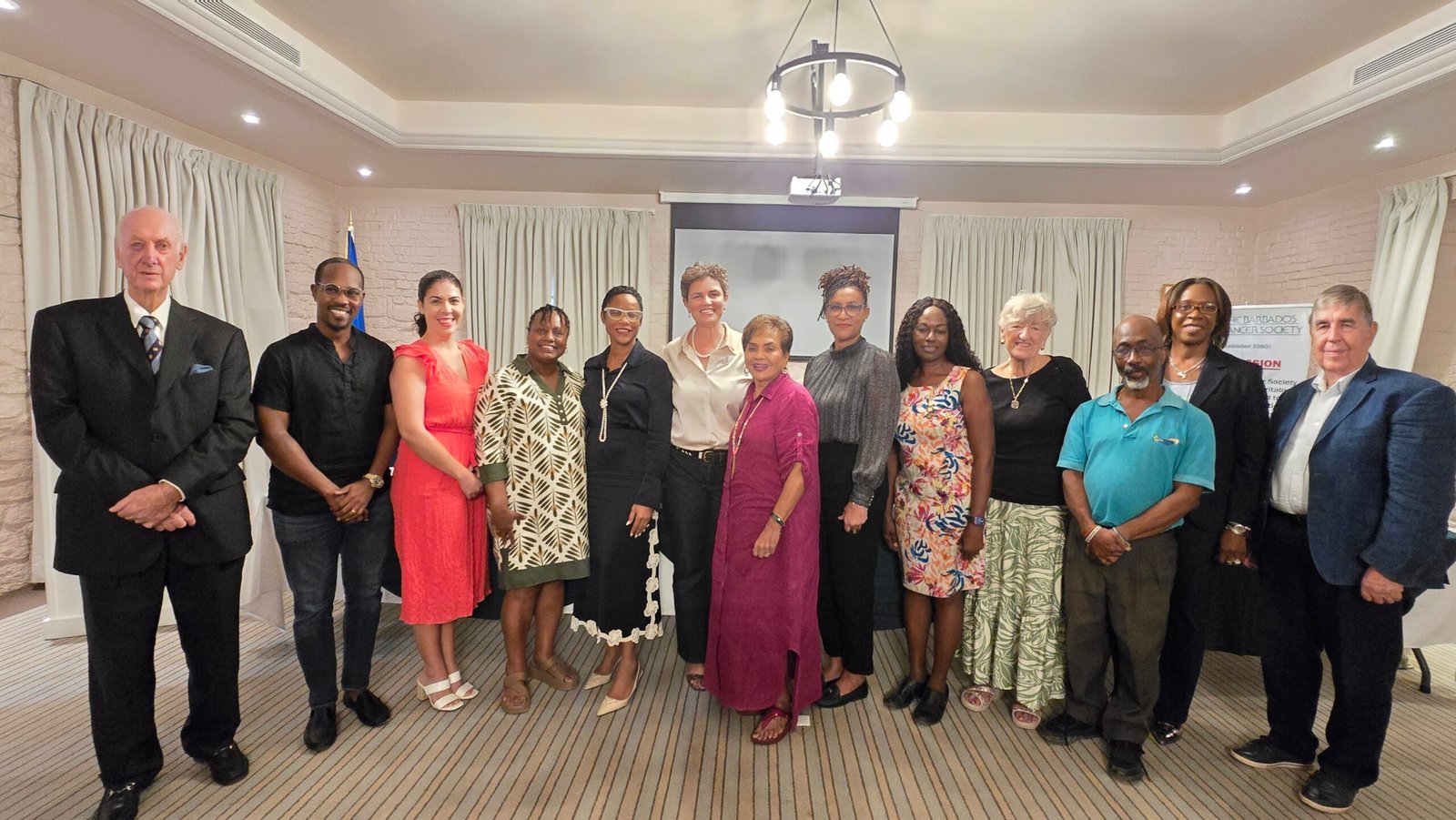
At the meeting, members elected Sonya Alleyne as president, with Justice Cicely P Chase as first vice-president and Dr Shirley Hanoman-Jhagroo as second vice-president. Dr Stephanie Date was elected honorary secretary and Rueben Blenman honorary treasurer.
Angela Simpson, Juann Ward, Michelle King, Gale Jordan, Dr Greg Padmore and Debbie Fraser were elected directors.
(LG)