As I wrote before, when I first arrived in New York from Addis Ababa, Ethiopia, democracy smelled like roasted nuts and subway dust. It was loud, imperfect, argumentative, and gloriously alive. For a young Ethiopian Jew who had grown up under dictatorship, New York represented something sacred: the belief that people from every background could belong.
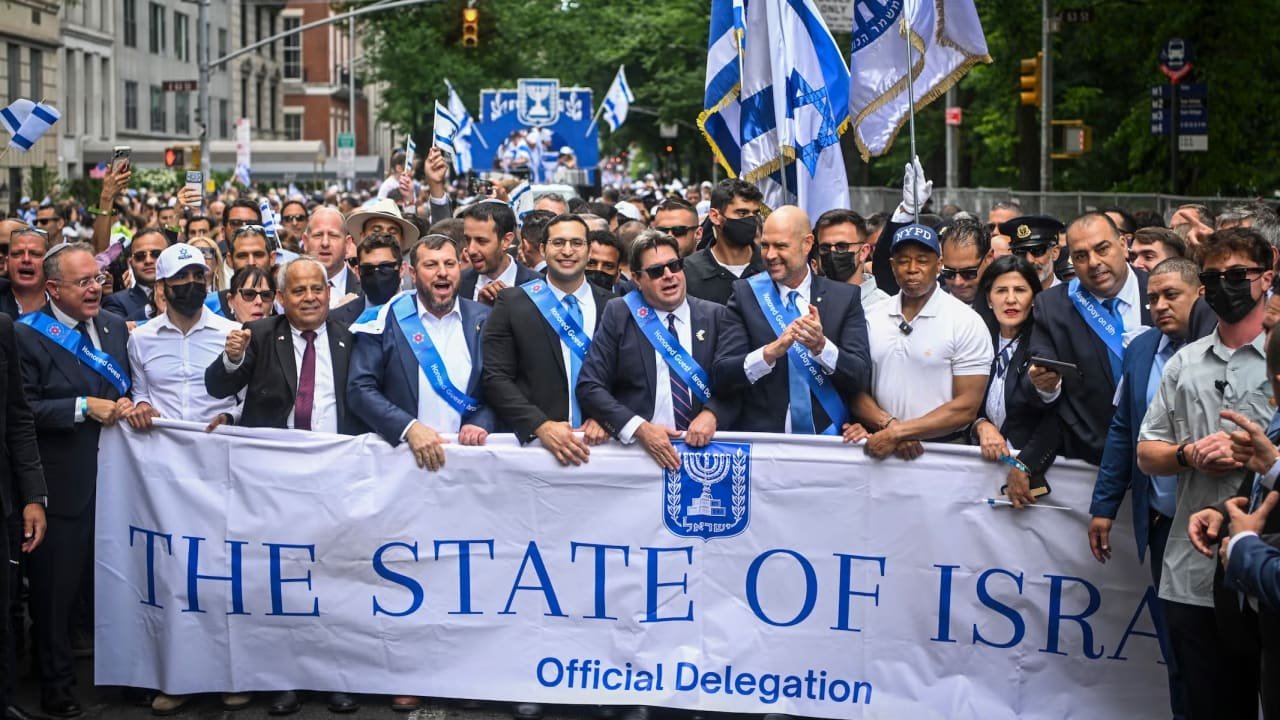
That is why, from my watchtower in Jerusalem, I watched this year’s Israel Day Parade with both pride and disappointment. Pride because more than 100,000 people gathered to celebrate their connection to Israel, its people, its culture, and its enduring place in Jewish life.
Disappointment because New York’s mayor, Zohran Mamdani, chose not to be there. His absence was not merely a scheduling decision. It was a statement. For the first time since the parade’s founding in 1964, New York’s mayor chose not to attend one of the most significant public celebrations of the Jewish community in America’s largest city. That matters.
The significance of the parade
The issue is not whether one supports the current Israeli government. Israelis themselves disagree passionately about their government. Jews around the world disagree passionately about Israeli politics. Criticizing the government of Israel is not only legitimate; it is practically a national sport among Israelis.
But the Israel Day Parade has never been primarily about a government. It is about a people. It is about a homeland. It is about the connection between the Jewish people and the State of Israel. There is a profound difference between opposing a government’s policies and refusing to stand with a community celebrating its identity. That distinction appears to have been lost.

At a moment when antisemitism is rising across America, Jewish communities are looking to public officials for reassurance. They want to know that their leaders stand with them, that their fears are taken seriously, and that they are not alone.
Instead, many Jewish New Yorkers watched their mayor stay away from an event that generations of city leaders considered important enough to attend regardless of political differences. The message received by many Jews was simple: When your community gathers in celebration, your mayor is absent.
Leadership is not only about showing up for communities when it is politically convenient. Leadership is about showing up when it is politically difficult.
Mamdani’s supporters will argue that his absence reflects disagreement with the policies of the Israeli government. That explanation misses the point. The parade was not a vote on a coalition government in Jerusalem. It was not a referendum on military policy. It was not a campaign rally. It was a celebration of Israel and the Jewish people’s connection to it.
Many of the people marching likely disagree with Prime Minister Benjamin Netanyahu. Many likely voted differently in Israeli elections. Many hold sharply different political views. Yet they marched together with their local neighbors because their connection to Israel transcends political parties. The mayor’s absence demonstrated a failure to understand this distinction. There are moments when symbolism matters. This was one of them.
When a mayor attends a Puerto Rican Day Parade, he is not endorsing every decision made by the government of Puerto Rico. When a mayor attends an Irish parade, he is not endorsing every policy adopted in Dublin. He is standing with his constituents. That is what true leaders/mayors do.
Jewish identity and community
The question many Jewish New Yorkers are now asking is why their community was treated differently. The answer may be uncomfortable.
Too often, progressive leaders speak about diversity while excluding Jewish experiences from their understanding of diversity. Too often, they celebrate minority identities while treating Jewish identity as politically complicated. Jews are welcomed as long as Israel is not mentioned. The moment Israel enters the conversation, standards suddenly change.
The solution is not outrage. The solution is clarity. Public officials must understand that standing with Jewish communities is not the same thing as endorsing every policy of the Israeli government. One can criticize a government and still stand with a people. One can disagree with policies and still show solidarity. One can debate politics and still attend a parade.
In fact, that is what democratic leadership requires. The next generation of leaders must learn that distinction. If they cannot separate a government from a people, they will continue alienating communities they claim to represent. That is why Jews around the world come out to rallies and public gatherings in support of the people of Iran, not any government. Governments change; leaders come and go. But our bond with the people is permanent.
Ironically, Mamdani may have accomplished the opposite of what he intended. His absence reminded Jewish New Yorkers why solidarity matters and that support cannot be taken for granted. It reminded them that there are moments when communities must stand together regardless of their political disagreements – others refuse to stand with us, we stand closer to one another.
From Jerusalem, I watched New York celebrate Israel without its mayor. I saw families marching, children waving flags, Holocaust survivors walking proudly, and ordinary citizens expressing their connection to the Jewish homeland.
The parade continued. The people showed up. The community endured. The mayor’s absence may become a historical footnote, but the lesson remains. There is a difference between criticizing a government and distancing oneself from a people.
New York’s mayor had an opportunity to demonstrate that he understood that distinction. By staying away, he demonstrated that many Jewish New Yorkers were right to question whether he does.
The author is a former NYC Supreme Court detective, an investigator and educator in conflict resolution and restorative peace, and a moral diplomacy expert. His upcoming book, Moral Diplomacy for a Broken World, is inspired by Rabbi Jonathan Sacks.