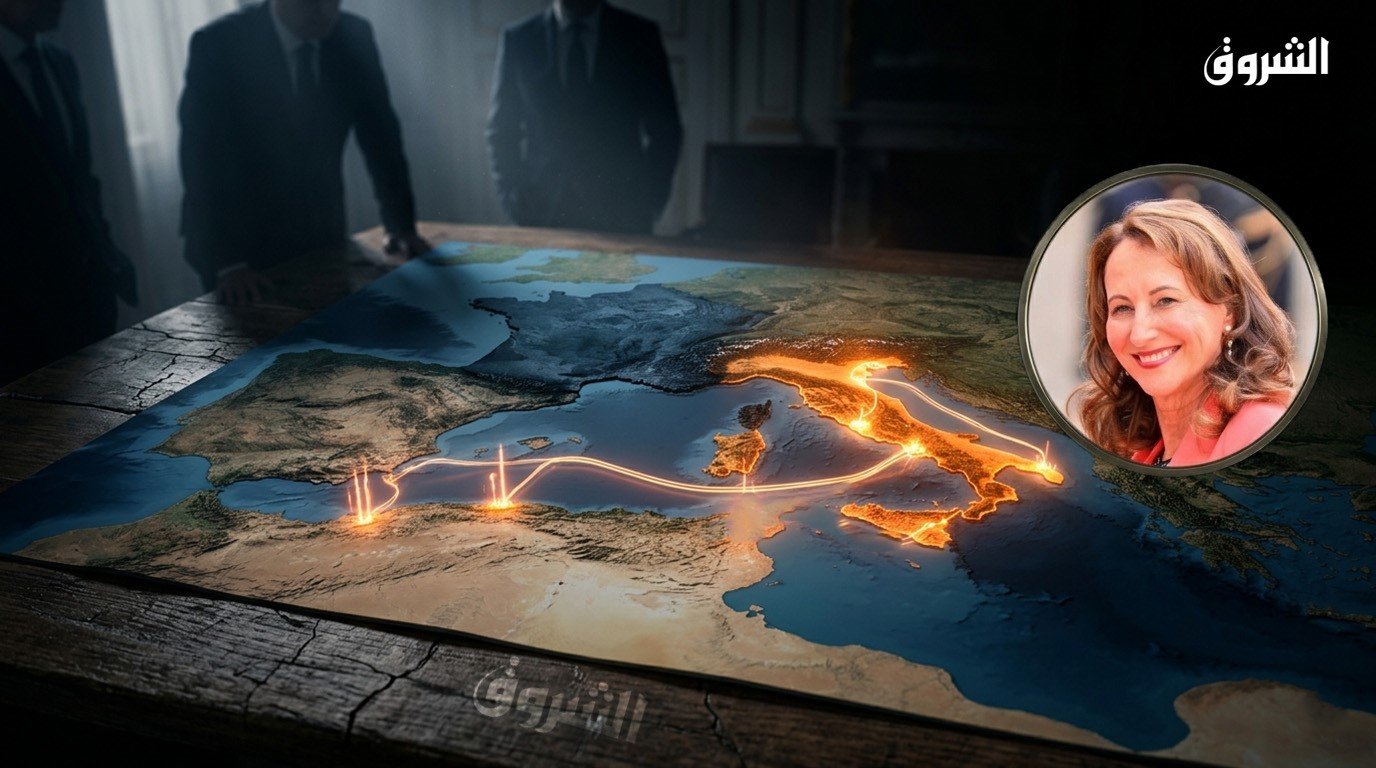
Former French Minister of the Environment, Ségolène Royal, warned of the direct economic repercussions of the tension policy pursued by the head of the Republican Party, Bruno Rutayo, towards Algeria, stressing that this approach led to a decline in cooperation in the energy sector and France losing strategic positions to European partners, led by Italy, which has become Algeria’s first partner in the field of gas.
In statements made to Al-Shorouk News, Royal said that those attacking Algeria “are from a group with an electoral logic,” explaining that this group seeks to attract “votes nostalgic for French Algeria.” She also pointed out that Bruno Rutayo accused President Emmanuel Macron of having “shown weakness” and “in a kind of dependency” toward Algeria.
Royal explained, in a post on Wednesday morning, that the escalation of rhetoric with Algeria does not serve France’s economic interests, but rather exacerbates diplomatic crises and negatively affects existing partnerships, noting that the escalating tension was also reflected in sensitive files, including orders to leave French territory (OQTF), in light of the decline in trust between the two sides.
She stressed that this approach serves neither France nor the French, considering that it aims to appeal to the trend of nostalgia for “French Algeria,” with the dangerous political and strategic repercussions that this carries. She also stressed that this discourse reproduces transcendent approaches that are not consistent with the reality of current relations.
Royal highlighted that what she described as Rutayo’s “anti-Algerian obsession” represents an extension of a previous political approach dating back to the era of former President Nicolas Sarkozy, especially with regard to the “benefits of colonialism” law, considering that this proposal ignores the sacrifices of millions of martyrs and displaced people in French-speaking Africa, especially in Algeria, and carries risks for historical and humanitarian relations between the two shores.
In the context of her call to change the approach, Royal stressed the need to adopt partnerships based on dialogue and common interests instead of escalation, stressing that the Pope’s visit to Algeria and the international praise that accompanied it refutes the image promoted by Rutayo. She said: “If Algeria were as Rotayo describes it, the Pope would not have made this solemn visit and praised it in front of the whole world. Let us build, through dialogue, smart and fruitful partnerships for all, especially for the benefit of the younger generations on both shores of the Mediterranean.”
On the other hand, Bruno Rotayo escalated his attacking tone Statements of French President Emmanuel Macronconsidering that it targets voices calling for greater toughness towards Algeria, describing Macron’s speech as a “false pretext” to divert attention from internal crises.
Rotayo stressed that the discussion should focus on the issue of irregular immigration, explaining that the problem is not related to Algerian doctors in France, but rather to people subject to deportation decisions, whom he described as “dangerous.” He considered that the policy of “good intentions” with Algeria had proven to be a failure, and called for adopting a more stringent approach in managing bilateral relations.
He stressed that invoking historical suffering should not, in his opinion, be used to justify what he described as “insulting France,” stressing the need to protect French sovereignty and interests.
These mutual statements reflect the escalation of the division within the French political arena over the Algeria file, in light of the intertwining of electoral calculations with historical legacy and strategic relations, while Algeria emerges as a pivotal partner in the energy and security equation in the Mediterranean, at a time when some French roles are declining in favor of other European powers.