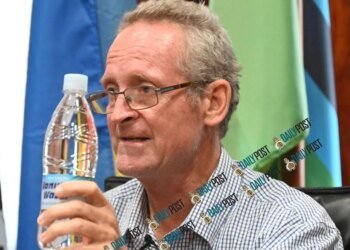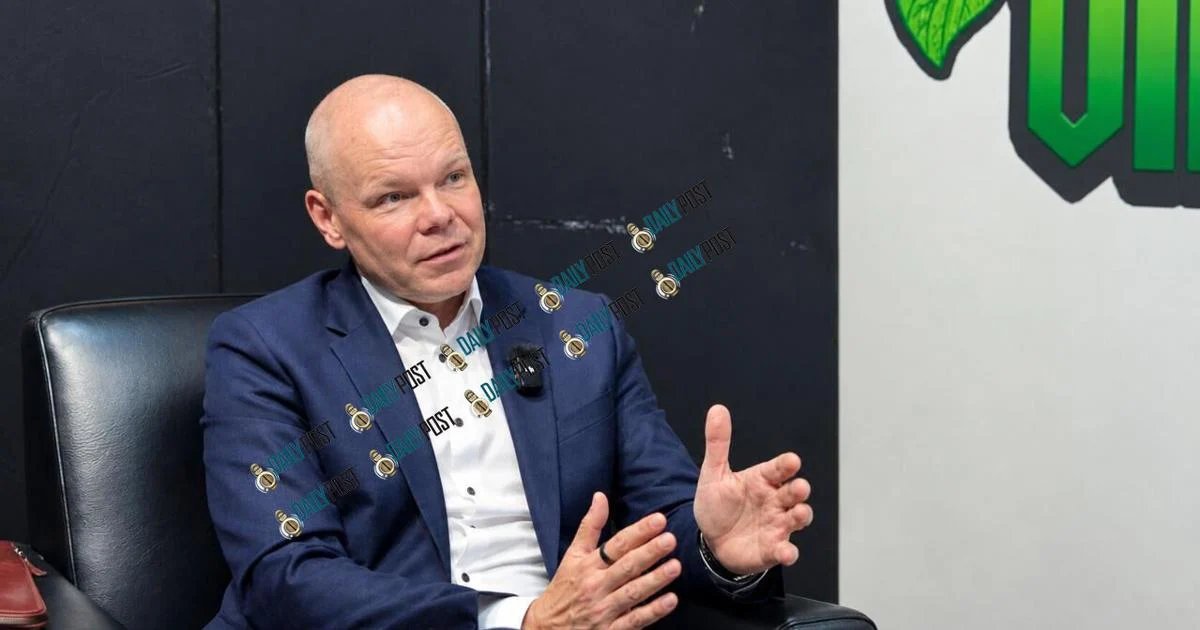
Finland is pitching its technology and business expertise as potential solutions for some of Vanuatu’s challenges, including maritime surveillance, disaster response and critical communications, as Ambassador Arto Haapea (AH) seeks closer cooperation during his first visit to the country, in an interview with Kava mo Kajap (KmK) host Mavuku Tokona (MT).
MT:Welcome back to another episode of KmK. Today I’m joined by Finland’s Ambassador, Arto Haapea, who is based in Canberra and covers the Pacific island countries. Arto, thank you for coming on the show.
AH:Thanks for having me. This is my first time in Vanuatu.
MT:It is. You’ve only been on the job for two and a half years, so if you had visited every country around the world, I’d be impressed.
MT:So, first time in Vanuatu. Let’s start with security. Off camera we talked about Finland joining NATO. Can you tell us a little about that before we come into the Pacific?
AH:NATO for us was a big step. After Russia invaded Ukraine in 2022, we realised the security situation in Europe had profoundly changed, and we had to make our own choices.
We had been partnering with NATO for 15 to 20 years before that. Then it was time to say things have changed. We need to be safe and secure, and we need to join NATO.
MT:Was that out of fear of Russia?
AH:It was because we felt the environment was too unpredictable at that moment. Of course, our eastern neighbour is the main reason.
MT:Coming into the Pacific, security often comes down to two main countries. Vanuatu does not have a foreign military base, but Australia and China usually come to mind. What’s your take on the relationship between the two?
AH:I think the Nakamal Agreement was a welcome step. It was something Australia had been looking for a long time. From the European perspective, we very much welcome that. It means Australia and Vanuatu are two like-minded partners tightening their collaboration.
MT:What about the other agreement, the Namele Agreement with China?
AH:That is obviously for the Vanuatu Government to decide on as a sovereign country.
When it comes to China, there are choices to be made. Sometimes you cannot partner with everyone. In Finland, we used to say for a long time that we don’t want to make binary choices between our partners.
We didn’t want to choose whether we partner with China or the United States. Now that world has somewhat changed. T
he United States is our ally, our NATO ally and our biggest trading partner. The relationship with China is still commercially important, but there is a choice to be made there.
MT:In other words, Vanuatu should make a choice?
We often have this theme when talking about Vanuatu’s foreign ties: friends to all, enemies to none. Finland was once in a similar position. You were a neutral country, but you eventually made a choice.
AH:We were a neutral country a long time ago. When we joined the European Union in 1995, we were no longer neutral. We were with the West.
We became independent in 1917 and went to the Winter War with the Russians in 1939. We fought for our independence and kept it.
For many decades after that, we were independent on paper, but we were restricted by what we could do and say by a formidable neighbour in the east.
Then, in the 1990s, there was another choice to be made. We went with the European Union. After the Russian aggression in Ukraine, we went to NATO.
There are always choices and consequences. You often can’t play with two sides at the same time.
MT:As exciting as the security talks may be, I think there is something even more exciting in terms of collaboration with Finnish businesses.
You’re here meeting stakeholders and government leaders. What is this visit about?
AH:My job here is to find out how we can have closer collaboration.
We are far away from one another and traditionally we haven’t had too much engagement. My job is to find out how we can work more closely together.
For example, Nokia, one of our biggest companies in Finland, is a mobile network producer and manufacturer. We are talking about trusted communication.
Nokia is already present in Vanuatu and is partnering with Digicel.
So you are probably using Nokia technology without even knowing.
MT:How does Vanuatu come onto your radar? We are a population of around 300,000. Why not New Caledonia, Solomon Islands or Fiji?
AH:They are all on my radar. I’m just going one by one to see what more we can do.
Nokia is just one part of the palette. We often like to say that we are a trusted partner for countries in this region in all things critical.
When we are talking about critical communications technology, critical satellite technology and other forms of technology, you don’t have to worry about any ulterior motives if you buy Finnish technology.
MT:Earlier you mentioned something about corporate responsibility because the Pacific markets are small. Can you elaborate on that?
AH:My understanding, and I don’t want to speak too much about what others have told me, is that because Pacific markets are often very small, there is not too much profit to be made.
Companies make big investments to come to this market. But when they are a market leader and want to establish their position globally, they feel there is a kind of corporate or global responsibility to provide the technology and make sure trusted technologies are also available here.
MT:I like that. We are not coming here to ask for a grant just to throw money at us, but to be a business partner.
MT:Apart from telecommunications, what else is Finland willing to do business with Vanuatu on?
AH:It is actually a wider perspective in our development cooperation policy.
We have had to make some hard choices because we have had to put so much money into defending Ukraine and helping Ukraine defend itself. A huge part of what used to go to development cooperation globally now goes to Ukraine.
That means we have to be more selective in other forms of engagement. We have developed a model that is a little more selfish, if you like, but at the same time we think it can benefit everyone. It is a win-win model.
We support a way to do good, but also so our companies can benefit from that, find new markets and develop new business.
MT:You mentioned ICEYE. Tell us about that.
AH:ICEYE is our biggest satellite manufacturer. They operate the largest synthetic aperture radar, or SAR, satellite network in the world.
They can deploy satellites within 24 hours of signing a contract. You can lease a contract or simply buy data from them. That can give you a sovereign capability.
AH:Synthetic Aperture Radar. Please don’t ask me more details. But it is a technology that can see through clouds and rain, so you can use it in any weather.
MT:What are some of its capabilities and how could we use it? Would it benefit Vanuatu?
AH:The Australian Federal Government has been using ICEYE for a long time for predicting bushfires and floods. ICEYE tells me the Australian Government has saved $70 million over the last couple of years by doing that.
They are able to predict what is happening with the climate, bushfires and heat, and respond early.
MT:Could we possibly use that satellite to find missing vessels or keep our EEZ safe?
AH:Certainly. Keeping your EEZ safe is exactly one of the issues I will be discussing here with local leaders.
You have a wide, large EEZ and you are probably not able to supervise all of it.
AH:Satellite technology can be that missing link that you would need there.
MT:Recently we had a vessel go down and 39 souls were lost. This has become a major question around the country. How can we avoid something like this happening again?
Our response time is lousy. It is actually an embarrassment. But this type of technology could pinpoint GPS locations for us to find survivors or even recover wreckage and understand what happened, whether it was a technical fault or human error.
AH:First of all, my condolences on the terrible tragedy that happened with the ship that sank. It is a terrible loss of life.
MT:Are you having these conversations with the Government?
AH:Yes. I’m hoping to meet government ministers in the next couple of days to discuss this offering.
MT:You said Finland wants to be a trusted partner. But Vanuatu already has trusted partners. They have been here since independence and supported Vanuatu through infrastructure, projects and grants.
How will you convince the Vanuatu Government that Finland means business?
AH:We fully respect that Vanuatu has long-term partners, and we are not looking at breaking any of those partnerships.
What we are trying to do is add something to them.
We have technology available from Finland that no other country has to offer. It is a bold statement from a country of 5.5 million, but we are a proud country of engineers.
We have developed many technologies that are now highly sought after, from mobile technology and satellites to quantum technology, artificial intelligence and meteorological equipment.
There is a whole range. I’m very proud to represent companies that are very solid and whose technology is world-leading in that sense.
MT:You also mentioned Finland is running for the United Nations Security Council.
AH:Yes. We want to listen to our small partners.
This is a time in the world when many things are decided by big powers. They want to force their power on smaller countries, and that is not something we, as a small country in the northern hemisphere, are very keen to see.
We want to speak to countries, especially in the Global South and small countries, because together we can have agency.
When we discuss together and form opinions together, we can have an influence. Vanuatu’s leadership at the United Nations on the climate resolution and the ICJ case is a very good example of how a small country can lead the world.
MT:The background behind that is even smaller. It came from a student at the University of the South Pacific campus.
AH:Your President told me that.
MT:Humble beginnings. For a country of 5.5 million, you find that statement pretty bold.
AH:For a country of 300,000, we respect that bold statement.
MT:That’s why we like each other. Before we sign off, is there anything else you would like to say?
AH:I’m finding Vanuatu extremely welcoming and pleasant. I’m really happy to be here and, like I said, I already look forward to coming back.
MT:We’re happy to accommodate you. I hope you have a lot of kava during your stay.
AH:I started my first night here with kava, so we can continue with that.
Thank you for coming, Ambassador of Finland. It has been lovely having you on the show.
And to the Vanuatu Government: listen to the guy and take his ideas into consideration. MV Matui went down. He has an option to try to provide safeguards, improve response times and help us. So hear him out and take it seriously.
That’s all for KmK. I’ll catch you guys next week.